
How to Set Up a Home Gym for Seniors: Safe Layout and Smart Gear

How to set up a safe home gym for seniors: room choice, flooring, lighting, clearance, support points, a senior safety checklist and the equipment worth buying first.
This article may contain affiliate links. If you buy through them, we may earn a small commission at no extra cost to you. Learn more.
Disclosure: As an Amazon Associate, we earn from qualifying purchases. If you buy through a link on this page, we may earn a small commission at no extra cost to you.
A home gym for older adults looks different from the garage setups you see online. It doesn’t need a power rack or heavy plates. It needs a safe floor, good light, something sturdy to hold, and a few pieces of equipment that make it easy to train strength, cardio and balance every week.
This guide walks through how to set up a home gym for seniors, from choosing the room to the gear worth buying first.
Step 1: choose the right room
- Ground floor if possible. Avoid carrying equipment up stairs and having to climb them tired after a workout.
- Close to a bathroom and a phone signal.
- Comfortable temperature. Hot garages and cold basements make workouts harder and less safe.
- Enough space: a 6 × 8 ft area is enough for a mat, a chair and small weights. Add space for any cardio machine. Our home gym space guide has measurements.
Step 2: make the floor safe
Falls are the biggest risk in any home exercise space. The CDC’s falls prevention resources recommend removing tripping hazards and improving lighting at home, and the same applies to your workout area.
- Remove loose rugs and runners.
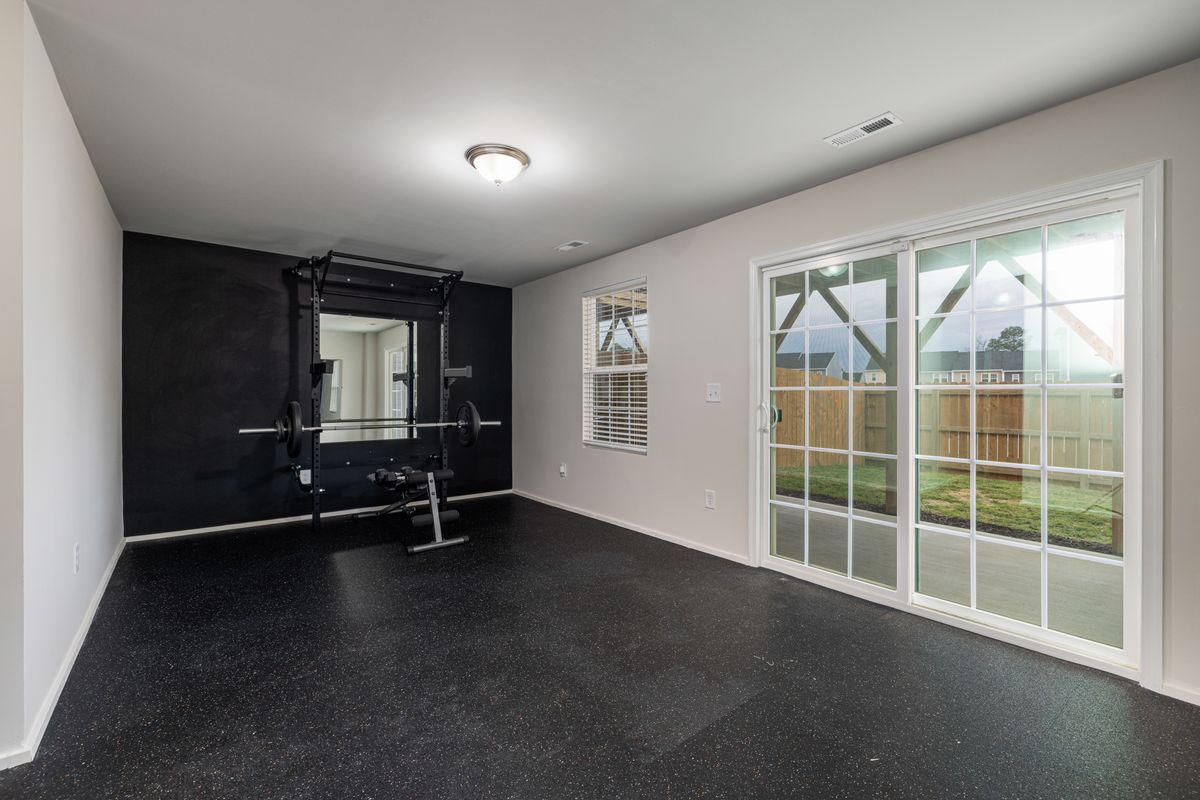
- Use firm rubber flooring or dense foam tiles that don’t shift underfoot. Very soft, squishy mats make balance harder.
- Keep the edges of mats flat and taped down.
Compare options in our home gym flooring guide.
Step 3: the safety checklist
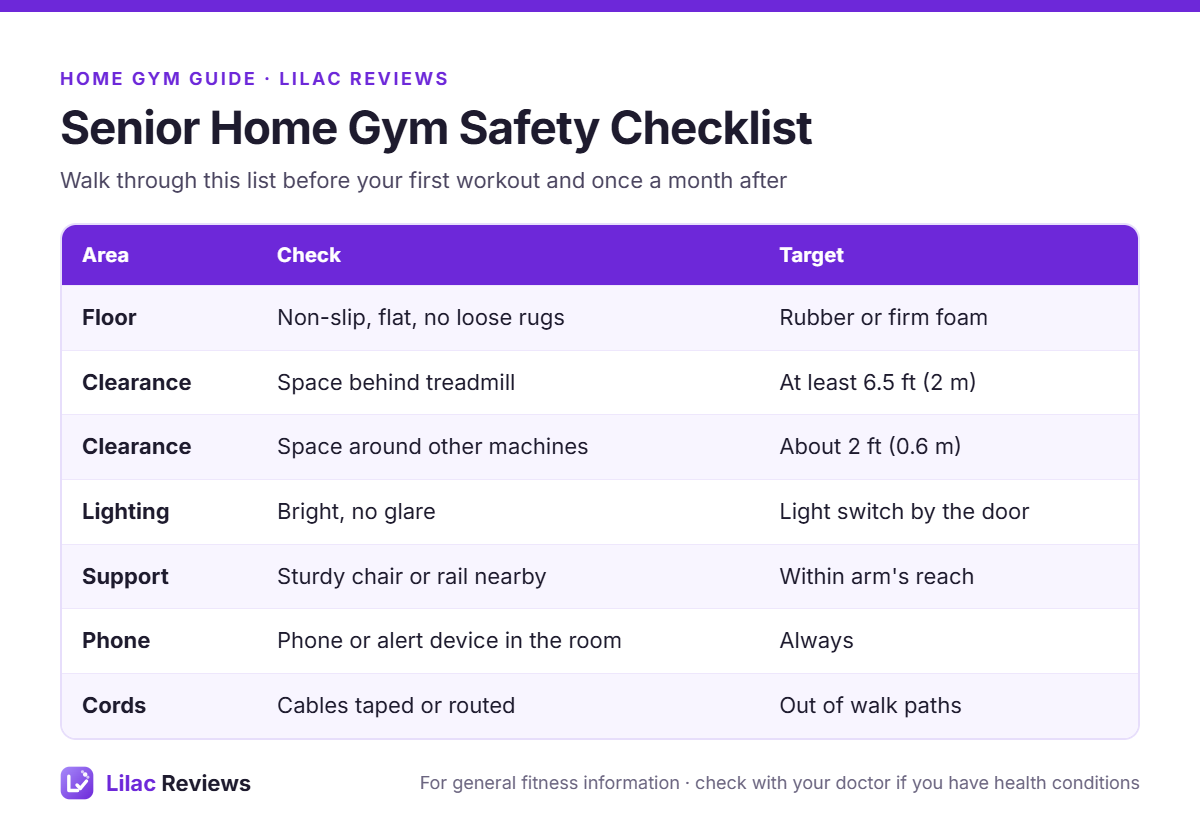
A few points deserve more detail:
- Support points: place a sturdy chair, counter or wall rail within arm’s reach of where you do standing exercises.
- Treadmill clearance: leave about 6.5 ft (2 m) free behind it.
- Phone: keep a phone or medical alert device in the room every time you exercise, especially if you live alone.
- Lighting: bright, even light with a switch by the door. See our home gym lighting ideas.
Step 4: the equipment worth buying first
For strength
A set of resistance bands and a pair of light dumbbells (or adjustable dumbbells) cover most exercises. Our resistance band exercises for seniors and strength training plan show what to do with them.


For cardio
A recumbent bike is the most senior-friendly cardio machine for many people: easy to get on, supported seat and no impact. Pedal exercisers and under-desk ellipticals are cheaper and smaller. A treadmill with long handrails suits confident walkers. See our recumbent bike workouts and treadmill workouts for seniors.

For balance and mobility
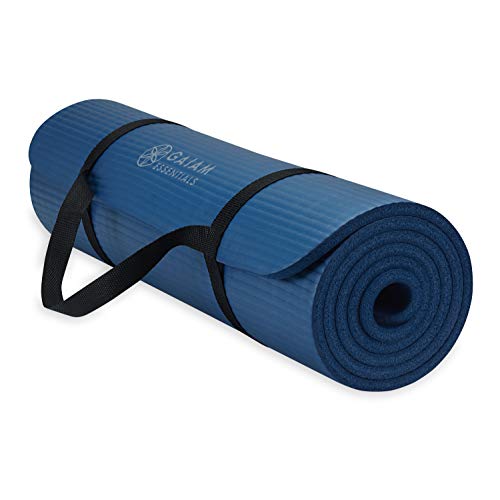
A sturdy chair, a non-slip mat and a clear wall are all you need. Our balance exercises for seniors and chair yoga sequence use exactly that.
Step 5: storage and layout
- Store weights at waist height on a shelf or rack so you don’t have to bend to the floor to pick them up.
- Hang bands on hooks.
- Keep the walking path from the door to each piece of equipment clear.
- Route power cords along walls, never across walkways.
More ideas in our home gym organization guide.
What to skip
- Heavy free-weight setups and benches that require getting very low.
- Wobble boards and balance domes until your balance is solid.
- Machines with complicated adjustments you won’t use.
- Very soft yoga mats for standing balance work.
Our article on home gym buying mistakes covers more ways people overspend.
FAQ
What is the best home gym equipment for seniors?
For most people: resistance bands, light dumbbells, a sturdy chair, a non-slip mat and one low-impact cardio machine such as a recumbent bike.
How much space does a senior home gym need?
About 6 × 8 ft for strength and balance work, plus the footprint and clearance of any cardio machine.
Is it safe for seniors to work out alone at home?
Often yes, with a safe setup and a phone in the room. If you have a condition that affects balance or heart health, ask your doctor first.
What flooring is best?
Firm rubber or dense foam tiles that stay flat and don’t slip.
Written by the Lilac Reviews Editorial Team. This article is general fitness information, not medical advice. If you have a health condition, recent injury or surgery, talk to your doctor or physical therapist before starting a new exercise routine.
This guide is for general information only and is not medical advice. Talk to a qualified professional before starting a new exercise program, especially if you have an injury or health condition.