
Strength Training for Seniors: A Safe 8-Week Beginner Plan

A safe 8-week strength training plan for seniors using a chair, a wall and light dumbbells, with how heavy to start, how to progress and which mistakes to avoid.
This article may contain affiliate links. If you buy through them, we may earn a small commission at no extra cost to you. Learn more.
Disclosure: As an Amazon Associate, we earn from qualifying purchases. If you buy through a link on this page, we may earn a small commission at no extra cost to you.
If there is one type of exercise older adults most often skip, it’s strength training. Many people picture heavy barbells and assume it isn’t for them. In reality, strength training for seniors usually means simple moves like standing up from a chair, pushing off a wall and lifting light dumbbells, done with good form a couple of times a week.
Those moves matter. Stronger legs make stairs and getting up easier, a stronger back and arms make carrying and reaching easier, and strength supports balance. This guide gives you an 8-week beginner plan with seven exercises.
How much strength training do seniors need?
The CDC guidelines for adults 65 and older recommend muscle-strengthening activities that work all major muscle groups on at least two days a week. Two 25–35 minute sessions are enough to start.
Before you begin
- Talk to your doctor if you have heart disease, uncontrolled blood pressure, osteoporosis with fractures, recent surgery, or joint replacements.
- Warm up for 5 minutes with marching or a short walk.
- Breathe out during the hardest part of each move. Don’t hold your breath.
- Start lighter than you think. You should finish each set feeling you could do two or three more reps.
The 8-week plan
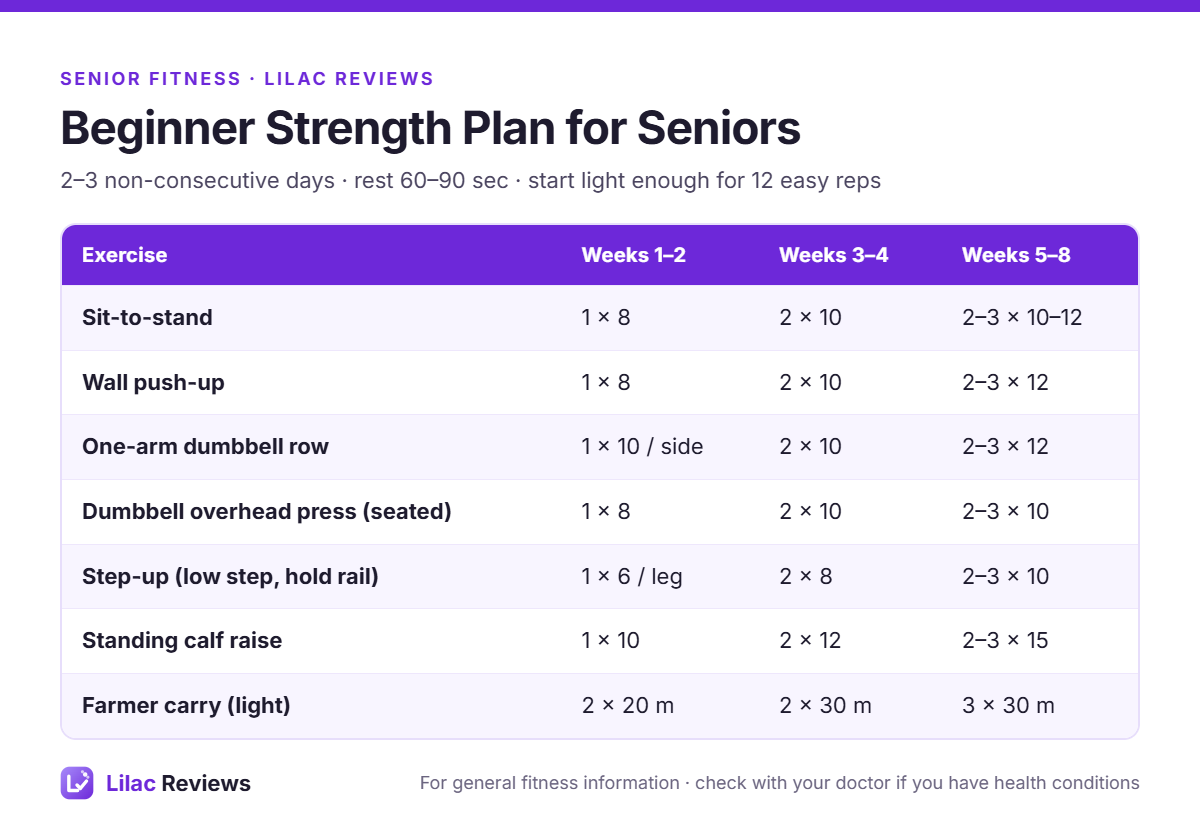
1. Sit-to-stand
Sit near the front of a sturdy chair, feet flat. Lean forward slightly and stand up by pushing through your heels, then sit back down slowly. Use your hands at first if needed. This one exercise trains the muscles you use every time you get out of a chair or car.
2. Wall push-up
Stand an arm’s length from a wall, hands on it at shoulder height. Bend your elbows to bring your chest toward the wall, keeping your body straight, then push back. Step your feet further back to make it harder, or move to a kitchen counter later.
3. One-arm dumbbell row
Put one hand on a counter or chair back, step back and hinge forward slightly with a flat back. Hold a light dumbbell in the other hand and pull it toward your hip, then lower slowly.
4. Seated overhead press
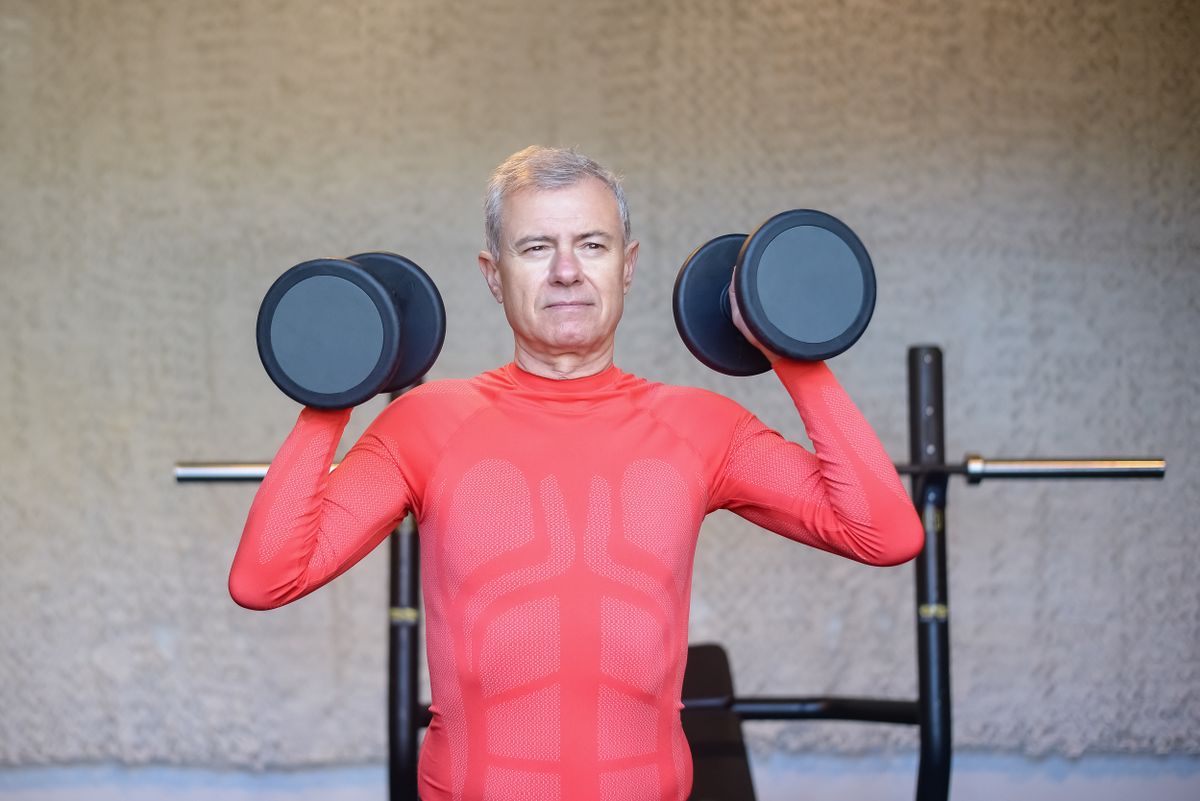
Sit tall holding dumbbells at shoulder height, palms facing forward. Press up until your arms are nearly straight, then lower. If overhead hurts, press at a slight forward angle or skip it.
5. Step-up
Use the bottom stair with a handrail. Step up with one foot, bring the other up, then step down. Lead with the same leg for all reps, then switch. Keep your whole foot on the step.
6. Standing calf raise
Hold a counter and rise onto your toes, pause, and lower slowly. Strong calves help walking speed and balance.
7. Farmer carry
Hold a light weight (or a full shopping bag) in each hand and walk tall for 20–30 meters. It trains grip, posture and core all at once.
How heavy should you start?
Many older beginners start with 2–5 lb dumbbells for upper body moves and bodyweight for legs. A pair of adjustable dumbbells can save space as you get stronger; see our BowFlex SelectTech 552 review. Our dumbbell weight guide explains a simple rep test to pick a weight.

Prefer something lighter and more portable? Bands work well for most of these exercises. See our resistance band exercises for seniors.

How to progress
- Weeks 1–2: one set of each exercise. Learn the movements.
- Weeks 3–4: two sets, with 60–90 seconds of rest.
- Weeks 5–8: two to three sets. When you can do the top number of reps easily on all sets, increase the weight slightly, use a stronger band or slow down the lowering phase.
Write down what you did each session so you can see progress. Our workout tracking guide keeps it simple.
Common mistakes
- Going too heavy too soon: leads to sore joints and poor form.
- Rushing: take two to three seconds to lower each rep.
- Training the same muscles every day: muscles need a day to recover.
- Skipping legs: leg strength has the biggest effect on daily independence.
FAQ
Is it safe for seniors to lift weights?
For most older adults, yes, when they start light, use good form and progress gradually. Check with your doctor if you have a medical condition.
Can you build muscle after 70?
Research shows older adults can still gain strength and muscle with regular resistance training. Progress may be slower, but it’s real.
How long should a senior strength workout be?
20–40 minutes, including a warm-up, is enough for most people.
Should seniors do cardio or strength first?
Either is fine. If strength is your priority, do it first while you’re fresh, then walk or ride afterward.
Written by the Lilac Reviews Editorial Team. This article is general fitness information, not medical advice. If you have a health condition, recent injury or surgery, talk to your doctor or physical therapist before starting a new exercise routine.
This guide is for general information only and is not medical advice. Talk to a qualified professional before starting a new exercise program, especially if you have an injury or health condition.