
Chair Yoga for Seniors: A 15-Minute Seated Sequence

A 15-minute chair yoga sequence for seniors with nine seated poses for posture, spine mobility, hips and relaxation, plus breathing tips and safety notes.
This article may contain affiliate links. If you buy through them, we may earn a small commission at no extra cost to you. Learn more.
Disclosure: As an Amazon Associate, we earn from qualifying purchases. If you buy through a link on this page, we may earn a small commission at no extra cost to you.
Chair yoga takes classic yoga poses and adapts them so you can do them sitting down, or standing with a chair for support. You get the mobility, posture and calming breath work of a yoga class without having to get down on the floor or hold difficult balance poses.
This chair yoga for seniors sequence takes about 15 minutes. It’s a good fit for beginners, people with limited mobility, and anyone who wants a gentle start to the day.
What you need
- A sturdy chair without wheels or arms, placed on a non-slip surface.
- Comfortable clothes you can move in.
- Optional: a cushion for your lower back, and a yoga strap or towel for reaching.
Sit near the front of the seat with your feet flat and hip-width apart, knees over ankles. That’s your starting position for every pose.
Breathing basics
Breathe slowly in and out through the nose if that’s comfortable. As a rule, breathe in as you lengthen or open, and breathe out as you twist, fold or relax. Never force a pose. The breath should stay smooth.
The 15-minute sequence
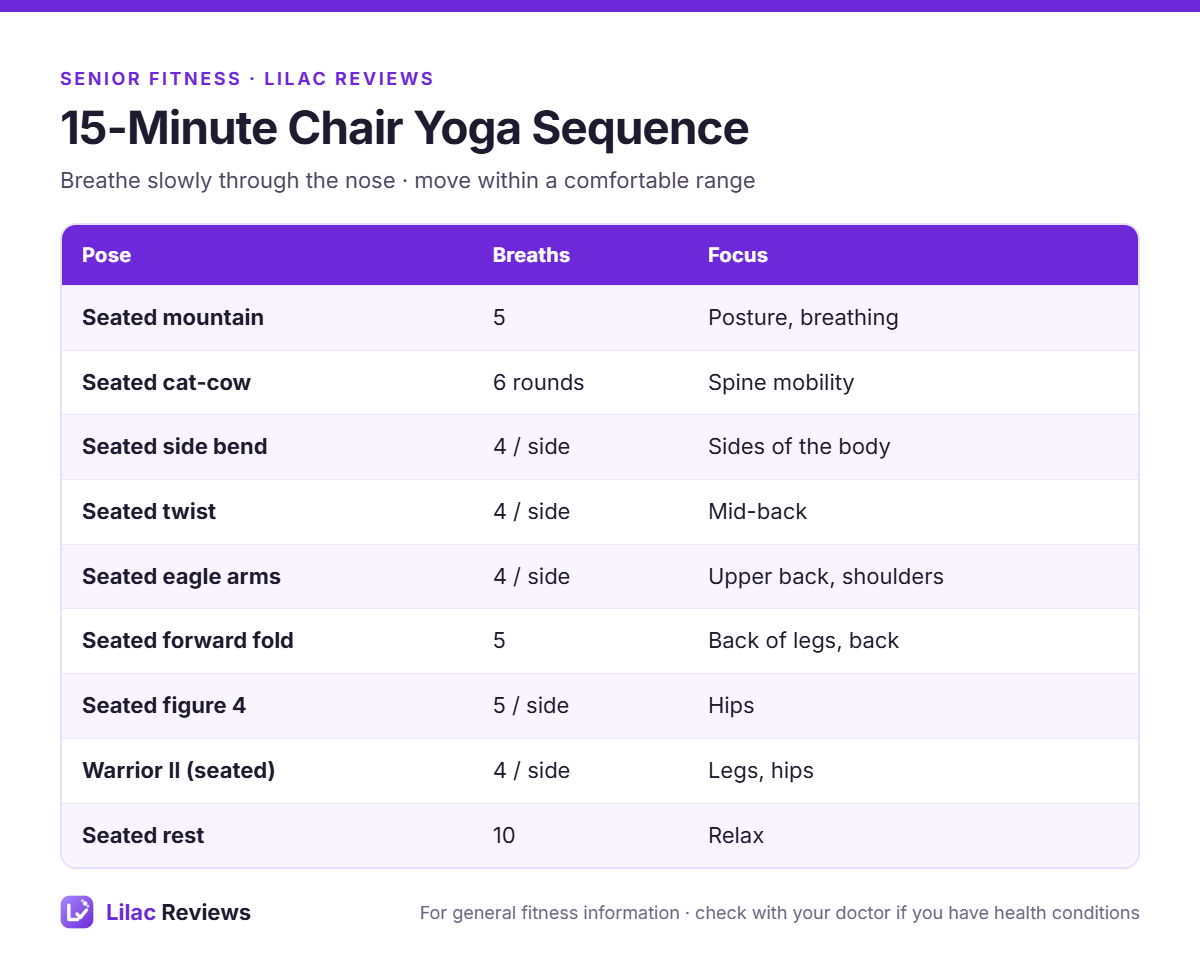
1. Seated mountain (5 breaths)
Sit tall, shoulders relaxed, hands resting on your thighs. Imagine a string lifting the top of your head. Notice your breath. This resets your posture.
2. Seated cat-cow (6 rounds)
Hands on knees. Breathing in, lift your chest and gently arch your upper back (cow). Breathing out, round your back and drop your chin (cat). Move slowly.
3. Seated side bend (4 breaths per side)
Reach your right arm overhead and lean gently to the left, keeping both hips on the seat. Return to center and switch sides.
4. Seated twist (4 breaths per side)
Sit tall, place your left hand on your right knee and your right hand on the chair back. Breathe in to lengthen, breathe out to turn gently to the right. Turn from your mid-back, not your neck. Repeat on the other side.
5. Seated eagle arms (4 breaths per side)
Cross your right arm under your left at the elbows and bring your palms together or hold opposite shoulders (a self-hug works just as well). Lift your elbows slightly. You’ll feel this between your shoulder blades.
6. Seated forward fold (5 breaths)
Breathe in to sit tall, breathe out and hinge forward from the hips, letting your hands slide down your legs. Go only as far as feels easy. Skip this one if you have glaucoma, uncontrolled blood pressure or get dizzy when bending.
7. Seated figure 4 (5 breaths per side)
Cross one ankle over the opposite knee and sit tall. Lean forward a little for more stretch in the hip. Skip or modify after a hip replacement unless your surgeon has cleared this movement.
8. Seated warrior II (4 breaths per side)
Turn to sit sideways on the chair so your right thigh is supported by the seat and extend your left leg back. Reach your arms out, front arm over the bent knee. If that’s awkward, simply sit facing forward and reach your arms out to the sides with strength.
9. Seated rest (10 breaths)
Sit back, close your eyes if you like, and let your hands rest. Breathe slowly and let your shoulders drop.
How often to practice
Most days is ideal. It pairs well with strength days or a walk. If you want more mobility work, our daily stretching exercises for seniors uses a similar seated setup. For a full week, combine chair yoga with our strength training plan for seniors and regular walking.
Props that make it easier
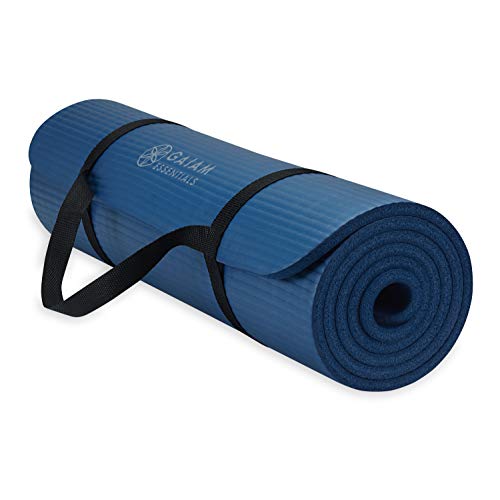
A yoga mat under the chair stops it sliding and gives you a comfortable surface if you later add standing or floor poses. A thick, cushioned mat is comfortable for kneeling, though thinner mats are steadier for standing balance.
Is chair yoga actually good exercise?
Chair yoga is mostly about flexibility, posture, breathing and relaxation, with some light strength work. It’s a great part of a routine but doesn’t replace aerobic activity and strength training. The National Institute on Aging recommends combining all four exercise types: endurance, strength, balance and flexibility. The NIH’s NCCIH page on yoga safety is a useful read if you have a health condition.
FAQ
Is chair yoga good for seniors with arthritis?
Many people with arthritis find it comfortable because it moves joints gently without weight-bearing strain. Stay in a pain-free range.
How long should a chair yoga session be?
10–20 minutes is a good start. Longer classes of 30–45 minutes are common once you’re comfortable.
Can chair yoga help with balance?
Indirectly, through posture and leg strength. Standing balance exercises work better for direct balance improvement.
Do I need a special chair?
No. Any sturdy, armless chair with a flat seat and no wheels works.
Written by the Lilac Reviews Editorial Team. This article is general fitness information, not medical advice. If you have a health condition, recent injury or surgery, talk to your doctor or physical therapist before starting a new exercise routine.
This guide is for general information only and is not medical advice. Talk to a qualified professional before starting a new exercise program, especially if you have an injury or health condition.