
Daily Stretching Exercises for Seniors: A Gentle 10-Minute Routine

A gentle 10-minute daily stretching routine for seniors with eight seated and standing stretches for the neck, shoulders, hips, hamstrings and calves, plus safety tips.
This article may contain affiliate links. If you buy through them, we may earn a small commission at no extra cost to you. Learn more.
Disclosure: As an Amazon Associate, we earn from qualifying purchases. If you buy through a link on this page, we may earn a small commission at no extra cost to you.
Stiff hips in the morning, a tight neck after reading, shoulders that don’t reach the top shelf like they used to. A lot of what we call “getting older” is really lost range of motion, and gentle daily stretching is one of the simplest ways to keep it.
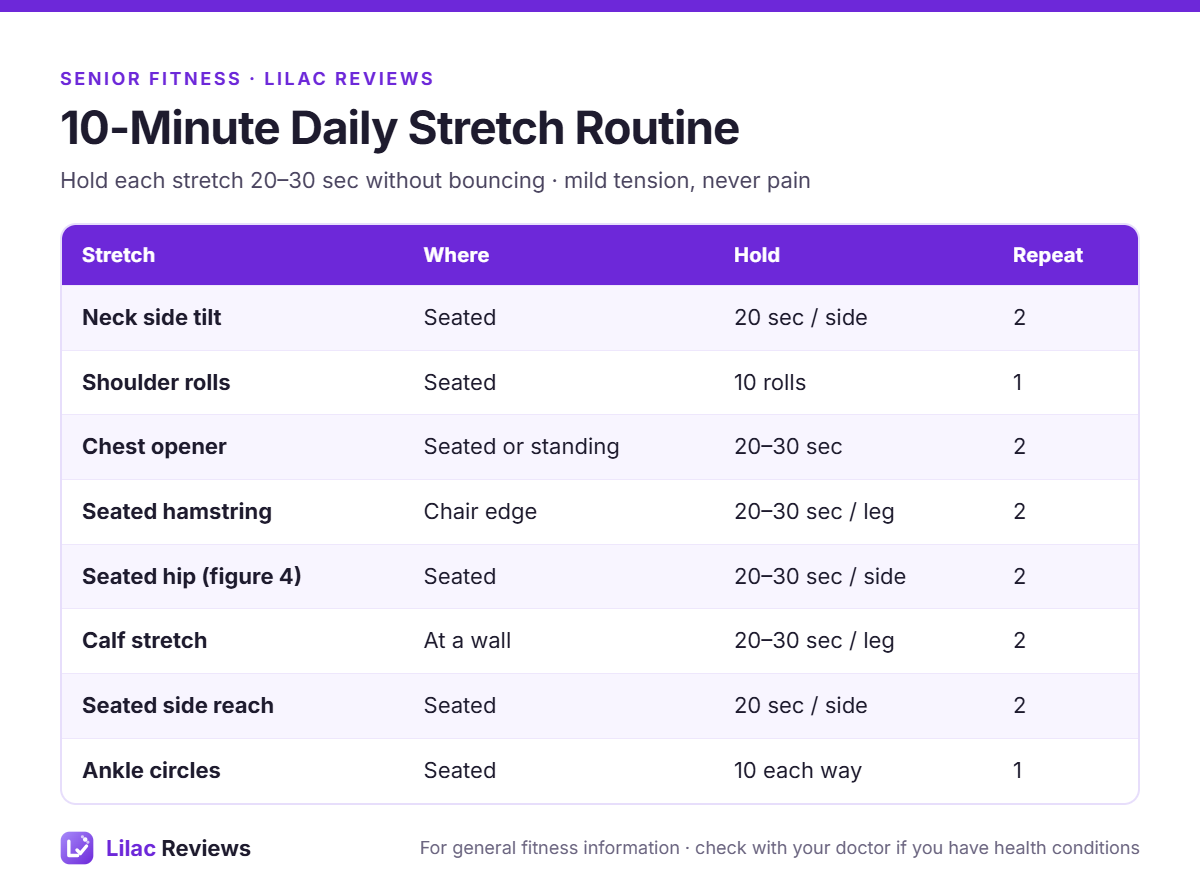
This 10-minute routine has eight stretching exercises for seniors. Most are done in a chair, so you don’t need to get down on the floor.
How to stretch safely
- Warm up first. Stretch after a short walk or a few minutes of marching in place, not straight out of bed.
- Hold, don’t bounce. Ease into each stretch and hold 20–30 seconds.
- Mild tension, not pain. You should feel a gentle pull. Sharp or burning pain means back off.
- Breathe. Slow breaths help muscles relax.
- If you’ve had a hip or knee replacement, follow your surgeon’s movement limits.
The National Institute on Aging lists flexibility as one of four types of exercise older adults benefit from, alongside endurance, strength and balance.
The 10-minute routine
1. Neck side tilt
Sit tall. Slowly tilt your right ear toward your right shoulder until you feel a stretch on the left side of your neck. Hold 20 seconds, then switch. Don’t roll your head in full circles.
2. Shoulder rolls
Lift your shoulders up toward your ears, roll them back and down. Do 10 slow rolls. This isn’t a held stretch but loosens the upper back before the next moves.
3. Chest opener
Sit near the front of the chair, reach your hands behind you and hold the sides of the seat or clasp your hands. Lift your chest gently. Hold 20–30 seconds. Great after time hunched over a phone.
4. Seated hamstring stretch
Sit on the edge of the chair, straighten one leg with your heel on the floor and toes up. Keeping your back straight, hinge forward from your hips until you feel a stretch behind the thigh. Hold 20–30 seconds per leg.
5. Seated hip stretch (figure 4)
Cross your right ankle over your left knee. Sit tall, then lean forward slightly until you feel the stretch in your right hip and buttock. If crossing your ankle is hard, rest it lower on your shin. Hold, then switch.
6. Calf stretch at the wall
Stand facing a wall with your hands on it. Step one foot back, keep that heel down and the leg straight, and lean gently toward the wall. Hold 20–30 seconds per leg. Tight calves affect walking and balance.
7. Seated side reach
Sit tall, raise your right arm overhead and lean gently to the left. Hold 20 seconds, then switch.
8. Ankle circles
Lift one foot slightly and draw slow circles with your toes, 10 each way. Switch feet.
When to stretch
Daily is ideal, and it fits nicely after a walk or a strength session. If you train with our resistance band exercises for seniors or ride with our recumbent bike workouts, use this routine as the cool-down.
Helpful extras
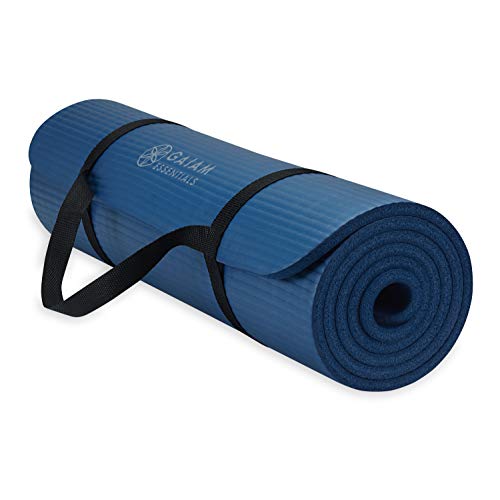
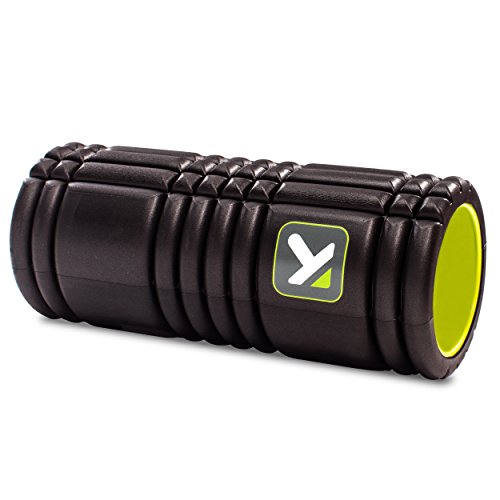
A cushioned mat makes floor stretches more comfortable if you can get down safely, and a soft foam roller can help loosen calves and the upper back. Read our foam roller benefits guide before trying one, and pick a softer roller to start.
Common mistakes
- Stretching cold muscles: warm up first.
- Bouncing: it makes muscles tighten up rather than relax.
- Rounding the back in forward bends: hinge from the hips instead.
- Holding your breath: keep breathing slowly.
FAQ
How often should seniors stretch?
Most days of the week is a good goal. Even a few minutes helps if you do it regularly.
How long should each stretch be held?
20–30 seconds is a common recommendation. Repeat two or three times if a muscle feels particularly tight.
Is it better to stretch in the morning or evening?
Either works. Many people like a few gentle moves in the morning after a short warm-up, and a longer routine in the evening.
Can stretching prevent falls?
Flexibility helps, but balance and strength exercises do more for fall prevention. Try our balance exercises for seniors too.
Written by the Lilac Reviews Editorial Team. This article is general fitness information, not medical advice. If you have a health condition, recent injury or surgery, talk to your doctor or physical therapist before starting a new exercise routine.
This guide is for general information only and is not medical advice. Talk to a qualified professional before starting a new exercise program, especially if you have an injury or health condition.