
Best Weighted Vests for Men (Walking, Rucking and Training)

The best weighted vests for men: pocket-style adjustable vests, plate carriers for rucking and slim vests for walking, with how heavy to go, fit tips and when a vest is worth it.
This article may contain affiliate links. If you buy through them, we may earn a small commission at no extra cost to you. Learn more.
Disclosure: As an Amazon Associate, we earn from qualifying purchases. If you buy through a link on this page, we may earn a small commission at no extra cost to you.
A weighted vest is one of those tools that looks extreme but is actually very practical. Strap one on for a brisk walk and you get more out of the same 30 minutes. Wear one for push-ups, pull-ups or step-ups and the bodyweight moves get harder without buying another piece of equipment. Rucking, walking with a loaded pack or vest, has also become a popular low-impact way for men to build fitness.
The best weighted vest for men depends on how you’ll use it. A vest for a daily dog walk is a very different thing from a plate carrier for heavy rucking or a vest for pull-ups. This guide breaks it down.
How we put this guide together: we didn’t lab-test these vests. We compared manufacturer specs (weight range, adjustability, materials, sizing), looked at how weight is distributed in each design, and read the patterns in verified owner feedback about bounce, shoulder comfort and durability. Check the current listing before buying.
Quick picks
- Best adjustable vest for heavy training: RUNmax Pro adjustable weighted vest
- Best plate carrier for rucking: GORUCK Ruck Plate Carrier
- Best tactical-style plate carrier: 5.11 Tactical TacTec plate carrier
- Best budget adjustable vest: Yes4All adjustable weighted vest
- Best slim vest for walking: Hyperwear Hyper Vest PRO
The three main styles
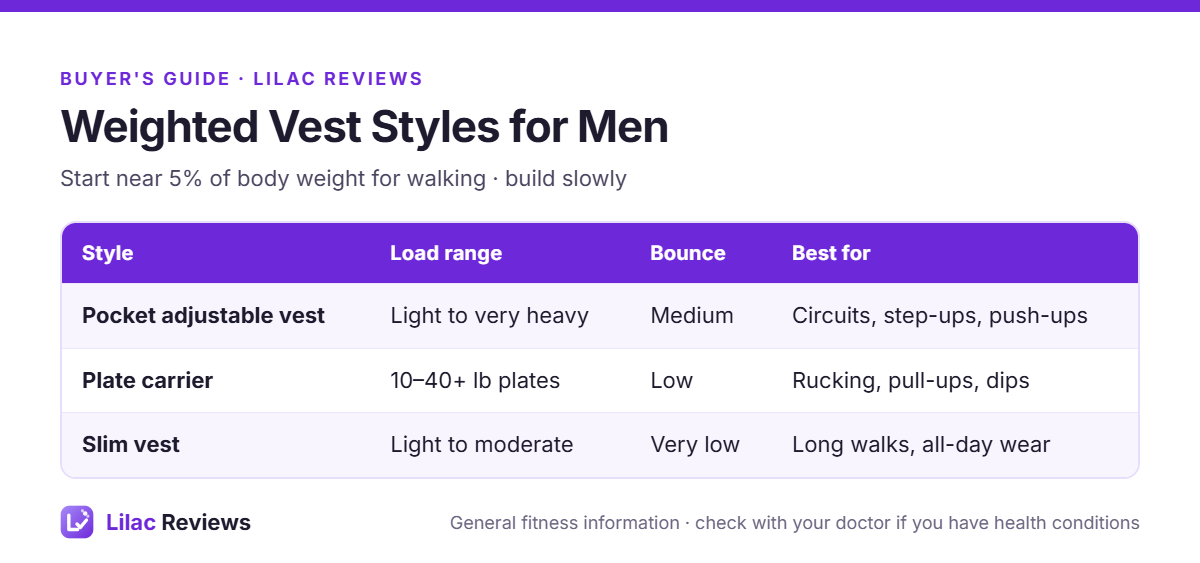
Pocket-style adjustable vests
Dozens of small pockets hold removable iron or sand weights. You can go from light to very heavy in one vest. They’re great for strength circuits and calisthenics but can be bulky and warm.
Plate carriers
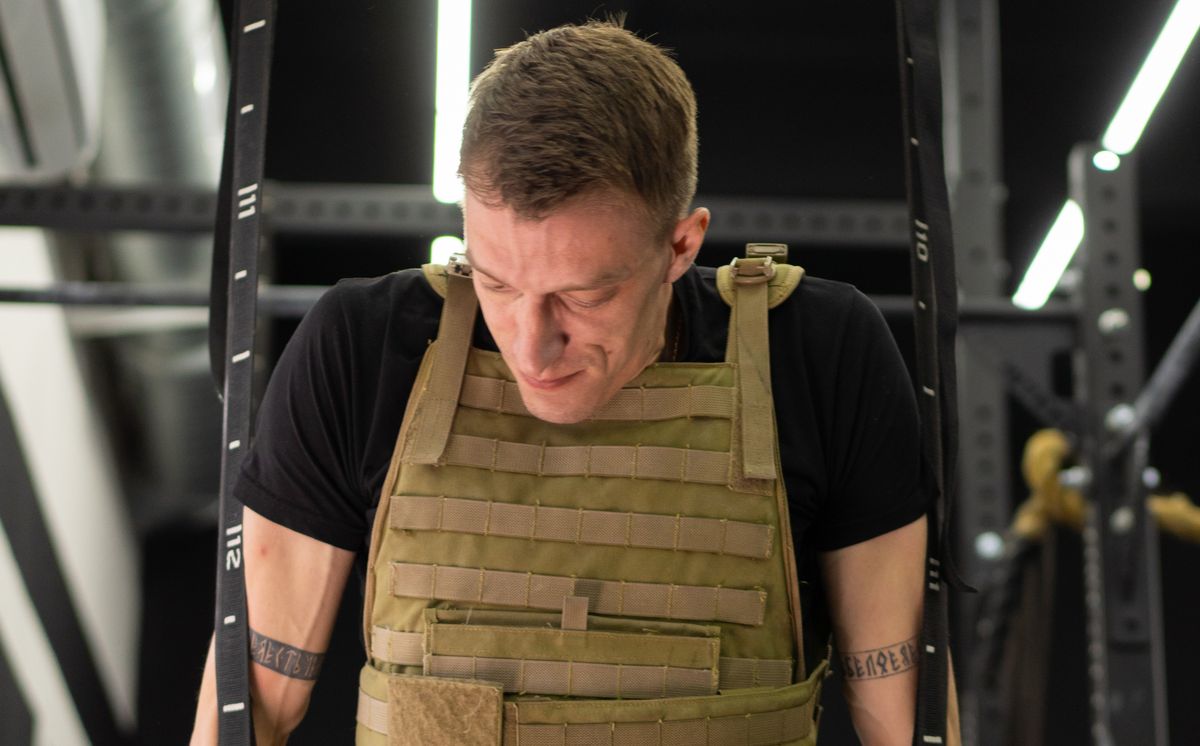
Two flat weight plates, one front and one back, held in a carrier with a cummerbund. The load sits high and tight, which reduces bounce. This is the go-to style for rucking and for heavy pull-ups or dips.
Slim vests
Thin, form-fitting vests with weight spread in small pieces around the torso. Lighter in total, but comfortable for long walks or wearing during chores.
The best weighted vests for men, by situation
1. RUNmax Pro adjustable weighted vest: best for heavy training
RUNmax’s pocket vests come in versions that reach well over 100 pounds when fully loaded, using small removable weights. You can start light and build to serious loads for step-ups, push-ups and stair climbing.
- Good for: strength and conditioning circuits, progressive loading.
- Keep in mind: fully loaded versions are bulky and heavy to put on; partly loaded pockets can shift if not balanced front and back.

2. GORUCK Ruck Plate Carrier: best for rucking
GORUCK is closely tied to the rucking trend, and its plate carriers are designed to hold ruck plates high on the back and chest. The fit is tight and the materials are made for long use.
- Good for: rucking, hiking with load, weighted calisthenics.
- Keep in mind: plates are often sold separately, and the price is premium.

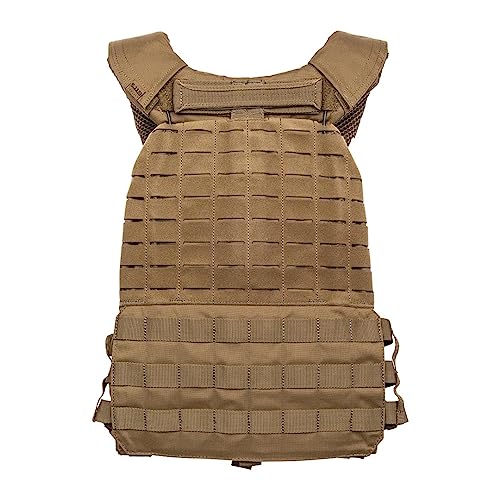
3. 5.11 Tactical TacTec plate carrier: best tactical-style carrier
The TacTec is a well-known plate carrier with adjustable shoulder straps and cummerbund. Many people use it with fitness weight plates for workouts and rucks.
- Good for: people who want a tough, adjustable carrier for training plates.
- Keep in mind: make sure the plates you buy are sized for the carrier.
4. Yes4All adjustable weighted vest: best budget adjustable vest
Yes4All makes affordable adjustable vests with removable weights. It’s a simple way to add load to walking and bodyweight training without a big spend.
- Good for: beginners, home workouts, trying out vest training.
- Keep in mind: budget straps and stitching may not hold up to heavy daily rucking.
5. Hyperwear Hyper Vest PRO: best slim vest for walking
The Hyper Vest PRO fits close like a compression top, with thin steel weights spread around the torso. You can wear it under a jacket on walks.
- Good for: long walks, all-day wear, runners who want minimal bounce.
- Keep in mind: the maximum load is lower than pocket vests or carriers.
How heavy should a men’s weighted vest be?
- Walking: start at about 5 percent of body weight and build to around 10 percent. For a 200-pound man, that’s 10 pounds to start, 20 pounds later.
- Rucking: many people start with 10 to 20 pounds and add weight slowly over weeks.
- Calisthenics: add 10 to 20 pounds once you can do 12 to 15 clean reps without the vest.
Our guide on how heavy a weighted vest should be has a full chart.
Running in a weighted vest
Running adds impact on every step, and extra weight multiplies that. If you want to run with a vest, keep it light (5 to 10 pounds), choose a snug slim vest or plate carrier, and keep distances short. Many coaches prefer walking or hiking with load over running with it.
How to choose a weighted vest
- Fit: it should sit high and snug. Loose vests bounce and rub.
- Shoulders: padded straps make a big difference with heavier loads.
- Breathability: mesh or open designs are cooler than neoprene.
- Adjustability: if you’ll progress, buy a vest that can grow with you.
Safety tips
- Build up time and weight gradually, especially if you’re new to exercise.
- Keep your posture tall. If the vest pulls you forward, it’s too heavy.
- Skip heavy vests if you have back, neck, knee or heart problems without checking with your doctor first.
- Hydrate and avoid heavy rucks in hot weather.
Adding load to walking is an easy way to work toward the CDC’s weekly activity guidelines for aerobic and muscle-strengthening activity.
FAQ
What size weighted vest should a man get?
Most men start at 10 to 20 pounds. Adjustable vests let you go heavier later.
Is rucking better than running?
Rucking has lower impact and builds strength-endurance; running builds aerobic fitness faster. Both work, and rucking is easier on the joints for many people.
Can I do pull-ups in a weighted vest?
Yes. A plate carrier is ideal because it sits tight and high. Start with 10 pounds.
How long should I wear a weighted vest?
Start with 15 to 20 minutes and build up. Listen to your shoulders and lower back.
Plate carrier or weighted vest?
Plate carriers are better for rucking and heavy calisthenics; pocket vests are better for fine adjustments and circuits.
The bottom line
For heavy home training, a pocket-style adjustable vest gives the most range. For rucking, a plate carrier is the most comfortable way to carry load. For daily walks, a slim vest is the easiest to live with. Start lighter than you think, and add weight slowly. For a budget fixed-weight option, see our ZELUS weighted vest review.
Written by the Lilac Reviews Editorial Team. Product details are based on manufacturer information and may change; check the retailer listing for current specifications. This article is general fitness information, not medical advice.
This guide is for general information only and is not medical advice. Talk to a qualified professional before starting a new exercise program, especially if you have an injury or health condition.