
Best Yoga Mats for Home Workouts (Grip, Thickness and Material)

The best yoga mats for home workouts: grip, thickness and material compared, picks for yoga, floor workouts and seniors, and how to choose the right one.
This article may contain affiliate links. If you buy through them, we may earn a small commission at no extra cost to you. Learn more.
Disclosure: Lilac Reviews is reader-supported. As an Amazon Associate we earn from qualifying purchases, at no extra cost to you. We don’t list prices because they change often; check Amazon for the current price.
A yoga mat is the first piece of “equipment” a lot of people buy for working out at home, and it’s often the one they replace first. Too thin and your knees hurt. Too soft and you wobble in every standing pose. Too slippery and downward dog turns into a slow slide.
This guide covers the best yoga mats for home workouts: what thickness to get, which materials grip best, and our picks for yoga, mixed floor workouts and people who need extra cushion, including seniors.
Quick picks
- Best overall: Manduka PRO, dense, durable and stable.
- Best grip for sweaty hands: Liforme yoga mat.
- Best natural rubber: JadeYoga Harmony.
- Best thick budget mat: BalanceFrom GoYoga.
- Best cushioned mat for floor exercises: Gaiam Essentials.
How we chose
We compared materials, thickness, size and weight from each brand’s published specs, read owner feedback on grip, smell and durability, and matched each mat to a type of workout. We did not lab-test these mats.
How to choose a yoga mat
Thickness
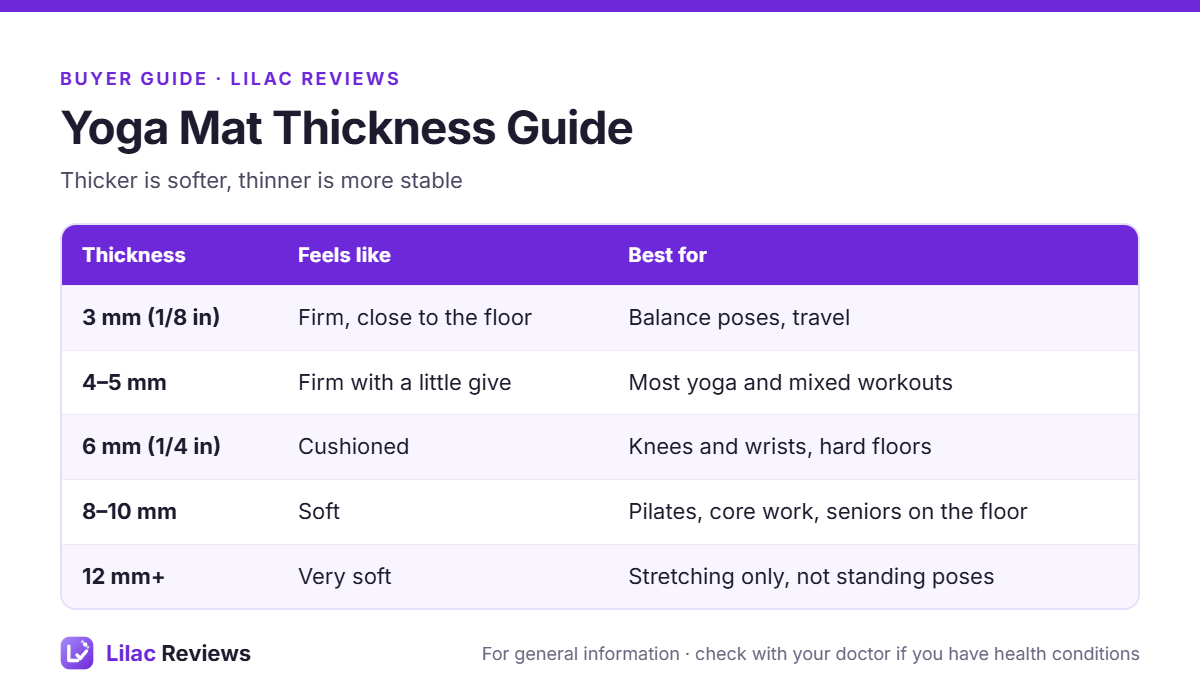
For most yoga and mixed workouts, 4 to 6 mm is the sweet spot. Thinner mats feel stable for balance poses; thicker ones protect your knees and wrists. Very thick mats (10 mm and up) are lovely for stretching and floor exercises but can make standing poses wobbly.
Material
- PVC: durable, dense and easy to clean. Not biodegradable.
- Natural rubber: excellent grip and cushion, but heavy, has a rubber smell at first and isn’t for latex allergies.
- PU on rubber: the stickiest surface for sweaty hands. Needs gentle cleaning.
- TPE: light and affordable, wears faster.
- NBR foam: thick, soft and cheap. Great for floor work, less great for standing poses.
Size
Standard mats are about 68 to 72 inches long. If you’re over about 5’10”, look for a long version (around 79 to 85 inches) so your hands and feet both fit in downward dog.
Weight
If the mat stays at home, weight doesn’t matter much and heavier mats stay flatter. If you carry it to class, look for something under about 5 lb.
The best yoga mats
1. Manduka PRO: best overall

The Manduka PRO is the mat many yoga teachers end up owning. It’s 6 mm of dense PVC that cushions without feeling squishy, and its closed-cell surface keeps sweat on top so it’s easy to wipe. It’s heavy and needs a breaking-in period before the grip is at its best, but it can last for many years.
Good to know: about 7.5 lb, so it’s a home mat more than a travel mat. Our upcoming Manduka PRO review goes deeper.
2. Liforme: best grip for sweaty hands
Liforme’s grippy surface and printed alignment markers make it a favorite for people who sweat a lot or want help placing their hands and feet. It’s a premium mat, so it makes the most sense if you practice often.
Good to know: treat the top layer gently; avoid harsh cleaners and direct sun.
3. JadeYoga Harmony: best natural rubber

JadeYoga’s natural rubber mats are known for grip that works even when your hands aren’t perfectly dry, plus a bit more cushion than PVC. The open-cell rubber absorbs some sweat, so it needs regular cleaning.
Good to know: contains natural latex, so skip it if you have a latex allergy. It also has a rubber smell for the first weeks.
4. BalanceFrom GoYoga: best thick budget mat
A popular budget mat that comes in several thicknesses and colors, often with a carry strap. It’s a fine pick for beginners and occasional use, or as a second mat for a family member.
Good to know: budget mats wear faster, especially under shoes.
5. Gaiam Essentials: best cushioned mat for floor exercises
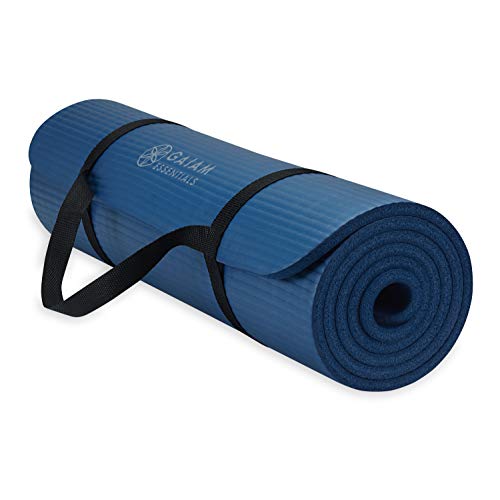
At 10 mm, the Gaiam Essentials is more of a soft exercise mat than a yoga mat. It’s great for core work, stretching, Pilates and seniors who do exercises on the floor. Read our Gaiam Essentials review for the trade-offs.
Which mat for which workout?
- Yoga (most styles): 4 to 6 mm, sticky surface. Manduka PRO, Liforme or JadeYoga.
- Hot or sweaty yoga: PU-top or rubber mat, plus a towel.
- Pilates and core: 8 to 10 mm cushioned mat.
- HIIT or workouts in shoes: a larger exercise mat or rubber flooring works better. Our home gym flooring ideas guide and the ProsourceFit puzzle mat review help here.
- Seniors and sore knees: 6 to 10 mm with a stable surface; fold the end over for kneeling.
Caring for your mat
Wipe it after sweaty sessions with a damp cloth and a drop of mild soap, let it air dry before rolling, and keep it out of direct sun. We’ll have a full guide to cleaning by material soon.
FAQ
What thickness yoga mat is best?
For most people, 4 to 6 mm. Go thicker for floor exercises and sore joints, thinner for balance and travel.
What is the best non-slip yoga mat?
PU-top rubber mats like Liforme and natural rubber like JadeYoga have the best grip for most people, especially with sweaty hands.
Can I use a yoga mat for other workouts?
Yes, for bodyweight and floor exercises. For jumping or workouts in shoes, a tougher exercise mat or rubber flooring lasts longer.
What is the best yoga mat for seniors?
A 6 to 10 mm mat with a grippy, stable surface. Very soft mats can make balance harder.
Bottom line
If you want one mat for years, the Manduka PRO is hard to beat. Choose Liforme for grip, JadeYoga for natural rubber, BalanceFrom for budget and the Gaiam Essentials for soft floor work.
This guide is for general information only and is not medical advice. Talk to a qualified professional before starting a new exercise program, especially if you have an injury or health condition.