
Foam Roller Benefits: What It Helps, How It Works, and When It’s Worth Using

Foam rolling is one of the simplest recovery tools you can add to a home fitness routine. It does not replace good training, sleep, or medical care, but it can be useful for easing tightness, improving how your body moves, and making post-workout recovery feel more manageable.
For regular exercisers, runners, and people who sit a lot, the main appeal is practical: a foam roller is inexpensive, easy to use, and fast. You can spend a few minutes on the muscles that feel stiff after a workout or use it before training to feel looser and move more comfortably.
Foam Roller Benefits at a Glance
If you want the short version, foam rolling may help with:
- Muscle soreness and tension after exercise
- Temporary improvements in flexibility and range of motion
- Warm-up readiness before a workout
- General recovery when muscles feel tight or “bound up”
- Self-massage at home without needing a professional session
Harvard Health notes that foam rollers are known to help reduce muscle and tissue soreness and tension, and they may also improve flexibility and circulation to targeted areas. Harvard Health That makes foam rolling a reasonable option if your goal is to feel better moving, not to “fix” a serious injury or chronic pain problem.
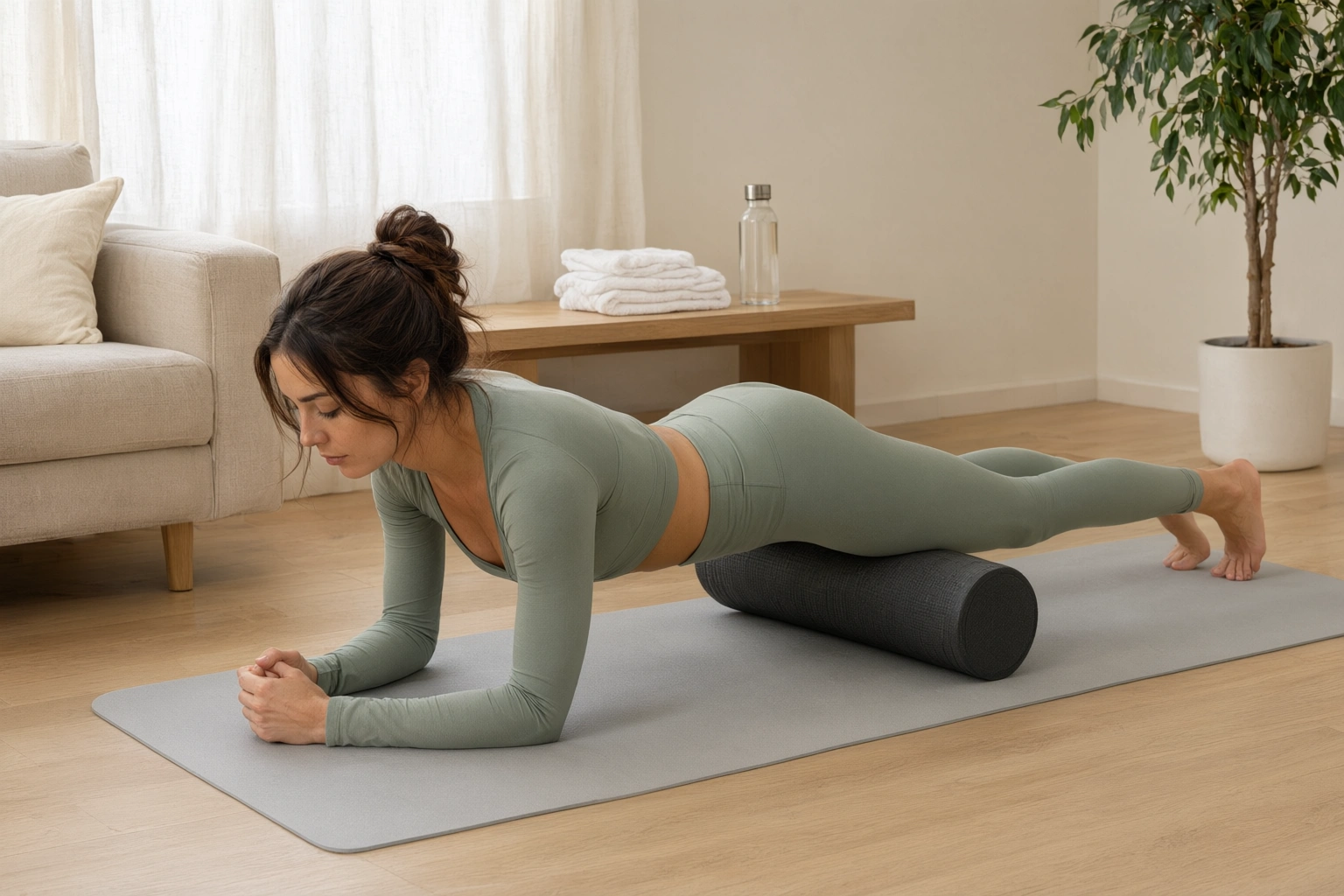
[IMAGE_1_PLACEHOLDER]
The biggest trade-off is this: foam rolling can provide noticeable short-term relief, but the effects are usually temporary unless you also address the underlying cause of tightness, such as training load, sedentary time, weak movement patterns, or limited mobility work.
What Foam Rolling Actually Does
Foam rolling is a form of self-myofascial release. In plain language, it is a self-massage technique where you use your body weight and a foam cylinder to apply pressure to muscles and the tissue around them.
The pressure is usually combined with slow movement over the muscle. That combination seems to help reduce the sensation of tightness and can make movement feel smoother afterward. Some people also use the term trigger points for especially tender spots, though you do not need to chase pain points aggressively for the technique to be useful.
A useful way to think about foam rolling is this: it is less about “breaking up knots” and more about creating a temporary change in how the muscle feels and moves. That is why a session before a workout can make squats, lunges, or a run feel easier, even if the underlying muscle tissue has not permanently changed in one session.
Foam rollers are typically cylinders made of foam, often around six inches in diameter and a foot or two long, and they come in different firmness levels. That basic design makes them easy to use on large muscle groups like the calves, quads, hamstrings, glutes, upper back, and lats.
Benefits for Muscle Soreness and Recovery
One of the most common reasons people reach for a foam roller is delayed onset muscle soreness (DOMS) after a hard workout. That’s the soreness that shows up later, often after unfamiliar exercise, heavier lifting, hill running, or a longer-than-usual session.
Foam rolling may help make sore muscles feel better. It can ease muscle pain and tension, and some evidence suggests it may help people recover more comfortably after exercise. MD Anderson notes that foam rolling can bring relief to acutely sore muscles, though it should not be viewed only as a rehab tool. MD Anderson
The practical takeaway is that foam rolling is best understood as a symptom-management tool for soreness and tightness. It may help you feel less stiff and more comfortable, but it is not a cure for overtraining, poor programming, or an actual injury.
A runner might notice that rolling the calves and quads after a long run makes walking downstairs feel less unpleasant the next day. A strength trainee might use it after leg day to reduce the “locked up” feeling in the hips and thighs. Those are realistic benefits. Expecting complete soreness elimination is not.
Benefits for Mobility and Range of Motion
Foam rolling can also help with mobility, which means how well a joint moves through its range in a usable, controlled way. It is often discussed alongside flexibility, but the two are not identical.
Some evidence suggests foam rolling can improve flexibility and range of motion, especially when used as part of a warm-up. Harvard Health specifically notes that foam rolling can increase flexibility and improve circulation to targeted areas. Harvard Health
This is where foam rolling is especially useful:
- Before a workout, when you want to feel less stiff
- After long periods of sitting, when your hips or upper back feel restricted
- On recovery days, when you want light movement without a full workout
The limitation is important: mobility gains from foam rolling are often temporary unless you reinforce them with movement, strength work, or stretching. If your hamstrings feel looser after rolling but tighten up again an hour later, that does not mean the roller failed. It means the roller helped create a short-term window of improved movement.
Foam Rolling vs Stretching: Which Helps More?
Foam rolling and stretching are often treated as competitors, but they work best as tools for different jobs.
| Goal | Foam rolling | Stretching |
|---|---|---|
| Reduce the feeling of tightness | Often helpful, especially for sore or “bound up” muscles | Helpful, especially for lengthening a specific muscle |
| Improve workout readiness | Useful as part of a warm-up | Useful when paired with dynamic movement |
| Increase range of motion | Can help temporarily | Can also help, especially when done consistently |
| Relax a specific area | Often feels more targeted and immediate | Can feel better for sustained lengthening |
| Best use case | Self-massage and quick tissue relief | Position-based mobility and flexibility work |
A simple rule: use foam rolling when the tissue feels irritated, dense, or tender; use stretching when you want to train a position or lengthen a muscle. Many people do both.
For example, if your calves feel tight before a run, a short round of foam rolling may make them feel less stiff, then a few dynamic calf and ankle movements can help prepare you for running. If your hips feel limited after sitting all day, rolling the glutes and hip area followed by hip flexor stretching may work better than either tool alone.
When to Foam Roll: Before or After a Workout?
Both can make sense, but the goal changes.
Before a workout
Foam rolling before exercise is usually about readiness. If you feel stiff, a brief session can help you move more comfortably and may improve flexibility for the session ahead. This is useful before lifting, running, or mobility-heavy training.
After a workout
Foam rolling after exercise is usually about recovery and relief. It may help muscles feel less sore and reduce that tight post-training sensation.
Which is better?
If your main goal is performance readiness, use it before training. If your main goal is comfort after hard exercise, use it afterward. If you only have time for one, choose the timing that matches your biggest problem.
A practical example:
– Before leg day: roll quads, glutes, and calves briefly, then do your warm-up sets
– After leg day: roll the same areas more slowly to reduce the heavy, tight feeling
How to Foam Roll Correctly as a Beginner
The biggest beginner mistake is using too much pressure too soon. Foam rolling should feel like firm discomfort, not sharp pain.
A simple beginner method:
-
Pick one muscle group
Start with calves, quads, glutes, or upper back rather than trying to roll everything. -
Move slowly
Roll a few inches at a time. Fast rolling usually does less and can feel sloppy. -
Pause briefly on tender spots
If you find a sore area, hold gentle pressure there for a short moment, then continue. Do not grind on it. -
Breathe normally
If you hold your breath, you often tense up and make the pressure feel worse. -
Keep the session short
A few minutes is enough for most people, especially at first.
If a spot feels sharp, numb, tingling, or worse as you continue, stop. Foam rolling should not create nerve-like symptoms or make pain escalate.
Simple beginner routine
Use this as a straightforward starting point:
Pre-workout sequence
– Calves: 30 seconds per side
– Quads: 30 seconds per side
– Glutes: 30 seconds per side
– Upper back: 30 seconds total
– Then do your normal dynamic warm-up or light movement
Post-workout sequence
– Quads: 45 to 60 seconds per side
– Glutes: 45 to 60 seconds per side
– Hamstrings: 30 to 45 seconds per side
– Calves: 30 to 45 seconds per side
If you are very sore, start with the shorter end of the range. If an area feels especially tender, do 1 to 2 slow passes over the muscle group instead of staying on one painful spot for a long time.
How Long and How Often to Use a Foam Roller
There is no single perfect schedule, but the best approach is usually simple and consistent.
For general recovery
Use it after workouts or on rest days when muscles feel tight.
For mobility work
Use it before training or during a dedicated short mobility session.
For soreness relief

Use it on the muscles that are actually sore instead of rolling everything by habit.
A practical routine might look like this:
– 30 to 60 seconds per area
– 1 to 2 passes per muscle group
– 1 to 2 muscle groups before a workout
– 2 to 4 muscle groups after a harder session
– A few times per week if you want it to be part of a regular recovery habit
More time is not automatically better. Spending too long on one tender area can irritate it and make the muscle feel worse later.
[IMAGE_2_PLACEHOLDER]
Which Areas to Target for the Best Results
The best foam rolling targets are usually the large muscle groups that commonly feel tight from training or sitting.
Calves
Useful for runners, walkers, and anyone whose lower legs feel stiff.
Quads
A common target after squats, lunges, cycling, or running.
Hamstrings
Helpful if the backs of your thighs feel tight after lifting or long periods of sitting.
Glutes
Often useful for people who sit a lot or feel hip tightness during lower-body training.
Upper back
A good choice for desk workers or lifters who feel stiff through the thoracic spine area.
Lats
Can help if overhead pressing, pulling, or rowing leaves your upper body feeling restricted.
A smart rule is to roll the area that feels limited in movement, not just the area that feels sore. Sometimes the tightness shows up in the calves, while the real movement restriction is higher up the chain.
How to Choose the Right Foam Roller
Choosing a foam roller comes down to comfort, pressure, and how often you plan to use it.
Smooth vs textured
- Smooth foam rollers are usually gentler and better for beginners or sensitive muscles.
- Textured foam rollers can create a deeper, more targeted pressure, which some experienced users prefer.
Soft vs firm
- Soft rollers feel more forgiving and are easier to tolerate if you are new to foam rolling or very sore.
- High-density foam rollers are firmer and can feel more intense, which may be useful for people who want deeper pressure.
Match the roller to your goal
- Beginner comfort or sensitive muscles: choose a smooth, softer roller
- Deeper pressure for tight muscles: choose a firmer or textured roller
- Larger muscle groups like quads, glutes, and upper back: a standard medium-firm roller is usually a good all-around choice
- Very tender areas or frequent soreness: start softer, then move up in firmness only if you want more pressure
What most people should buy first is a smooth, medium-firm roller. It gives you enough pressure to be useful without making the first few sessions miserable. If you already know you like deep pressure, a firmer roller or textured option may suit you better.
For a basic product overview, the American Council on Exercise and similar fitness education sources often discuss foam rolling as a simple self-massage tool, but the key choice is not brand—it is whether the roller matches your tolerance and goals.
Safety Tips, Limits, and When to Avoid Foam Rolling
Foam rolling is generally straightforward, but it is not appropriate in every situation.
Avoid rolling directly over:
– Acute injuries
– Swelling
– Fractures
– Areas of unexplained severe pain
– Bruises or recently irritated tissue
– Joints or bony points
Use caution with back pain, especially in the lower back, unless a clinician has told you it is appropriate. Foam rolling is usually better for surrounding areas like the upper back, glutes, or hips than for aggressively rolling the lower spine itself.
Be especially cautious or ask a clinician first if you have:
– Osteoporosis or low bone density
– A history of blood clots or a current clotting risk
– Varicose veins or circulation problems
– Pregnancy, especially if you are unsure which areas are safe to roll
– Neuropathy, numbness, or tingling
– Recent surgery or a healing injury
– Any condition where pressure on tissues could be unsafe
Stop and seek medical advice if rolling causes:
– Sharp pain
– Numbness or tingling
– Worsening symptoms
– Pain that does not match ordinary muscle tenderness
Also, if you have persistent pain, pain that keeps returning, or symptoms that do not improve with normal rest and movement, it is better to ask a health professional before making foam rolling part of your routine.
Is Foam Rolling Worth It for Your Goal?
If your goal is to feel less stiff, recover more comfortably, or move a little better before exercise, foam rolling is usually worth trying. It is low-cost, easy to learn, and can be done at home in a few minutes.
If your goal is long-term mobility, foam rolling works best as one piece of a larger plan that includes stretching, movement practice, and strength work. If your goal is pain relief from a serious or persistent issue, foam rolling should not be the only answer.
The simplest way to decide is this:
– Choose foam rolling if you want quick, practical relief for tight muscles
– Pair it with stretching if you want better mobility and flexibility
– Skip it or ask a professional first if pain is sharp, unusual, or getting worse
For regular exercisers, that makes foam rolling less of a miracle tool and more of a useful maintenance habit. That is still a strong case for keeping one around.
FAQs
Does foam rolling actually help with soreness?
It can help reduce the feeling of soreness and muscle tension, especially after hard or unfamiliar exercise. The effect is usually more about comfort and recovery than eliminating soreness entirely.
Should I foam roll before or after a workout?
Before a workout, foam rolling is useful for loosening up and improving readiness. After a workout, it is more about recovery and easing tightness. Use the timing that matches your goal.
How hard should foam rolling feel?
Firm, but tolerable. If it feels sharp, causes you to brace hard, or leaves you more irritated afterward, the pressure is probably too much.
Is a textured roller better than a smooth one?
Not always. Textured rollers can feel more intense and targeted, but smooth rollers are often better for beginners or sensitive muscles. The best roller is the one you will actually use consistently.
Can foam rolling replace stretching?
No. Foam rolling and stretching do different things. Foam rolling is more like self-massage, while stretching trains a position and can help with flexibility and mobility in a different way.
How long should I spend on one area?
Usually 30 to 60 seconds per area is enough. Focus on one or two muscle groups rather than trying to roll everything in one session.
Is foam rolling safe for back pain?
Sometimes, but not always. It is best to be cautious with back pain, especially in the lower back, and to get professional advice if the pain is persistent, severe, or unexplained.
What muscles should I roll first as a beginner?
Calves, quads, glutes, and upper back are usually the easiest places to start. They are large, commonly tight, and easier to tolerate than smaller or more sensitive areas.