
Door Pull Up Bar Safety: A Beginner’s Guide to Safer Setup and Use

A door pull up bar can be a smart budget choice for a home gym, but only if the doorway, the bar type, and the way you use it all line up. The big mistake beginners make is treating the weight rating on the box like a guarantee. It isn’t. Safety depends just as much on the door frame, trim, wall construction, and whether you use controlled reps or start swinging around.
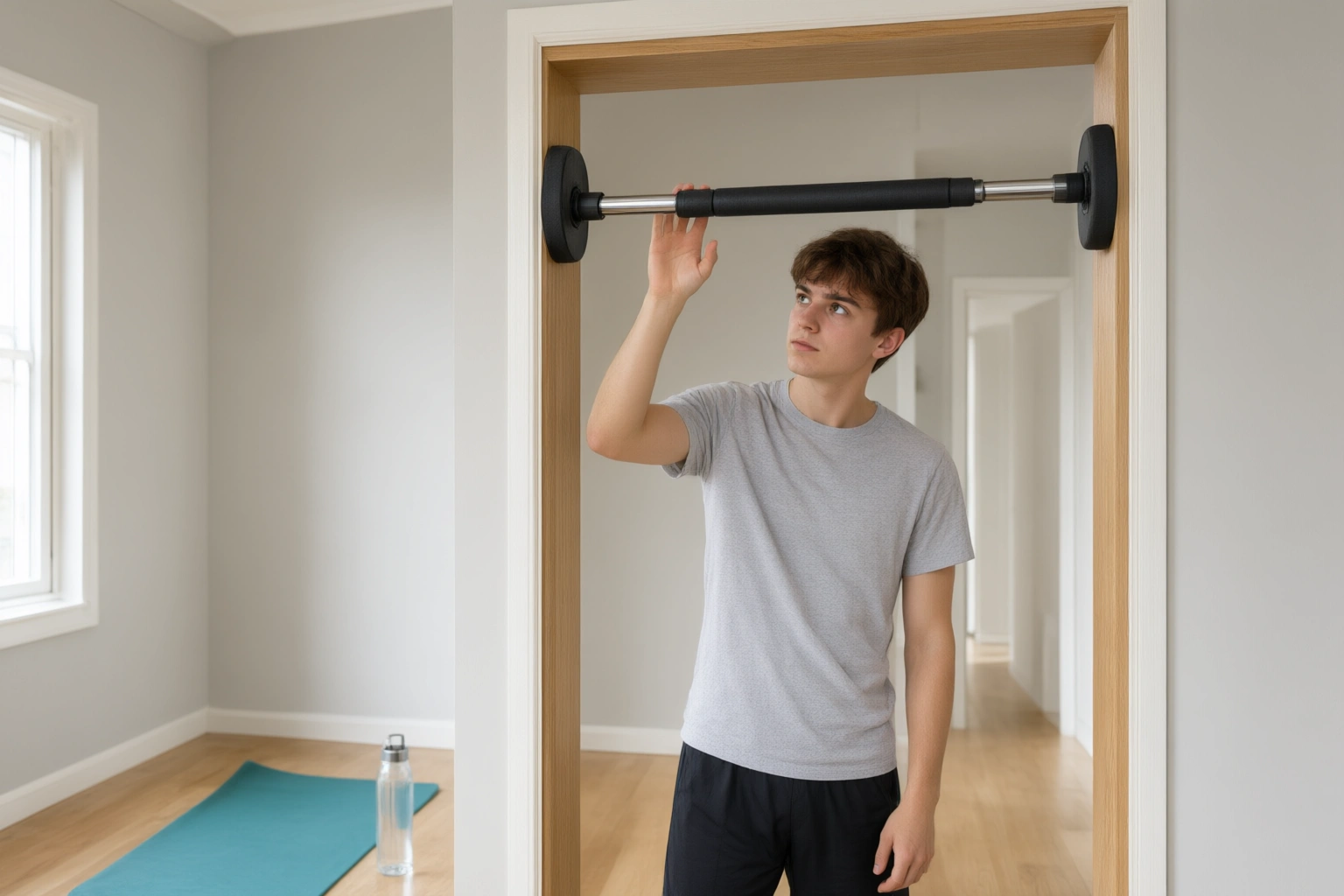
If you want a simple answer: yes, a door pull up bar can be safe for controlled home use in the right doorway. But if the frame is weak, the trim is loose, the bar is installed wrong, or you plan to do dynamic movements, the risk goes up fast. That’s why this guide focuses on practical checks, not vague reassurance.
For a broader setup mindset, it helps to keep a home gym safety checklist nearby and to review common home gym safety mistakes before adding any hanging equipment.
Are Door Pull Up Bars Safe? A Simple Answer for Beginners
Safe enough for the wrong doorway? No. Safe enough in a solid, compatible doorway with controlled use? Often yes.
That’s the useful way to think about it. A door pull up bar is not a single thing. Some models hook over the frame and rely on leverage. Others sit in the doorway with pads pressing against the jamb and trim. Screw-mounted versions anchor into the structure more like a permanent fixture. Those differences matter because they change how force gets transferred into the house.
BodySpec’s guidance is practical here: doorway bars are best for occasional, controlled workouts, while swings and kipping can mark or stress the trim. That lines up with what most beginners should do anyway. If your goal is strict pull-ups, chin-ups, or dead hangs, a doorway bar may fit. If your goal is explosive calisthenics, it usually is the wrong tool.
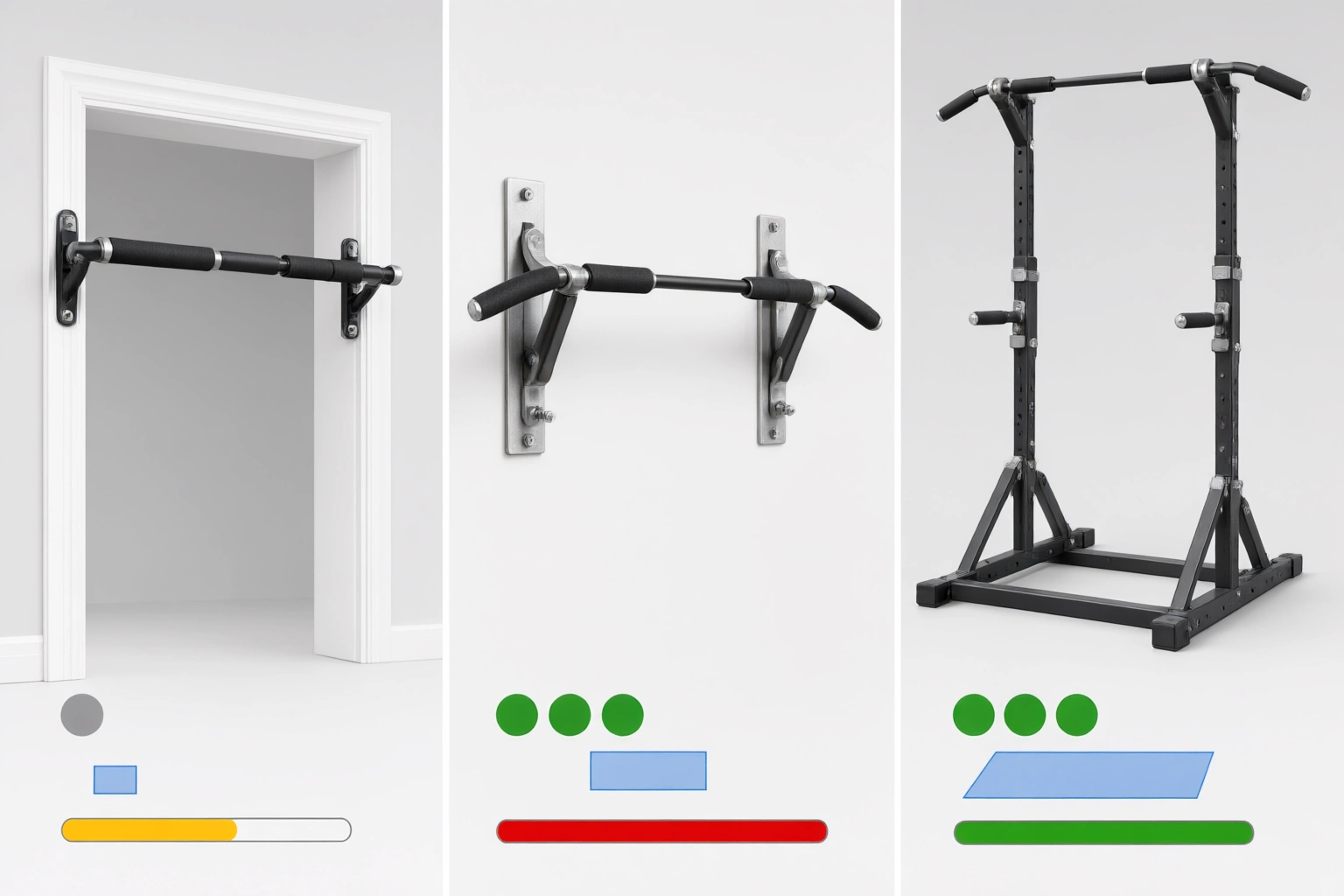
A quick decision rule
Use a doorway bar only if all three are true:
- The doorway is solid and undamaged
- The bar fits exactly as the manufacturer says
- You can use it without swinging, jerking, or forcing the movement
If any of those fail, pick another option.
How Door Pull Up Bars Work
Most doorway bars do not “hang” from the door like a coat hook. They work by pressing against the doorway in a way that creates friction, leverage, or both.
A leverage-style bar typically uses the door frame as a brace point. Your bodyweight creates downward force, and the bar transfers that force into the sides and top of the doorway. That means the shape and strength of the frame matter a lot. If the trim is decorative, weak, or loose, the bar may still fit but not hold securely.
An over-the-door style bar may rely on hooks or contact points that rest over the top of the frame. These can be convenient, but they still need proper clearance and a frame that can handle the load without crushing trim or shifting.
Screw-mounted bars work differently. They are fixed into structural material, usually with hardware that should be anchored into studs or solid framing, not just drywall. They are usually more stable, but they are less renter-friendly and less forgiving if installed badly.
Consumer Reports notes that doorway bars can be a useful space saver, which is exactly why they’re so popular in small home gyms. The trade-off is simple: less space and lower cost usually means more dependence on the doorway itself.
Which Type of Door Pull Up Bar Is Safest?
Here’s the practical comparison.
| Type | Safety trade-off | Installation | Damage risk | Best for |
|---|---|---|---|---|
| Leverage-style | Convenient, but depends heavily on doorway shape, frame depth, and whether the contact pads sit on structural jamb surfaces | Usually tool-free | Moderate if trim is weak or the bar shifts | Beginners with a solid doorway and controlled reps |
| Over-the-door | Simple and compact, but can be sensitive to frame dimensions and may load the top edge and trim more directly | Usually tool-free | Moderate | Light, controlled use in compatible doorways |
| Screw-mounted | Generally more secure if anchored correctly | Requires drilling and proper hardware | Lower during use, but permanent holes | Users who want a more stable setup and can modify the space |
If you want the safest doorway option without drilling, a leverage-style bar with broad contact pads and a good lock mechanism is often the best starting point. Wirecutter reported that the FitBeast Adjustable Pull Up Bar has two large rectangular pads and safety locks on both slides for extra security, but also noted that the pads slipped somewhat in some test doorways. That’s a good reminder that even a well-made bar still depends on fit.
If your main concern is stability over convenience, screw-mounted usually wins. If your main concern is avoiding holes, a no-drill bar may be the better compromise, but only if the doorway is a good match.
Can Your Door Frame Support a Pull Up Bar?
This is where beginners need to slow down. The frame has to be more than “strong enough in theory.” It needs to be the right shape, in good condition, and able to take load at the points where the bar actually touches.
Check the doorway, not just the box
Look at four things:
-
Door jamb and header condition
The wood should be solid, not cracked, soft, swollen, or visibly damaged. -
Trim
Trim is not the same thing as structure. If the bar presses hard on decorative trim, that’s a warning sign, not a bonus contact point. -
Drywall nearby
Drywall is not a load-bearing anchor for a doorway bar. If the setup depends on drywall to stay in place, stop. -
Fit and clearance
The bar should sit exactly as the manufacturer intended. If the frame is too shallow, too thick, too narrow, or oddly shaped, the bar may never seat correctly.
A more concrete pass/fail check helps here:
- Pass: The bar bears on solid jamb or header surfaces, the trim is clearly decorative, and the frame depth matches the product’s required dimensions.
- Fail: The bar sits mostly on trim, the jamb feels hollow or soft, the header area is shallow or uneven, or the product needs a shape the doorway does not have.
- Stop and choose another option: The doorway is damaged, patched, swollen, heavily painted over, or you cannot tell whether the contact points are structural.
Older homes and rentals deserve extra caution. In both cases, you may not know how the frame was built, whether prior repairs weakened it, or whether the trim is hiding a problem. A doorway can look fine and still flex under load.
If you rent, it is reasonable to ask the landlord before using a no-drill bar, especially if the frame is older, painted over, or already showing wear. If the answer is unclear or the doorway is questionable, a non-door solution is the safer choice.
A simple rule: if the bar causes visible compression, shifting, or creaking before you even start a rep, the doorway is telling you something useful.
Weight Limits: What the Number Means and What It Does Not Mean
The listed weight capacity matters, but it is not the full story.
Manufacturers usually give a maximum load number, but that number may not reflect every real-world use case. It may assume a centered load, controlled movement, and a properly fitting doorway. It may also be based on static weight rather than the extra force created when you swing, kick, or drop into the hang.
That’s why a 250-pound rating does not mean “safe for any 250-pound person in any doorway doing any movement.” It means the bar has been rated under certain conditions. Your doorway may be weaker than the bar. Your movement may be more aggressive than the test condition. The real safe limit is the lower of the bar’s rating and the doorway’s practical ability to hold it.
Dynamic movement can also increase the force on the setup beyond your bodyweight alone, sometimes enough to matter even when the static number looks fine. The exact increase depends on the movement, speed, and how you load the bar, so it is better to think in terms of added force rather than a precise multiplier.
GORNATION’s buying guide also makes the right point: check maximum load capacity, grip options, comfort, available space, ease of installation, and your usage goals. In other words, capacity is one factor, not the whole decision.
A practical margin rule
If your bodyweight is close to the bar’s stated limit, the setup deserves more caution. If you plan to use a dead hang only, that is one thing. If you plan pull-ups with a little swing, the load changes. If you are a beginner, choose more margin, not less.
How to Install a Door Pull Up Bar Correctly
The safest installation is the one that follows the manufacturer’s instructions exactly. That sounds obvious, but it’s where a lot of failures happen.
Before installation
- Read the full manual
- Confirm the doorway dimensions match the product
- Check that the frame is solid and undamaged
- Make sure the contact pads or hooks will sit on structural surfaces, not just trim
During installation
- Center the bar exactly as directed
- Keep it level
- Tighten any adjustable parts fully
- Engage safety locks if the model includes them
- Do not “make it work” if the fit is awkward
Wirecutter’s review of the FitBeast bar is useful here because it shows both sides of the story: sturdy construction and easy installation on one hand, but some slipping in test doorways on the other. That means installation can be correct and still not be good enough for a particular doorway.
If the bar requires screws, use the correct fasteners and anchor into studs or solid framing, not drywall. If you are not sure what is behind the wall, that is a good moment to stop and reassess.
First-Use Safety Check Before Your First Rep
Do not go straight into a full pull-up. Test the setup first.
Use this beginner checklist
-
Visual check
Confirm the bar is level, seated correctly, and not pressing oddly on trim. -
Hand pressure test
Push down firmly with your hands while standing on the floor. Look for shifting or slipping. -
Partial hang
Put a small amount of bodyweight on the bar before committing to a full hang. -
Listen closely
Creaking, popping, or scraping is a stop signal. -
Recheck after the first few reps
If anything moved, even a little, stop and inspect the frame.
A stable setup should feel boring. That’s the goal. No movement, no sudden shifts, no visible compression that gets worse with each rep.
Warning Signs the Bar or Doorway Is Not Safe
Stop immediately if you notice any of these:
- The bar shifts when you load it
- The pads slide or lose contact
- The frame creaks or flexes
- The trim compresses or starts to separate
- The bar feels different rep to rep
- The doorway leaves new dents, cracks, or paint damage after use
BodySpec specifically advises inspecting the frame regularly and avoiding dynamic moves. That’s good advice because failure often starts as a small change, not a sudden collapse.
If the bar felt secure yesterday but feels loose today, treat that as a real problem. Don’t wait for it to get worse.
How to Protect the Door Frame, Trim, and Wall
If you rent, or if you care about keeping the doorway looking good, protection matters.
Use the right contact points
Broad, grippy pads are better than narrow hard edges because they spread pressure over a larger area. That doesn’t make a bar magically safe, but it can reduce concentrated stress on the frame. Avoid setups that rest heavily on decorative trim or depend on drywall.
Keep the movement controlled
The more momentum you create, the more force the doorway has to absorb. That is why strict reps are safer than swings or kipping. A dead hang is also easier on the setup than a fast, bouncing rep.
Inspect after use
Check for fresh dents, paint transfer, trim compression, or loosened hardware. Small cosmetic marks can be the first sign that the setup is stressing the doorway more than it should.
For a renter, that matters twice: once for safety, and once for the deposit.
Safe Pull Up Use Tips for Beginners
If the bar passes the setup test, use it in the safest way possible.
- Stick to strict pull-ups or chin-ups
- Keep your body still
- Avoid swinging your legs
- Do not kip
- Do not jump into the bar with force
- Use smooth reps and controlled lowering
Consumer Reports notes that pull-ups, chin-ups, and dead hangs can help build upper back and grip strength. That’s useful, but the exercise only stays appropriate for the doorway if the movement stays controlled.
Think of the bar as a precision tool, not a playground bar. The goal is steady force, not explosive force.
When You Should Not Use a Doorway Pull Up Bar
Some situations are simply not a good fit.
Do not use a doorway bar if:
- The frame is cracked, soft, or damaged
- The trim is loose or decorative rather than solid
- The setup depends on drywall
- The bar does not fit the doorway exactly as instructed
- The bar shifts during test use
- You want to do kipping, swinging, or other dynamic movements
- The home is an older property with uncertain framing and the doorway feels questionable
- You are renting and the doorway condition is unclear enough that you would need to guess about the frame
This is where “safe enough” becomes “not worth it.” If you have to force the fit or keep telling yourself it seems okay, that’s usually the wrong doorway.
Safer Alternatives for a Small Home Gym
If the doorway is a poor match, you still have options.
Wall-mounted pull up bar
A wall-mounted bar is usually more stable when it is anchored into solid studs or masonry with the correct hardware. It gives you more confidence and more exercise freedom, but it requires drilling and a suitable wall.
Ceiling-mounted pull up bar
This can be very secure when installed properly, but it depends on ceiling structure and proper anchoring. It’s not a casual no-drill solution.
Freestanding pull up tower
A tower avoids doorway damage and doesn’t depend on trim or frame shape. The trade-off is space and usually cost. In a tight apartment, it may be too bulky. In a garage or spare room, it can be the safer beginner choice because it does not depend on a specific doorway fit and is generally less likely to damage trim or jambs. If you are unsure about your frame, rent your home, or want the least guesswork, the extra cost and footprint can be worth it.
A simple way to decide: if you want the lowest upfront cost and have a clearly solid doorway, a no-drill bar may work. If you want the most beginner-friendly stability and can spare the space, a freestanding tower is often the safer first buy. BodySpec’s comparison is the useful one here: doorway bars are for occasional, controlled workouts; wall and ceiling bars offer superior stability when anchored correctly. That’s the simplest way to frame the decision.
Quick Buyer and Setup Checklist
Before you buy or use a doorway bar, confirm these points:
- The doorway is solid and undamaged
- The bar type matches your space and your willingness to drill
- The manufacturer’s doorway dimensions match your frame
- The listed load capacity leaves a sensible margin
- The bar has broad, grippy contact points if it is a no-drill model
- You can install it exactly as instructed
- The first test hang shows no slipping, flexing, or creaking
- Your workouts will stay controlled, not dynamic
If any item is uncertain, choose a different pull-up solution.
When to Consult a Personal Trainer
If you are unsure whether your doorway is appropriate, or you want help choosing between a doorway bar, wall-mounted setup, or freestanding tower, a personal trainer can help you think through the safety trade-offs. That is especially useful if you are heavier, returning to exercise after time off, or planning to use the bar for more than basic pull-ups.
A good trainer won’t just talk about exercise form. They can also help you match the equipment to your home, your goals, and your risk tolerance.
FAQs
Are door pull up bars safe?
They can be safe for controlled use in a solid, compatible doorway. They are not a good choice for weak frames, damaged trim, drywall-only support, or dynamic movements.
Will a door pull up bar damage my door frame?
It can, especially if the fit is poor or the frame is weak. Broad contact pads and controlled use reduce the risk, but they do not eliminate it.
How do I know if my door frame is strong enough?
Check for solid wood, no cracking, no soft spots, and no loose trim. If the bar shifts, creaks, or compresses the frame during a test hang, treat that as a warning.
Can I use a door pull up bar on drywall?
No, not as the main support point. Drywall is not a load-bearing anchor for this kind of setup.
What is the safest type of door pull up bar?
For no-drill convenience, a well-fitting leverage-style bar with broad pads and secure locks is often the best doorway option. For maximum stability, a properly installed wall- or ceiling-mounted bar is usually better.
Should I trust the weight rating on the box?
Use it as a starting point, not a guarantee. Real safety depends on the doorway condition, the installation, and how you move on the bar.
When should I choose a different option?
If the doorway is damaged, the fit is poor, the trim flexes, or you want to do swinging or explosive work, choose a wall-mounted, ceiling-mounted, or freestanding option instead.
Can I use dead hangs on a doorway bar?
Only if the bar and doorway pass the stability check and the manufacturer allows that use. A dead hang is still a real load, so test carefully first.
What should I do if the bar starts to slip?
Stop immediately, get off the bar, and inspect the frame and hardware before using it again.
Are screw-mounted bars always safer?
They are usually more secure when installed correctly into studs or solid framing, but poor installation can still make them unsafe.