
Massage Gun vs Foam Roller: Which Helps Recovery More?

Massage gun vs foam roller compared on soreness, mobility, cost, effort, portability and who each suits, plus how to use both in a 10-minute routine.
This article may contain affiliate links. If you buy through them, we may earn a small commission at no extra cost to you. Learn more.
Disclosure: Lilac Reviews is reader-supported. As an Amazon Associate we earn from qualifying purchases, at no extra cost to you. We don’t list prices because they change often; check Amazon for the current price.
Walk into any gym and you’ll see both: someone groaning on a foam roller in the corner, and someone else buzzing their quads with a massage gun. Both promise looser muscles and less soreness. So if you’re only buying one, which should it be?
Here’s an honest look at massage gun vs foam roller: what each one is good at, what the research suggests, how much effort and money each takes, and how to use them together in a short routine.
The short answer
- Choose a foam roller if you’re on a budget, want to cover big areas like your back and quads, and don’t mind getting on the floor.
- Choose a massage gun if you want targeted relief with less effort, travel a lot, or find floor work hard on your wrists, knees or back.
- Use both if you train often: roll big areas first, then use the gun on stubborn spots.
How each one works
Foam roller
A foam roller uses your own body weight. You lie or sit on it and roll slowly along a muscle. It’s a form of self-massage, and studies suggest it can give a short-term boost to range of motion and reduce how sore you feel in the days after hard training. It doesn’t “break up” fascia or flush out toxins. Our guide to foam roller benefits covers what the evidence does and doesn’t support.
Massage gun
A massage gun (percussion massager) taps rapidly into the muscle, usually at 1,700 to 3,200 strokes per minute. Early research suggests similar short-term effects to foam rolling: a feeling of looser muscles and a small improvement in range of motion. The main difference is that you control it with your hand, so you can focus on a small area with very little effort.
Head-to-head comparison
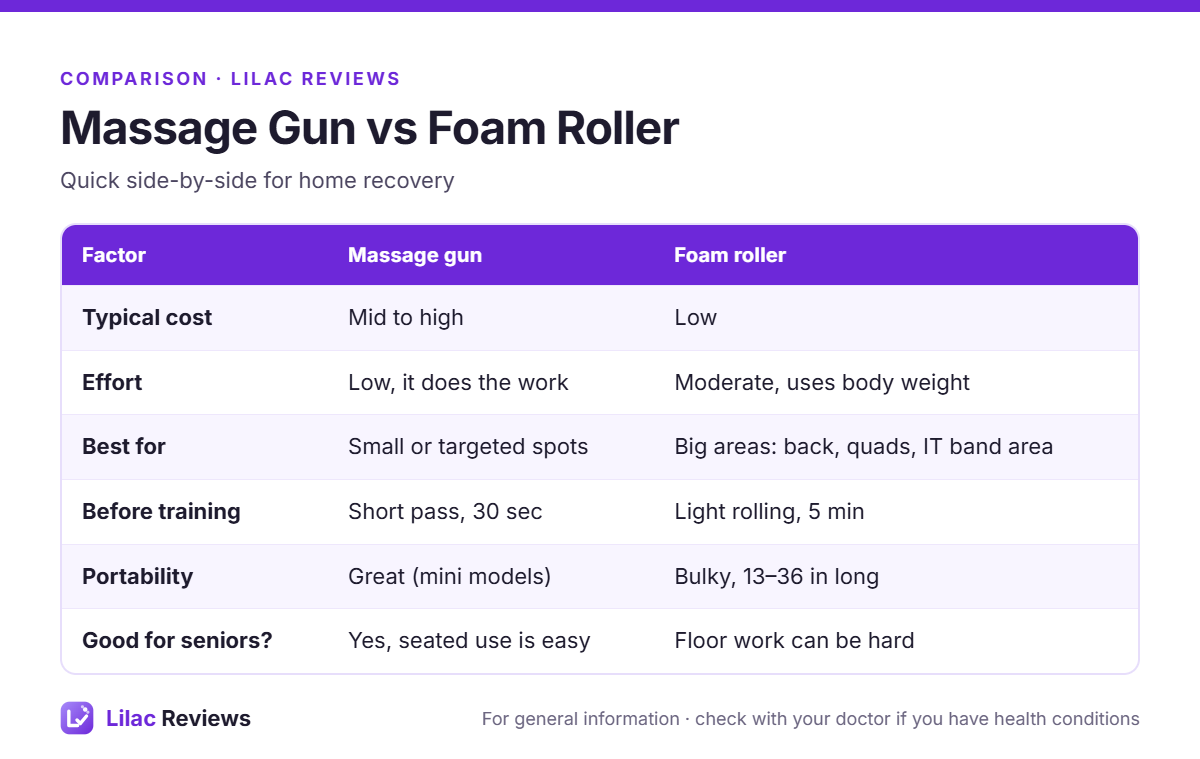
Cost
Foam rollers win easily. A good roller like the TriggerPoint GRID costs a fraction of a premium massage gun. Even budget massage guns cost more than most rollers.
Effort
Massage guns win. Foam rolling your quads means holding a plank-like position and moving your body. That’s a mini workout. With a gun, you sit on the couch and move your hand.
Coverage
Foam rollers win on big areas. Rolling your whole upper back or both quads takes a minute or two. A gun does one small patch at a time.
Targeting small spots
Massage guns win. Calves, forearms, the sides of the neck, the arch of the foot: a gun gets into places a roller can’t. (A massage ball is a cheap middle ground here.)
Portability
Massage guns win, especially minis like the Theragun Mini or Hypervolt Go 2. A full-length roller is bulky, though short travel rollers exist.
Ease for seniors and people with joint pain
Massage guns often win. Getting down onto the floor and supporting yourself on your hands isn’t comfortable for everyone. A gun can be used sitting in a chair. That said, you can foam roll against a wall for your back and calves, which helps a lot.
Our picks for each
Foam roller: TriggerPoint GRID
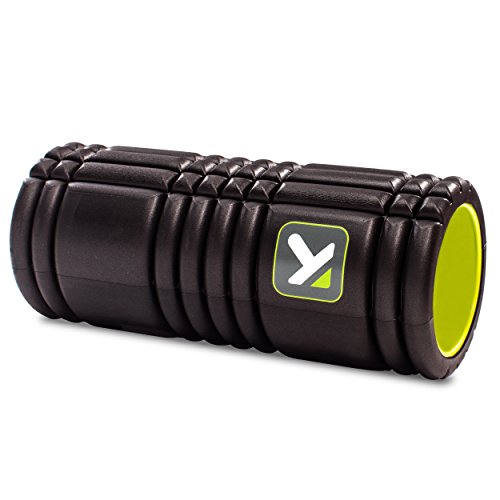
Hollow core, firm, textured and built to last. If it feels too hard, a softer smooth roller is a fine starting point.
Softer budget roller: Amazon Basics high-density roller

Simple, smooth and available in several lengths. A longer one (24 to 36 inches) is easier to balance on for your back.
Massage gun: Theragun Prime
Deep strokes and a handle that reaches your back. For more options, see our best massage guns roundup.
Budget massage gun: Bob and Brad C2

Light, simple and a good way to find out if you’ll actually use a massage gun.
A 10-minute routine using both
- Foam roll big areas (5 minutes): upper back, quads, hamstrings, glutes and calves, about 45 to 60 seconds each, slow and controlled.
- Massage gun on stubborn spots (3 minutes): one or two areas that still feel tight, 30 to 60 seconds each, low speed, keep it moving.
- Light stretching (2 minutes): hold easy stretches for the same areas for 20 to 30 seconds.
Before a workout, keep it shorter: 30 seconds per area and finish with a proper warm-up. For step-by-step technique with the gun, see how to use a massage gun after a workout.
Safety notes for both
- Avoid rolling or using a gun directly on the spine, joints, bones or the front of the neck.
- Skip fresh injuries, bruises, swelling and areas with numbness.
- Ask your doctor first if you have osteoporosis, a bleeding disorder, take blood thinners, are pregnant, or have a history of blood clots.
- Discomfort is fine; sharp pain is not. Back off.
FAQ
Is a massage gun better than a foam roller?
Not better, just different. A massage gun is easier and more targeted; a foam roller is cheaper and covers big areas faster. Results on soreness and flexibility look similar.
Can a massage gun replace a foam roller?
For many people, yes, especially if floor work is hard. But a roller is still the quickest way to work your whole back and both legs.
Which is better for seniors?
A light massage gun used while seated is often easier. Wall rolling with a foam roller is a good alternative.
Should I foam roll or use a massage gun before or after a workout?
Both are fine. Keep it brief before training and a little longer after.
Bottom line
If money is tight, start with a foam roller. If you want ease, targeting and portability, get a massage gun. If you train most days, the combination is hard to beat.
This article is for general information and is not medical advice.
This guide is for general information only and is not medical advice. Talk to a qualified professional before starting a new exercise program, especially if you have an injury or health condition.