
TriggerPoint GRID Foam Roller Review: Still the Best Hollow-Core Roller?

TriggerPoint GRID foam roller review: 13 inch hollow core, firm density, textured zones, who will find it too hard and how it compares with cheaper rollers.
This article may contain affiliate links. If you buy through them, we may earn a small commission at no extra cost to you. Learn more.
As an Amazon Associate, we earn from qualifying purchases. If you buy through a link on this page we may earn a small commission at no extra cost to you. It never changes what we write.
Foam rollers look like they should all be the same. They aren’t. Density, texture and the core inside change how a roller feels, how long it lasts, and whether you actually want to use it.
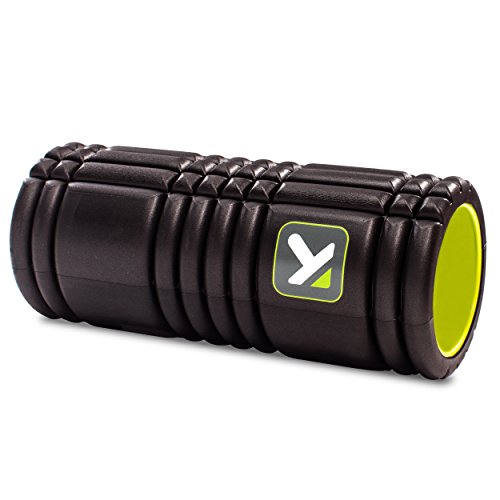
The TriggerPoint GRID is one of the best-known rollers on the market: a hard hollow core wrapped in textured EVA foam, short enough to toss in a bag. Here is how it holds up on paper and who it suits.
The short version
The GRID is a firm, durable roller that keeps its shape far better than cheap solid-foam rollers. The textured surface and compact 13-inch length make it great for legs, glutes and travel. If you are new to rolling or bruise easily, it may feel intense at first, and the short length makes upper-back rolling a little fiddly.
- Best for: regular exercisers who want a firm roller that won’t flatten over time.
- Skip it if: you want a soft, gentle roller or a long roller for lying lengthwise along your spine.
- Standout spec: hard hollow core rated for up to 500 lb.
How we put this review together
We did not run a long-term lab test on this one, and we are not going to pretend we did. This review of the TriggerPoint GRID is built from published specifications and independent reviews from established fitness publications. Where sources disagree on a number, we say so. Prices change constantly, so we don’t list them here; check the current price on Amazon before you buy.
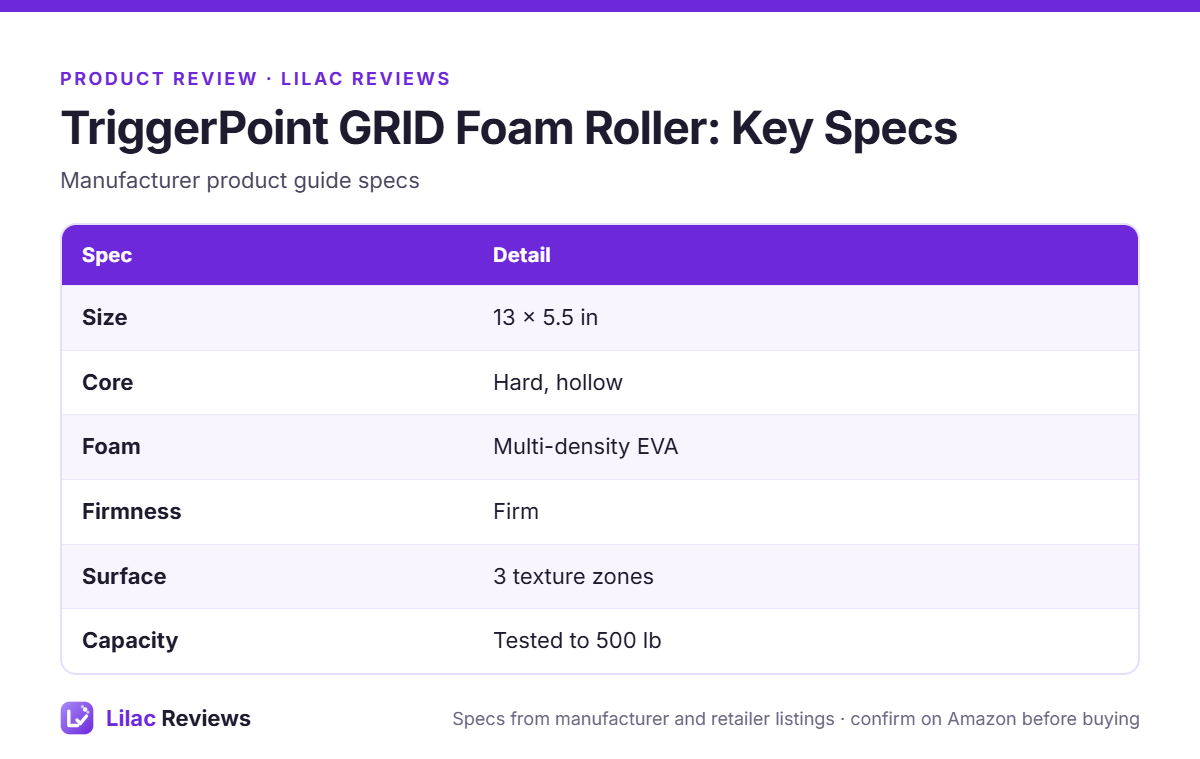
TriggerPoint GRID Foam Roller specs at a glance
| Spec | Detail |
|---|---|
| Length | 13 inches |
| Diameter | 5.5 inches |
| Core | Hard, hollow core |
| Foam | Multi-density EVA foam |
| Firmness | Firm |
| Surface | Three textures: high/firm, tubular and low/flat zones |
| Weight capacity | Tested to 500 lb (per product guide) |
What we like about the TriggerPoint GRID
It doesn’t go flat
Cheap white foam rollers often develop a flat spot after a few months. The GRID’s rigid hollow core stops that from happening, so it rolls the same on day 300 as on day one. That durability is the main reason people pay more for it.
Texture that does something
The surface has three zones: raised firm blocks, tube-like ridges and flatter areas. In practice you can shift your body slightly to choose a firmer or gentler contact without changing rollers.
Compact enough to travel
At 13 inches long it fits in a carry-on or gym bag, and the hollow core lets you stuff socks or a small band set inside. For people who train while traveling, this is a genuine advantage over 36-inch rollers.
Simple and versatile
Quads, hamstrings, calves, glutes, IT band area and upper back are all straightforward. Our guide to foam roller benefits covers what rolling can and can’t do for recovery.

What could be better
Firm can mean uncomfortable for beginners
If you’ve never rolled before, a firm roller can feel like too much on tight calves or the outside of the thigh. Start with less body weight on the roller, supporting yourself with your hands and the other leg.
Short length limits some moves
Lying lengthwise along your spine for chest-opening stretches needs a longer roller. Rolling both legs at once is possible but less stable than on a 36-inch roller.
Pricier than basic foam
You can buy a basic roller for a lot less. You’re paying for durability and texture, which is worth it only if you will roll regularly.
Pros and cons
Pros
- Rigid core keeps its shape
- Three texture zones on one roller
- Travel-friendly 13″ size
- Tested to 500 lb
Cons
- May be too firm for beginners
- Short for spine-length stretches
- Costs more than basic rollers
Who should buy the TriggerPoint GRID (and who shouldn’t)
Buy the GRID if you lift, run or play sport several times a week and want a roller that will last years. It is also a strong pick if you travel and want to roll in a hotel room.
Skip it if you just want a gentle, occasional roll for stiffness, or if you need a long roller for stretches along your back. A softer, longer roller is kinder for that.
How to roll without overdoing it
Roll slowly, about an inch per second, and spend 30 to 60 seconds on each area. Breathe normally. Pain that makes you hold your breath means too much pressure.
Avoid rolling directly on joints, the lower back and the front or side of the neck. If you have a medical condition, a clotting disorder, or you are not sure whether rolling is safe for you, ask your doctor or physical therapist first.
Alternatives to consider
- Hyperice Hypervolt Go 2: a compact massage gun for targeted spots a roller struggles to reach.
- Theragun Mini (3rd Generation): an even smaller percussion option for travel and quick sessions.
- Gaiam Essentials 10mm Fitness Mat: a thick mat makes floor rolling more comfortable on hard floors.
FAQ
Is the TriggerPoint GRID too hard for beginners?
It is firm. Many beginners manage by putting less weight on it at first. If you bruise easily, start with a softer roller.
How big is the GRID?
It is 13 inches long with a 5.5 inch diameter.
How much weight can it hold?
TriggerPoint’s product guide says it is tested for up to 500 lb.
Can I foam roll my lower back?
Most guides advise against rolling directly on the lower spine. Work the glutes and upper back instead.
Bottom line
If you roll more than once a week, the TriggerPoint GRID is worth the extra money over basic foam. It stays firm, travels well and gives you a few textures in one tool. Beginners who want something gentle should look softer first.
This guide is for general information only and is not medical advice. Talk to a qualified professional before starting a new exercise program, especially if you have an injury or health condition.