
Best Recumbent Bikes for Seniors: Safe, Comfortable Picks for Home

The best recumbent bikes for seniors: step-through frames, supportive seats and gentle magnetic resistance, plus models with arm handles and a simple checklist before you buy.
This article may contain affiliate links. If you buy through them, we may earn a small commission at no extra cost to you. Learn more.
As an Amazon Associate, we earn from qualifying purchases. If you buy through a link on this page we may earn a small commission at no extra cost to you. It never changes what we write.
A recumbent bike is one of the easiest pieces of cardio equipment for older adults to use safely at home. You sit in a real chair with a backrest, your legs push forward instead of down, and there is nothing to balance on. Getting on and off is as simple as stepping through a low frame and sitting down.
This guide explains what makes a recumbent bike senior-friendly, then walks through models that fit different needs and budgets.
Why recumbent bikes suit seniors
- Back support: the reclined seat takes pressure off the lower back.
- No balance needed: you are seated the whole time, which lowers fall risk.
- Low impact: smooth pedaling is easy on knees and hips.
- Easy to start light: magnetic resistance can begin almost at zero.
The CDC recommends that adults 65 and older aim for 150 minutes of moderate activity a week, plus strength and balance work. Twenty to thirty minutes on a recumbent bike most days covers the cardio part comfortably.
What to look for
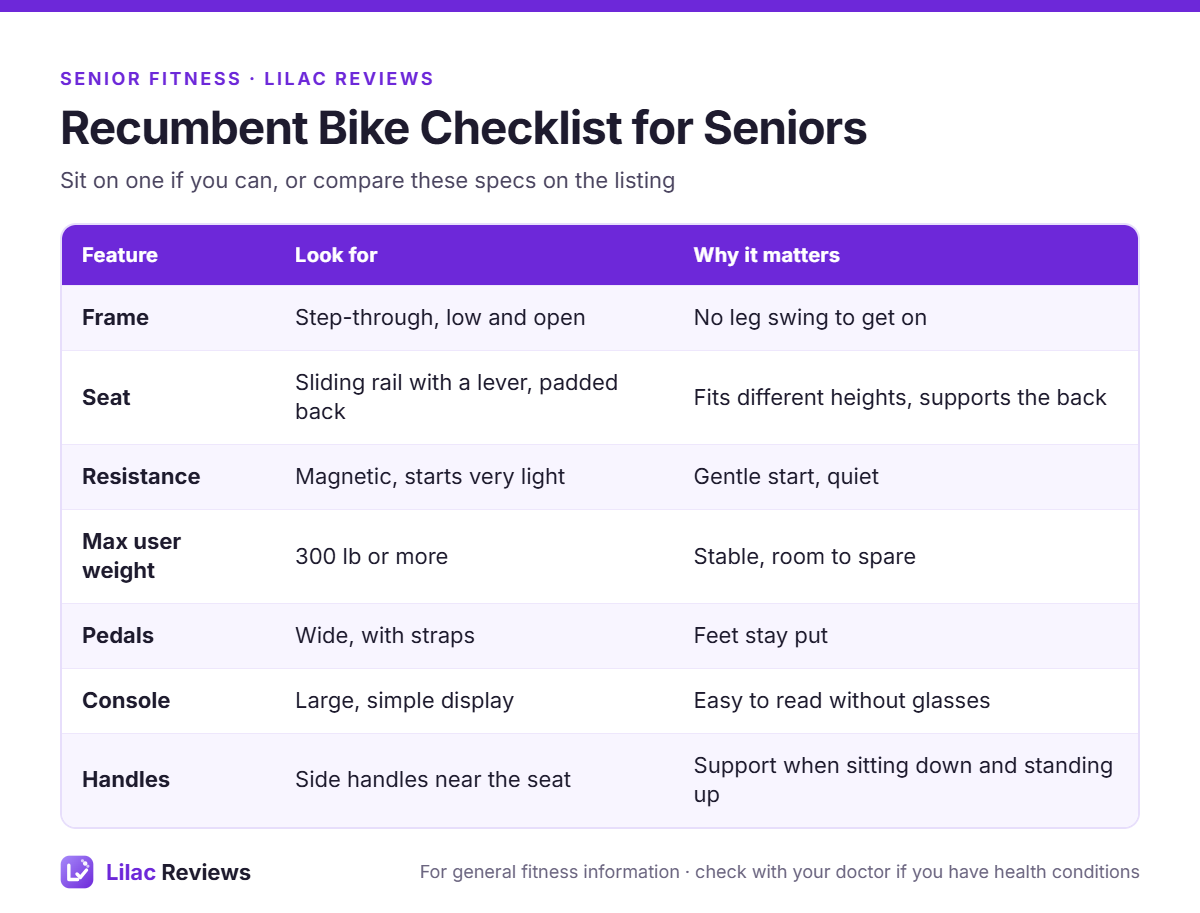
Step-through frame
The lower and more open the frame between the seat and the pedals, the easier it is to get on. You should not have to lift a leg over anything.
Seat adjustment you can reach
The seat slides on a rail to fit your leg length. Look for a lever you can reach while seated, so you do not have to get off, adjust, and climb back on. A tall, padded backrest is more comfortable than a short one for longer rides.
Magnetic resistance with a light start
Magnetic resistance is quiet and smooth, and it rarely needs maintenance. The first level should feel almost effortless. That gives you room to warm up and to ride on days when your joints feel stiff.
Max user weight and stability
A higher weight rating generally means a sturdier frame. Aim for at least 50 lb above your body weight. The bike should not rock when you sit down hard.
Pedals, console and handles
Wide pedals with adjustable straps keep feet from slipping. A large, backlit display is easier to read. Side handles near the seat help you lower yourself down and stand back up.
The best recumbent bikes for seniors
We have not lab-tested these bikes ourselves. Picks are based on published specifications and consistent feedback from independent reviewers and owners. Specs can change between model years, so confirm details on the current listing.
Best overall: Schwinn 230 Recumbent Bike
The Schwinn 230 has been a go-to home recumbent bike for years. It offers 16 resistance levels, 13 programs, a sliding seat with a lever and a 300 lb user rating. It is simple to use and quiet. Our Schwinn 230 review covers the seat comfort and console in detail.

Best for more programs and comfort: Schwinn 290 Recumbent Bike
The 290 is the step-up model. It adds more resistance levels (25), many more workout programs and a more advanced console with Bluetooth for app tracking. The seat and frame design are similar, so it is just as easy to get on. It suits people who like variety and plan to ride most days.
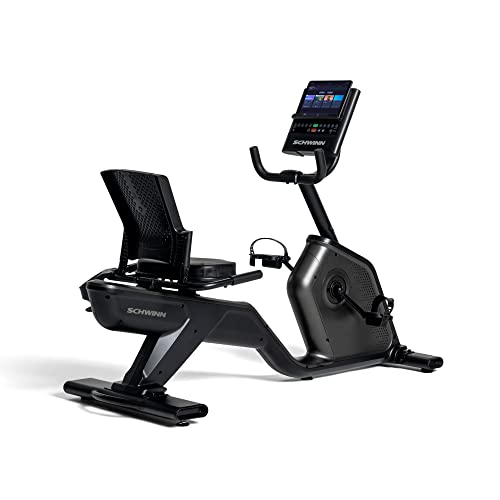
Best budget pick: Marcy ME-709 Recumbent Bike
The Marcy ME-709 is a basic, low-cost recumbent bike with eight levels of magnetic resistance, a simple LCD display and a 300 lb user rating. It does not have programs or apps, but for easy daily pedaling while watching TV, many owners find that is all they need. The seat is more basic than Schwinn’s, so a cushion helps on longer rides.
Best with arm exercise: Teeter FreeStep Recumbent Cross Trainer
If you want to move your arms too, a recumbent cross trainer is worth a look. The Teeter FreeStep works like a seated stepper: your legs press forward and back while the handles move with them. It is low impact like a recumbent bike, but it brings the upper body into the workout and feels closer to the seated machines used in rehab clinics.
Smallest option: an under-desk bike
If a full recumbent bike will not fit, a compact pedal bike placed in front of a sturdy armchair gives a similar seated workout. The DeskCycle 2 is a popular choice. It is lighter and smaller, so make sure the chair does not roll.

How to set up a recumbent bike correctly
- Sit all the way back in the seat.
- Slide the seat so your knee is slightly bent, not locked, when the pedal is furthest away.
- Tighten the pedal straps so your whole foot is on the pedal.
- Start on the lowest level for five minutes before adding resistance.
If your knee feels pinched at the top of each pedal stroke, the seat is too close. If you reach or rock your hips, it is too far.
A simple starting routine
Week one: 10 minutes at an easy level, five days a week. Each week add five minutes until you reach 25 to 30 minutes. Once that feels easy, raise the resistance one or two levels for the middle part of the ride. You should be able to talk in full sentences most of the time. For a full week of activities, see our easy home exercises for seniors.
FAQ
Is a recumbent bike good for bad knees?
It is usually one of the gentlest options because there is no impact and you can keep resistance low. Set the seat so your knee never fully locks or bends too sharply.
Recumbent or upright bike for seniors?
For most seniors, recumbent. It has back support and is easier to get on. Upright bikes take up less space but need more balance and a smaller seat.
How long should a senior ride a recumbent bike?
Start with 10 minutes and build toward 20 to 30 minutes most days, at an effort where you can still talk.
Bottom line
A recumbent bike gives older adults a safe, comfortable way to stay active at home. The Schwinn 230 is the easiest all-round pick, the 290 adds variety, and the Marcy ME-709 keeps costs down. Whichever you choose, focus on a step-through frame, a seat you can adjust while sitting and resistance that starts very light.
Check with your doctor before starting a new exercise routine, especially if you have heart, joint or balance conditions.
This guide is for general information only and is not medical advice. Talk to a qualified professional before starting a new exercise program, especially if you have an injury or health condition.