
How to Use a Massage Gun After a Workout (Step by Step)

Learn how to use a massage gun after a workout: attachments, speed, time per muscle, where never to use it and a quick 5-minute routine.
This article may contain affiliate links. If you buy through them, we may earn a small commission at no extra cost to you. Learn more.
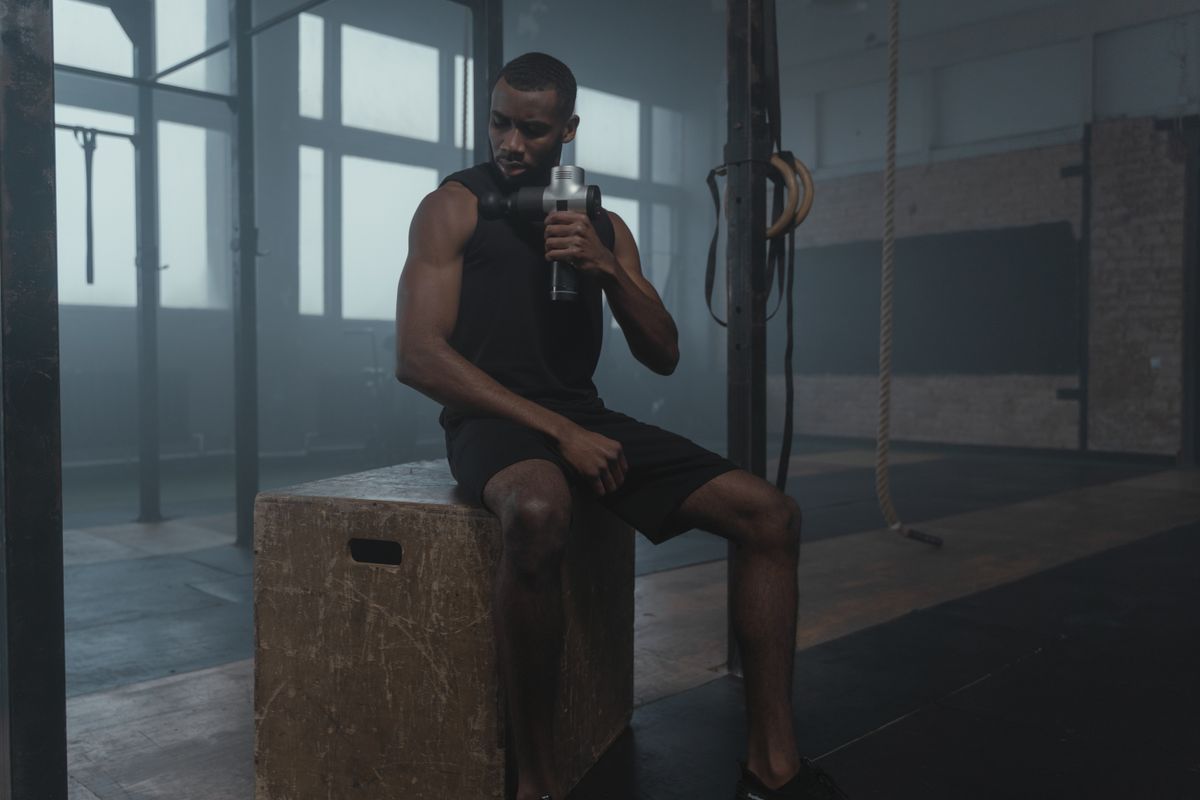
Massage guns went from physical therapy clinics to every gym bag in a few years, and it’s easy to see why. Ninety seconds on a tight quad after leg day just feels good. But most of them come with a tiny instruction leaflet, and a lot of people end up using them too hard, too long, or in places they shouldn’t.
This guide explains how to use a massage gun after a workout, step by step: which attachment to pick, what speed to use, how long to spend on each muscle, and where never to put it.
What a massage gun actually does
A massage gun (percussion massager) taps rapidly into the muscle, usually somewhere between 1,700 and 3,200 times a minute. Most people use it to ease post-workout tightness and to feel looser before training. Research on percussion therapy is still young, but early studies suggest it can help with short-term range of motion and the feeling of soreness, similar to foam rolling. It won’t “flush out lactic acid,” break up scar tissue, or replace sleep and sensible training. Think of it as a tool that helps you feel better, not a medical treatment.
If you already foam roll, our guide to foam roller benefits explains how the two compare. In short: the foam roller is cheaper and covers big areas well, the massage gun is better for targeted spots and easier on your wrists and arms.
Step-by-step: how to use a massage gun after a workout
- Pick the right attachment. Start with the large round or flat head for big muscles. Save the bullet or narrow heads for later, and use them gently.
- Turn it on before it touches your skin, at the lowest speed.
- Float it over the muscle. Let the gun’s own weight do the work. Don’t press hard. Move slowly along the length of the muscle, about an inch per second.
- Spend 30 seconds to 2 minutes per muscle group. Large muscles like quads and glutes can take the longer end; smaller ones like forearms need less.
- Pause briefly on tight spots, no more than 10 to 15 seconds, then move on.
- Increase speed only if it feels comfortable. Many people never need the top settings.
- Keep the total session under about 10 to 15 minutes. More isn’t better.
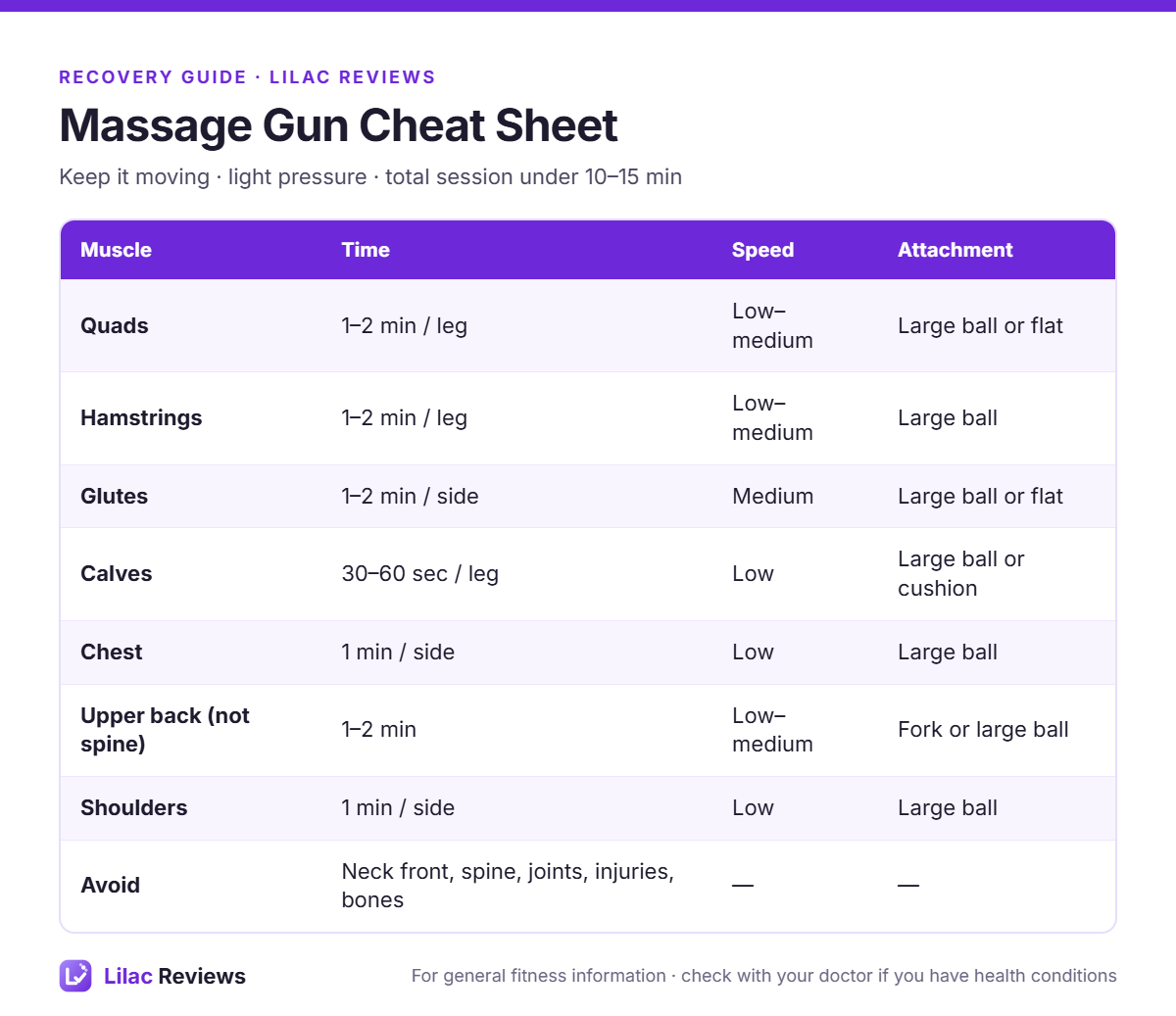
How long and what speed for each muscle
Use this as a starting point and adjust to what feels good. The times are per side unless noted.
Where NOT to use a massage gun
This is the most important section. Avoid:
- Bones and joints: kneecaps, elbows, spine, shins, collarbones, hip bones.
- The front and sides of the neck: major arteries and nerves run there.
- The head and face.
- Injuries: fresh bruises, sprains, strains, open wounds, swollen areas, or anywhere it hurts sharply.
- Varicose veins and areas of numbness.
- The abdomen, particularly with heavier heads or higher speeds.
Don’t use a massage gun at all without medical advice if you have a blood clotting disorder or take blood thinners, have a history of deep vein thrombosis (DVT), are pregnant, have osteoporosis, a pacemaker or implanted device, nerve conditions, or have recently had surgery. A sudden swollen, warm, painful calf is a reason to see a doctor, not to reach for a massage gun. When in doubt, ask your doctor or physiotherapist.
Before vs after a workout
Before training
Use it as part of a warm-up, not instead of one. Thirty seconds on each major muscle you’re about to train at a low or medium speed is enough. Then do your usual warm-up sets or dynamic moves.
After training
Go slower and gentler. One to two minutes per worked muscle group, low to medium speed. If a muscle is very sore the next day, keep the pressure light; hammering a sore muscle tends to make it feel worse.
Attachments explained
- Large ball: general use, big muscle groups. Your default.
- Flat head: dense muscles like quads and chest. Firmer feel.
- Bullet: small, precise areas like the arch of the foot or a knot near the shoulder blade. Use low speed and light pressure.
- Fork (U-shaped): along either side of the spine (on the muscles, never on the bones) and around the Achilles area, gently.
- Cushion or soft head: sensitive areas and anyone new to massage guns.
Common mistakes
- Pressing too hard. If you’re bracing or wincing, back off. Pressure doesn’t equal results.
- Staying in one spot too long. Keep it moving; long, focused hammering can bruise.
- Using it on an injury. Pain that’s sharp, swollen or getting worse needs rest and proper assessment, not percussion.
- Going straight to max speed. Start low and work up only if it feels good.
- Skipping the basics. Recovery mostly comes from sleep, food and sensible training volume. Our guide on how many days beginners should work out covers rest days.
A quick post-workout routine
After a lower-body day: about one minute on each quad, each hamstring and each glute, then 30 seconds on each calf. After an upper-body day: one minute on each side of the chest, one to two minutes across the upper back (not the spine), one minute on each shoulder, then 30 seconds on each forearm. Either routine takes around 6 to 8 minutes. Finish with some light stretching.
Looking after your massage gun
Wipe the attachments after use, charge it fully before storing, and keep it away from heat. Check the head for cracks and replace it if you see any. Store it in its case with your other recovery gear; our home gym organization guide has storage ideas.
FAQ
How long should you use a massage gun on one muscle?
About 30 seconds to 2 minutes per muscle group. Pause on tight spots for no more than 10 to 15 seconds.
Can I use a massage gun every day?
Most healthy people can use one daily for short sessions. If you notice bruising or tenderness, take a break.
Is it better to use a massage gun before or after a workout?
Both are fine. Use it briefly and lightly before training, and more slowly after training.
Can a massage gun help back pain?
It may ease tight muscles around the back, but never use it on the spine itself. Ongoing or severe back pain should be checked by a professional.
This guide is for general information only and is not medical advice. Talk to a qualified professional before starting a new exercise program, especially if you have an injury or health condition.