
Best Yoga Blocks and Straps for Beginners and Stiff Hamstrings

The best yoga blocks and straps for beginners: foam vs cork vs wood, strap length and buckle types, and five easy ways to use them for flexibility.
This article may contain affiliate links. If you buy through them, we may earn a small commission at no extra cost to you. Learn more.
Disclosure: Lilac Reviews is reader-supported. As an Amazon Associate we earn from qualifying purchases, at no extra cost to you. We don’t list prices because they change often; check Amazon for the current price.
If you’ve ever tried a forward fold and found the floor somewhere far below your fingertips, yoga blocks and straps are for you. They’re cheap, simple, and probably the most underrated tools for beginners, people with stiff hamstrings and older adults who want to stretch safely.
This guide covers the best yoga blocks and straps, how foam, cork and wood compare, which strap length to buy, and five easy ways to use them today.
Quick picks
- Best foam block: Gaiam yoga block.
- Best cork block: Manduka cork yoga block.
- Best strap: Gaiam yoga strap.
- Best value set: REEHUT yoga blocks and strap set.
How we chose
We compared materials, sizes, weight and strap buckle types from published specs and looked at owner feedback about grip, firmness and how blocks hold up. We did not lab-test these products.
Why blocks and straps help
A block “raises the floor.” In a standing forward fold or a lunge, resting your hand on a block lets you keep your back straight instead of rounding to reach the floor. Sitting on a block makes cross-legged positions easier on the hips and knees. A strap “extends your arms,” so you can stretch your hamstrings lying on your back without straining your neck or lower back.
For seniors and beginners, that means more comfortable stretching and better balance support. Our easy home exercises for seniors guide pairs well with both.
Choosing a yoga block
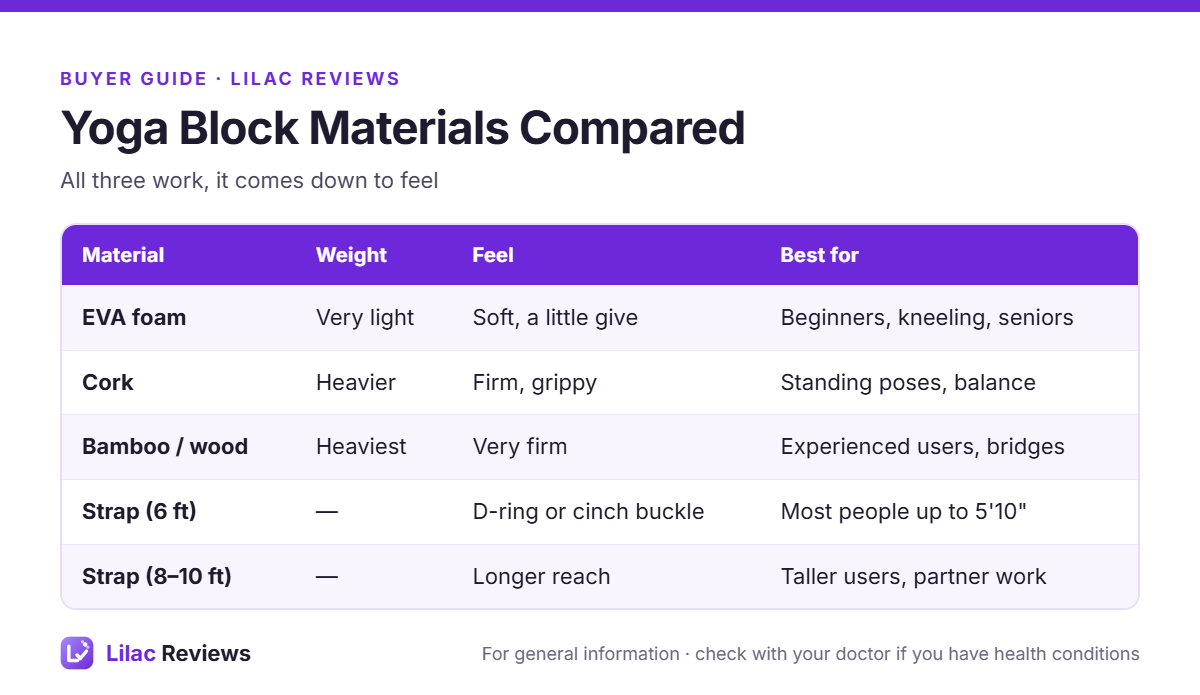
- Foam (EVA): light, soft and inexpensive. Best for beginners, kneeling and sitting on.
- Cork: heavier, firmer and grippier. Feels more stable under your hand in standing poses.
- Bamboo or wood: very firm and heavy. Fine for experienced users, hard on bony hands and knees.
- Size: standard blocks are about 9 × 6 × 4 inches. A 3-inch block is lower and lighter.
- How many: two is ideal, so you can use one under each hand or stack them.
Choosing a yoga strap
- Length: 6 ft suits most people; 8 to 10 ft if you’re tall or want more options.
- Buckle: D-ring buckles are easy to adjust. Cinch (cam) buckles hold more firmly. Some straps have loops instead.
- Material: cotton is soft and grippy; nylon is slicker and dries faster.
The best yoga blocks and straps
1. Gaiam yoga block: best foam block
Gaiam yoga block
Light, soft-edged and affordable. A great first block that’s comfortable to sit on and kind to hands and knees.
2. Manduka cork yoga block: best cork block

Firm, grippy and steady under your hand. Heavier than foam, which some people like for balance poses. It pairs well with the dense mats in our best yoga mats guide.
3. Gaiam yoga strap: best strap

A simple cotton strap with a metal D-ring buckle in a choice of lengths. Easy to adjust and soft in your hands.
4. REEHUT yoga blocks and strap set: best value set
REEHUT yoga blocks and strap set
Two foam blocks and a strap in one box. A sensible starter kit if you want everything at once.
Five easy ways to use blocks and straps
- Supported forward fold: stand with feet hip-width, soften your knees and rest your hands on blocks in front of your feet. Keep your back long. 30 seconds.
- Lying hamstring stretch: lie on your back, loop a strap around one foot and gently straighten the leg toward the ceiling. Keep the other knee bent. 30 seconds per side.
- Seated hip opener: sit on a block with your legs crossed loosely. Raising your hips takes pressure off knees and lower back. 1 minute.
- Supported low lunge: one knee down on a folded mat, hands on blocks either side of your front foot. 30 seconds per side.
- Chest and shoulder stretch: hold a strap wide with both hands and slowly lift it overhead and slightly back, only as far as comfortable. 5 slow repeats.
Move gently, breathe slowly and never force a stretch into pain. If you have hip or knee replacements, osteoporosis or balance problems, check with your doctor or a physical therapist about which positions are safe.
FAQ
Do beginners need yoga blocks?
Not strictly, but they make many poses safer and more comfortable. Most teachers recommend having two.
Foam or cork yoga block?
Foam for softness, light weight and sitting. Cork for a firmer, more stable feel in standing poses.
What length yoga strap should I get?
6 ft for most people. Choose 8 ft or longer if you’re over about 5’10” or want more versatility.
Can I use a towel instead of a strap?
Yes, a long towel or belt works for simple stretches. A strap is easier to adjust.
Bottom line
Two foam blocks and a 6 ft strap cost less than one yoga class and make home stretching much more comfortable. Choose cork if you want a firmer block, and a set if you want everything in one go.
This article is for general information and is not medical advice.
This guide is for general information only and is not medical advice. Talk to a qualified professional before starting a new exercise program, especially if you have an injury or health condition.