
Strength Training for Women Over 50: A 3-Day Home Plan

A 3-day home strength training plan for women over 50 using dumbbells and bands, why lifting matters after menopause, how heavy to go and how to progress safely.
This article may contain affiliate links. If you buy through them, we may earn a small commission at no extra cost to you. Learn more.
Disclosure: As an Amazon Associate, we earn from qualifying purchases. If you buy through a link on this page, we may earn a small commission at no extra cost to you.
After 50, strength training stops being optional extra credit and becomes one of the most useful things you can do for your body. Women lose muscle gradually with age, and bone density can drop faster around and after menopause. Regular resistance training helps you keep strength for everyday life and supports bone health alongside walking and good nutrition.
This strength training plan for women over 50 uses three short home sessions a week with dumbbells, a band and your own body weight.
Why it matters after 50
- Muscle: strength training is the main way to slow age-related muscle loss.
- Bones: weight-bearing and resistance exercise are recommended for bone health. The Bone Health & Osteoporosis Foundation has guidance on exercise for bone health.
- Daily life: stronger legs, hips and back make stairs, gardening, travel and lifting grandchildren easier.
- Guidelines: the CDC recommends muscle-strengthening activity at least two days a week for all adults.
If you have osteoporosis, a history of fractures, or joint problems, ask your doctor or a physical therapist which movements suit you. Some people are advised to avoid heavy forward bending and twisting.
The 3-day plan
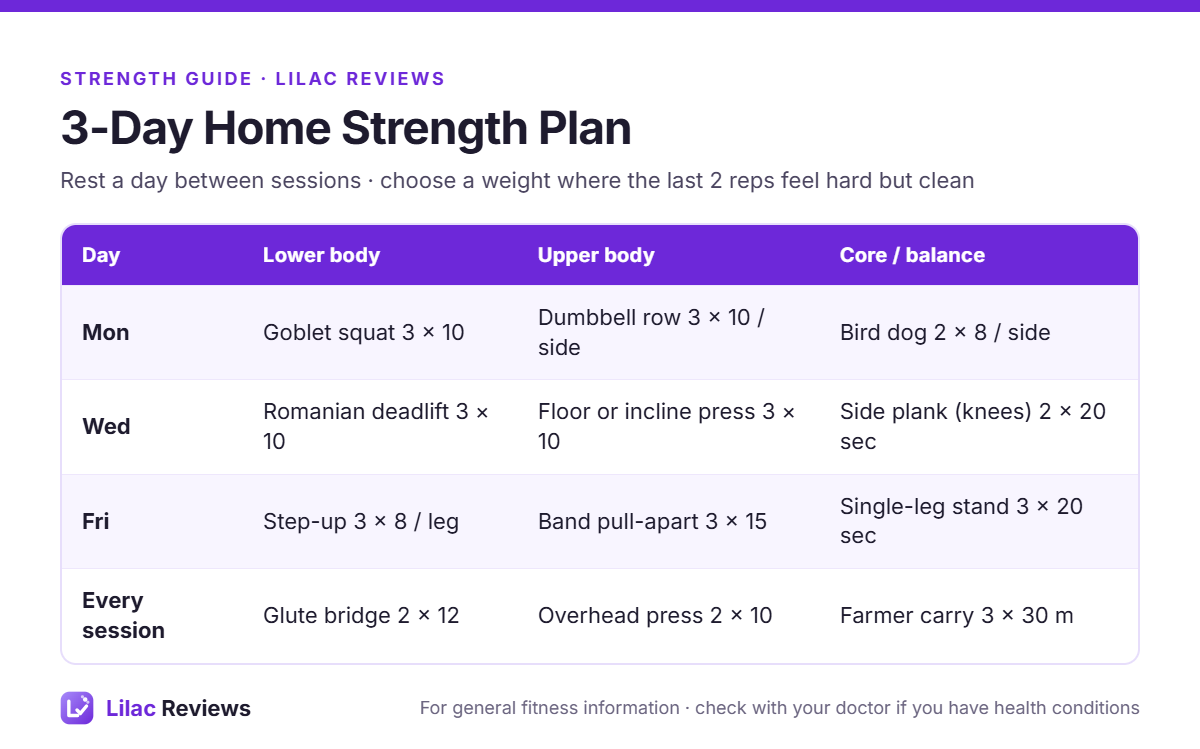
Train Monday, Wednesday and Friday (or any three non-consecutive days). Warm up for 5 minutes first: marching, arm circles, a few bodyweight squats.
Lower body moves
Goblet squat: hold one dumbbell at your chest, feet a little wider than hips, and sit back and down as if onto a chair. Use a chair behind you to control depth at first.
Romanian deadlift: hold dumbbells in front of your thighs, soften your knees, and push your hips back while keeping your back flat, lowering the weights to just below the knees. Stand up by squeezing your glutes.
Step-up: step onto a sturdy step or the bottom stair, holding the rail or light dumbbells.
Glute bridge: lie on your back and lift your hips. Add a dumbbell across your hips when easy.
Upper body moves
Dumbbell row: one hand on a bench or chair, pull the dumbbell toward your hip.
Floor or incline press: lie on the floor or an incline bench and press dumbbells up from chest level.
Band pull-apart: hold a band at shoulder height and pull it apart. Great for posture.
Overhead press: seated or standing, press dumbbells from shoulders to overhead.
Core and balance
Bird dogs, side planks on your knees, single-leg stands and farmer carries train the trunk and balance at the same time.
How heavy should you lift?
Pick a weight where the last two reps of each set feel hard but you can still keep good form. For many beginners that’s 5–10 lb for upper body and 10–20 lb for squats and deadlifts, but it varies a lot. Adjustable dumbbells save space as you get stronger; see our BowFlex SelectTech 552 review.

How to progress
- Weeks 1–2: 2 sets of each exercise, focusing on form.
- Weeks 3–8: 3 sets. When you can do all reps with good form, increase weight a little (2–5 lb).
- Every 8–12 weeks: take an easier week, then keep building.
Keep a simple log; our workout progress guide shows how.
Add weighted walking
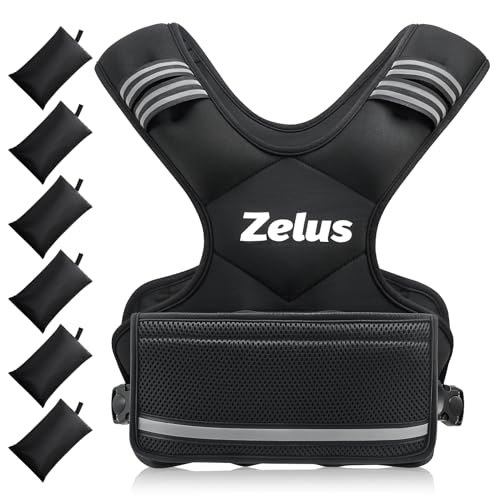
Walking is weight-bearing exercise, and a light weighted vest can add load once walking feels easy. Start at about 5% of your body weight. Our weighted vest guide and ZELUS vest review cover the details.
Common mistakes
- Lifting too light for too long. Bones and muscles respond to a real challenge. Build up steadily.
- Only doing cardio classes. They’re great, but they don’t replace progressive strength training.
- Skipping rest days. Recovery is where strength is built.
- Ignoring protein. Older adults often need more protein to support muscle; talk to your doctor or a dietitian about your needs.
FAQ
Is it too late to start lifting at 50 or 60?
No. Women in their 50s, 60s and beyond can build strength with consistent training.
Will lifting weights make me bulky?
Very unlikely. Building large muscles takes years of heavy training and a calorie surplus. Most women simply get stronger and more toned.
How long should each session be?
30–45 minutes including warm-up is enough.
Can I use resistance bands instead of dumbbells?
Yes, for most exercises. Bands are great at home and for travel, though dumbbells make it easier to add load over time.
Written by the Lilac Reviews Editorial Team. This article is general fitness information, not medical advice. If you have a health condition, recent injury or surgery, talk to your doctor or physical therapist before starting a new exercise routine.
This guide is for general information only and is not medical advice. Talk to a qualified professional before starting a new exercise program, especially if you have an injury or health condition.