
Best Bumper Plates for Home Gyms (and Do You Really Need Them?)

The best bumper plates for home gyms: budget, high-density, colored and urethane plates compared by thickness, bounce, smell and durability, plus whether you need bumpers at all.
This article may contain affiliate links. If you buy through them, we may earn a small commission at no extra cost to you. Learn more.
Disclosure: As an Amazon Associate, we earn from qualifying purchases. If you buy through a link on this page, we may earn a small commission at no extra cost to you.
Bumper plates are the thick rubber plates you see in CrossFit boxes and weightlifting gyms. Because every bumper has the same diameter, a loaded bar sits at the same height for deadlifts, and you can drop it from overhead without wrecking the bar, the plates or the floor. They’re also quieter than iron.
But they’re not the right choice for every home gym. This guide covers when you need bumpers, what the specs mean, and the best bumper plates for a home gym by budget and use.
How we put this guide together: we didn’t lab-test these plates. We compared manufacturer specs (thickness, durometer, weight tolerance, hub material, warranty) and the patterns in verified owner feedback, especially about rubber smell, bounce, hub loosening and cracks. Check the current listing before buying.
Do you need bumper plates?
- Yes, if you do cleans, snatches, jerks or deadlifts you’ll drop, or if noise and floor damage are concerns.
- Probably not, if you only squat and bench in a rack with safeties. Cast iron plates are cheaper and thinner, so you can fit more weight on the bar.
- Mixed approach: many home gyms buy a pair of 45 lb (or 20 kg) bumpers for deadlifts and use iron plates for the rest.
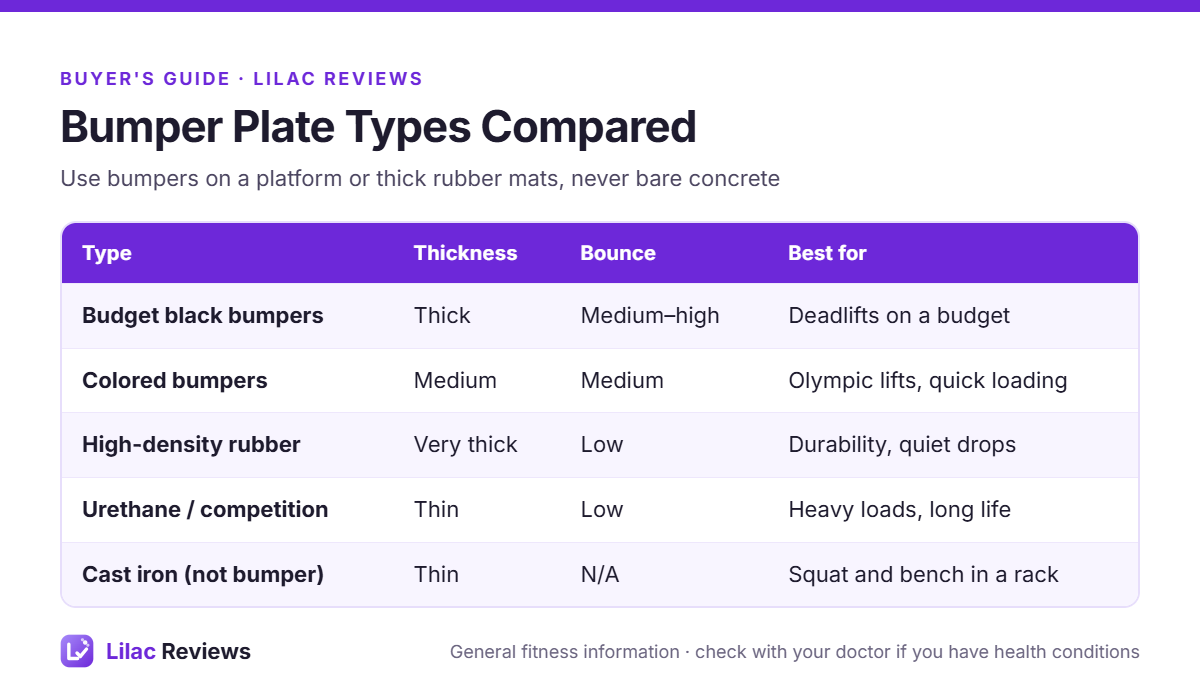
Bumper plate specs, explained
Thickness
Budget bumpers are thick, so a 45 lb plate can be more than 3 inches wide. You may only fit around 300 to 400 pounds on a bar. Thinner, high-density bumpers let you load more.
Durometer (hardness)
Measured on the Shore A scale. Softer plates (around 70 to 80) bounce more. Harder plates (around 85 to 90) bounce less and are usually thinner.
Bounce
Very bouncy plates can send a dropped bar flying. Lower bounce is safer in small rooms.
Hub
The metal insert in the center. A steel or brass hub that’s well bonded to the rubber matters for durability. Loose hubs are a common failure point on cheap plates.
Weight accuracy
Budget plates can be a few percent off. That’s fine for most home lifters.
Smell
Recycled rubber can smell strongly at first. It usually fades over a few weeks with ventilation.
The best bumper plates for home gyms
1. CAP Barbell Olympic bumper plates: best budget bumpers
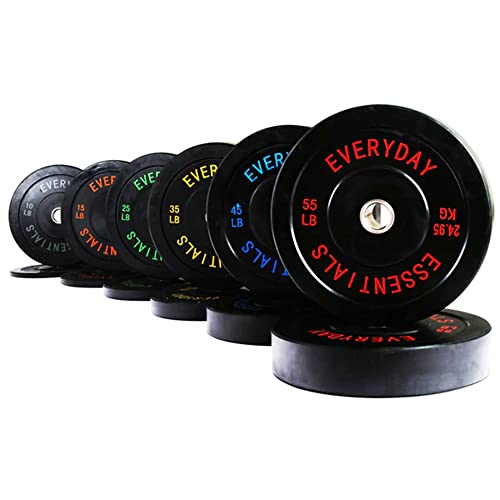
CAP’s bumpers are among the most affordable on Amazon and come in single pairs or sets. They’re a common first purchase for garage gyms.
- Good for: deadlifts and occasional drops on a budget.
- Keep in mind: they’re thick and can be bouncy; budget hubs may loosen with heavy use.

2. Synergee bumper plates: best colored bumpers
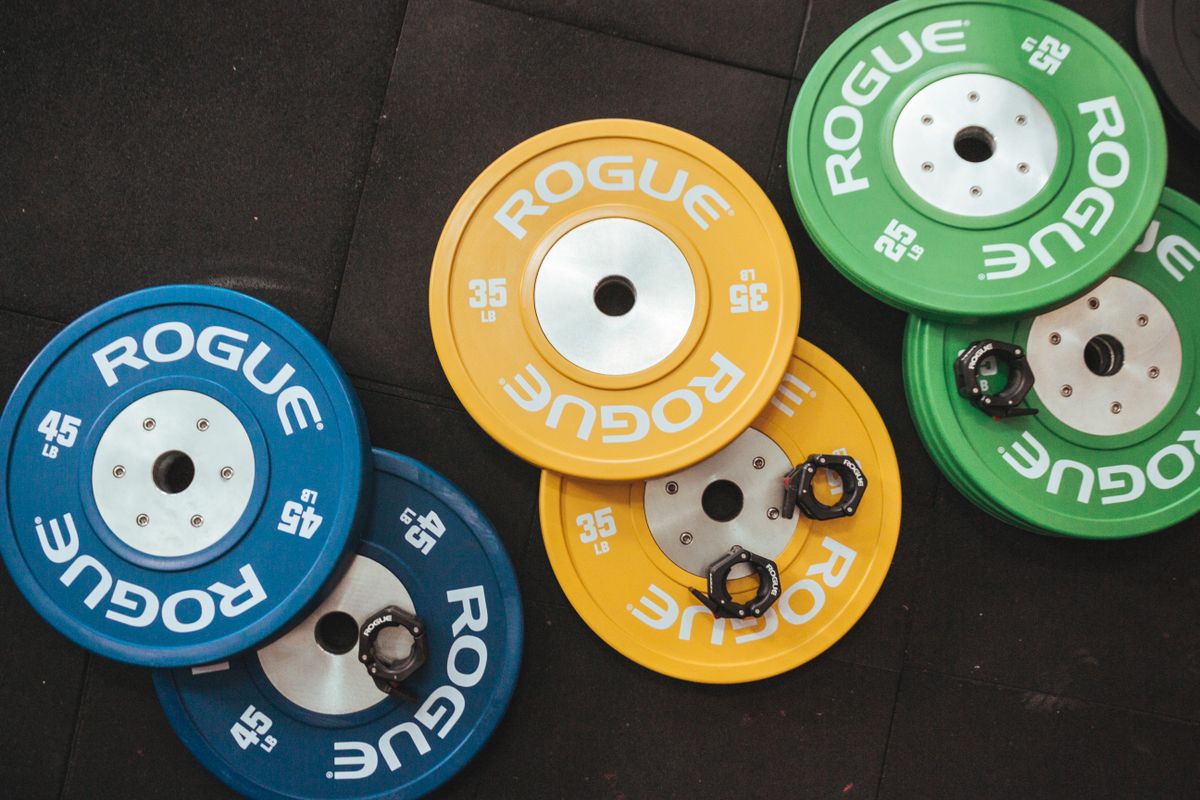
Synergee sells colored bumpers that follow the competition color code (red 25 kg, blue 20 kg, yellow 15 kg, green 10 kg), with steel hubs. Colors make loading quicker and easier to read at a glance.
- Good for: Olympic lifting and CrossFit-style training.
- Keep in mind: colored rubber usually costs more than black.

3. Titan Fitness economy bumper plates: best value set
Titan’s economy bumpers are a straightforward value set with a steel insert and standard 450 mm diameter.
- Good for: people who want a full set without overspending.
- Keep in mind: like most economy plates, they’re on the thick side.

4. High-density or “hi-temp” style bumpers: best for quiet, low-bounce drops
Dense recycled-rubber bumpers are known for being very durable and low bounce. They’re thick, but they take a lot of abuse and stay quiet.
- Good for: garage gyms where durability matters more than how much fits on the bar.
- Keep in mind: they’re very thick and can smell at first.
5. BalanceFrom bumper plate set: best starter set with a bar option
BalanceFrom offers bumper sets that are easy to buy as a bundle. It’s a simple way to get started if you don’t want to piece together pairs.
- Good for: beginners setting up a first barbell station.
- Keep in mind: check the total thickness and weight tolerance on the listing.
What to pair with bumper plates
- A lifting platform or thick rubber mats. Bumpers protect the bar and plates, not the concrete under a thin mat. Our home gym flooring ideas article explains platform options.
- A good Olympic bar. See our guide to the best barbells for home gyms.
- Collars. Rubber plates slide if you don’t clip them.
- A plate tree or wall storage. See our home gym organization guide.
Starter bumper plate sets
A popular first set is a pair each of 10, 25 and 45 lb (or 5, 10, 15 and 20 kg), for a total of 160 lb plus the bar. That covers deadlifts, cleans and presses for most beginners. Add fractional iron plates for small jumps. If you’re confused about plate sizes, our Olympic vs standard plates guide has the basics.
FAQ
Can I drop bumper plates on concrete?
Only with a proper platform or thick rubber matting. Dropping on bare concrete can crack plates and damage the floor.
Why are 10 lb bumper plates fragile?
They’re thin and flexible. Dropping a bar with only 10 lb bumpers can bend or crack them. Use them together with heavier plates for drops.
Are bumper plates worth it for squats?
Not really. Iron plates are thinner and cheaper. Bumpers shine on deadlifts and Olympic lifts.
How do I get rid of the rubber smell?
Wash with mild soap and water, let them dry fully, and keep the room ventilated. The smell usually fades within weeks.
Are bumper plates quieter than iron?
Yes, especially when you set the bar down on a mat. They’re a good choice for shared homes.
The bottom line
If you deadlift often, train Olympic lifts or need a quieter home gym, bumpers are worth it. Start with a pair or two of budget bumpers and use iron for the rest. If you only squat and bench in a rack, save your money and buy iron plates instead.
Written by the Lilac Reviews Editorial Team. Product details are based on manufacturer information and may change; check the retailer listing for current specifications.
This guide is for general information only and is not medical advice. Talk to a qualified professional before starting a new exercise program, especially if you have an injury or health condition.