
Weighted Vest Workout for Beginners: A 25-Minute Home Circuit

A 25-minute weighted vest workout for beginners with seven home exercises, how heavy your vest should be, fit tips, a 6-week progression and who should skip it.
This article may contain affiliate links. If you buy through them, we may earn a small commission at no extra cost to you. Learn more.
Disclosure: As an Amazon Associate, we earn from qualifying purchases. If you buy through a link on this page, we may earn a small commission at no extra cost to you.
Most people buy a weighted vest for walking, and that’s a great use for it. But a vest can also turn simple bodyweight moves like squats, step-ups and push-ups into a more challenging strength workout, without holding dumbbells. Your hands stay free, and the weight sits close to your center, which many people find easier to control.
This weighted vest workout is a 25-minute circuit for beginners who already walk comfortably in their vest or are ready to try one.
How heavy should your vest be?
Start with about 5% of your body weight and build up to around 10% over several weeks. For a 160 lb person that’s about 8 lb to start. Our weighted vest weight chart has numbers for every body weight. For a circuit like this one, lighter is better at first because you’re moving in more directions than when walking.
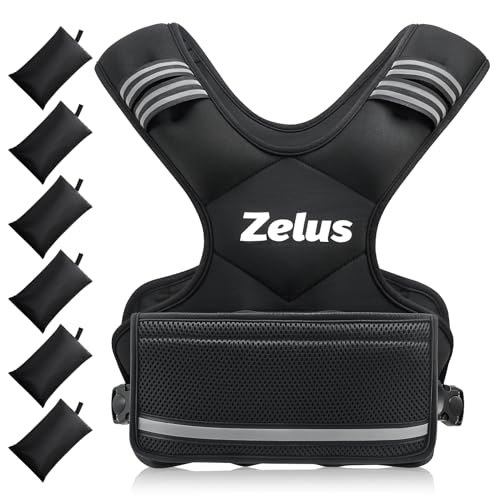
Fit check
- The vest should sit snug on your torso and not bounce when you march in place.
- Weight should be spread evenly front and back.
- Straps shouldn’t dig into your neck or restrict breathing.
Our ZELUS weighted vest review covers fit on one popular adjustable model.
The 25-minute circuit
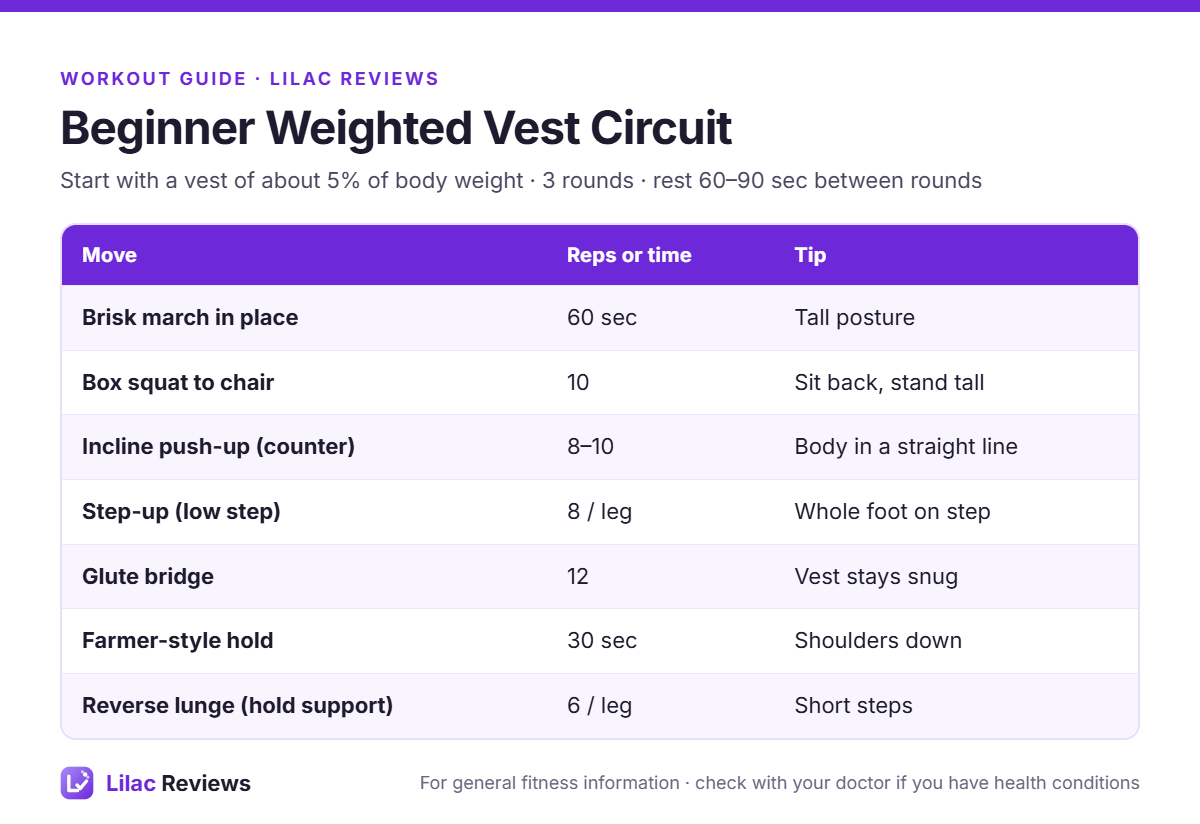
Warm up for 5 minutes without the vest: march, arm circles, a few bodyweight squats. Then put the vest on and do the seven moves in order. That’s one round. Rest 60–90 seconds and repeat for three rounds total.
1. Brisk march in place (60 seconds)
Lift your knees, swing your arms and stand tall. This gets your body used to the extra weight.
2. Box squat to a chair (10)
Stand in front of a chair, reach your hips back and sit down lightly, then stand up. The chair controls the depth and gives you confidence.
3. Incline push-up on a counter (8–10)
Hands on a sturdy counter, walk your feet back until your body is straight. Lower your chest toward the counter and press back. The vest makes this noticeably harder, so use a higher surface if needed.
4. Step-up (8 per leg)
Use the bottom stair with a handrail or a sturdy, low step. Place your whole foot on the step, drive up, and step back down with control.
5. Glute bridge (12)
Lie on your back with knees bent. The vest adds load to your hips as you lift. If lying with the vest is uncomfortable, take it off for this one.
6. Farmer-style hold (30 seconds)
Stand tall with shoulders down and back, and brace your core as if someone might nudge you. Hold a light weight in each hand if you have them.
7. Reverse lunge with support (6 per leg)
Hold a counter or chair, step one foot back and lower gently, then push back up. Keep the steps short at first.
A 6-week progression
- Weeks 1–2: 2 rounds, vest at about 5% of body weight.
- Weeks 3–4: 3 rounds.
- Weeks 5–6: add 2–4 lb to the vest, or a few more reps per move.
Do the circuit twice a week, and keep walking with the vest on one or two other days.
Who should skip or adapt it
- People with back, neck, shoulder or knee problems, osteoporosis with fractures, or heart and blood pressure issues should check with a doctor first.
- Skip jumping, running and fast direction changes in a vest.
- If balance is unsteady, do squats and lunges holding support, or start with our strength training plan for seniors without a vest.
Weight-bearing exercise is often recommended for bone health. The National Institute on Aging has a good overview of exercise types for older adults.
Common mistakes
- Too heavy too soon. Your joints need time to adapt.
- Loose vest. Bouncing pulls on shoulders and changes your posture.
- Leaning forward. Keep your chest up, especially in squats and step-ups.
- Wearing it all day. Use it for workouts and walks, not hours of housework.
FAQ
Are weighted vest workouts good for beginners?
Yes, with a light vest and simple moves. Start with walking, then add a circuit like this.
How often should I do a weighted vest workout?
Two strength circuits a week, plus vest walks on one or two other days, is plenty for most people.
Can I do push-ups with a weighted vest?
Yes, but use an incline (counter or bench) at first. The vest adds a lot to floor push-ups.
Does a weighted vest help with bone density?
Adding load to weight-bearing exercise is one approach used to support bone health, but results vary. Talk to your doctor if bone density is a concern.
Written by the Lilac Reviews Editorial Team. This article is general fitness information, not medical advice. If you have a health condition, recent injury or surgery, talk to your doctor or physical therapist before starting a new exercise routine.
This guide is for general information only and is not medical advice. Talk to a qualified professional before starting a new exercise program, especially if you have an injury or health condition.