
Posture Exercises for Seniors: 7 Daily Moves to Stand Taller

Seven posture exercises for seniors to ease rounded shoulders and forward head posture, an 8-minute daily routine, everyday habits that help and when to see a doctor.
This article may contain affiliate links. If you buy through them, we may earn a small commission at no extra cost to you. Learn more.
Disclosure: As an Amazon Associate, we earn from qualifying purchases. If you buy through a link on this page, we may earn a small commission at no extra cost to you.
Rounded shoulders, a head that drifts forward and an upper back that curves more than it used to are common as we age. Years of sitting, looking down at phones and books, and weaker back muscles all play a part. Posture also affects balance and breathing, and how easy it is to reach up or look over your shoulder when driving.
While some changes in the spine can’t be reversed, posture exercises for seniors can strengthen the muscles that hold you upright and loosen the ones that pull you forward. This 8-minute routine is designed to be done daily.
Note: a sudden change in posture, back pain after a minor fall, or loss of height can be signs of a spinal fracture from osteoporosis. See your doctor before starting exercises if any of these apply.
The 8-minute daily routine
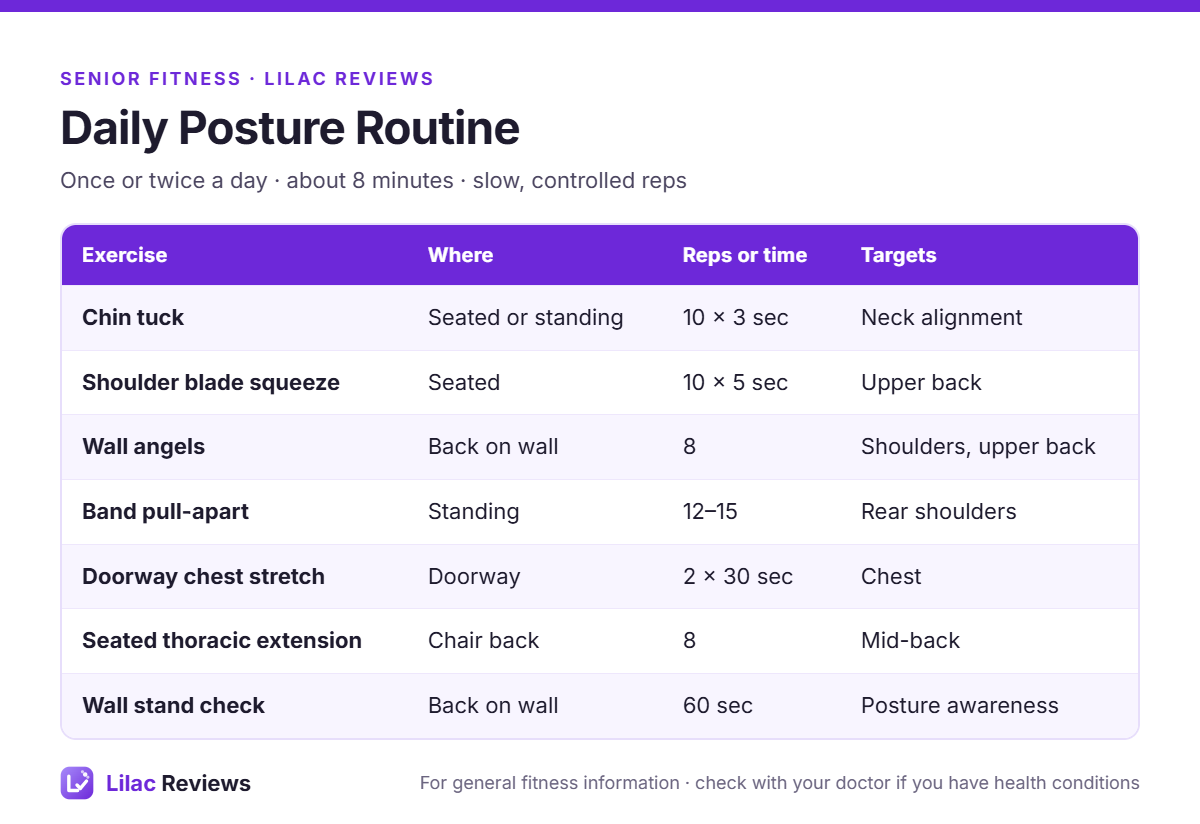
1. Chin tuck (10 × 3 seconds)
Sit or stand tall and look straight ahead. Gently slide your chin straight back, as if making a double chin, without tilting your head down. Hold 3 seconds. This counters the forward head position from looking at screens.
2. Shoulder blade squeeze (10 × 5 seconds)
Sit tall, arms relaxed. Squeeze your shoulder blades together and slightly down, as if trying to hold a pencil between them. Hold 5 seconds, release.
3. Wall angels (8)
Stand with your back against a wall, feet a few inches forward. Bring your arms into a “goalpost” shape against the wall and slowly slide them up and down. Only go as high as you can while keeping contact. If your head can’t touch the wall comfortably, put a small pillow behind it.
4. Band pull-apart (12–15)
Hold a light resistance band at shoulder height with straight arms. Pull your hands out to the sides, squeezing your shoulder blades, then return slowly. This strengthens the upper back muscles that pull your shoulders back.

5. Doorway chest stretch (2 × 30 seconds)
Stand in a doorway with forearms on the frame at shoulder height. Step one foot forward gently until you feel a stretch across your chest. Tight chest muscles pull the shoulders forward.
6. Seated thoracic extension (8)
Sit in a chair with a backrest that reaches mid-back. Hands behind your head, gently lean back over the top of the chair, lifting your chest toward the ceiling. Return. Move slowly and stay in a comfortable range.
7. Wall stand check (60 seconds)
Stand with heels, buttocks, shoulder blades and the back of your head against a wall (or as close as you comfortably can). Breathe normally and notice how it feels. Step away and try to keep that position for a few steps.
Everyday habits that help
- Raise your screen to eye level instead of looking down.
- Use a cushion or rolled towel behind your lower back in chairs and the car.
- Break up sitting every 30–60 minutes: stand, roll your shoulders and do two chin tucks.
- Walk tall: look ahead, not at your feet. Our 30-day walking plan is a great posture habit too.
- Sleep support: a pillow that keeps your neck level rather than pushed forward.
Build the muscles behind good posture
Daily posture moves work best alongside two days a week of strength training. Rows and pulling exercises are especially useful. See our resistance band exercises for seniors and core exercises for seniors. The National Institute on Aging recommends combining strength, balance, flexibility and endurance exercise.
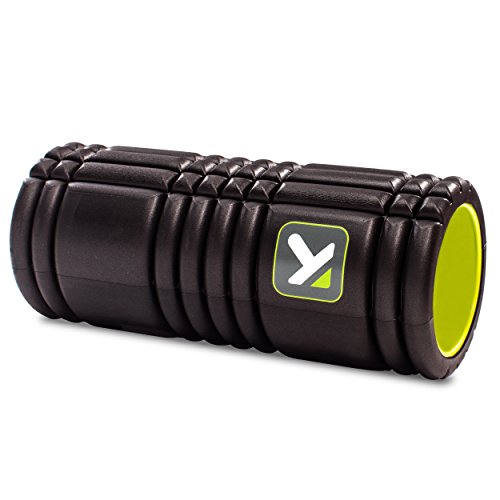
A foam roller can help loosen a stiff upper back. Lie on it lengthwise, or crosswise under your mid-back, and breathe. Avoid rolling your neck and lower back, and skip rolling if you have osteoporosis unless a professional has cleared it. Our foam roller guide explains more.
How long until posture improves?
Many people feel looser and more upright within a few weeks of daily practice. Lasting change depends on doing the exercises regularly and changing daily habits.
FAQ
Can seniors improve their posture?
Yes, often noticeably, by strengthening the upper back and core and stretching the chest. Some structural changes in the spine won’t change, but how you hold yourself can.
What is the best exercise for rounded shoulders?
Pulling exercises (rows, band pull-aparts) combined with a chest stretch are a good starting pair.
Is a posture corrector brace helpful?
It may remind you to sit up, but it doesn’t build the muscles that hold posture. Exercises are more useful long term.
Should I do posture exercises every day?
Yes. These moves are gentle enough for daily practice, once or twice a day.
Written by the Lilac Reviews Editorial Team. This article is general fitness information, not medical advice. If you have a health condition, recent injury or surgery, talk to your doctor or physical therapist before starting a new exercise routine.
This guide is for general information only and is not medical advice. Talk to a qualified professional before starting a new exercise program, especially if you have an injury or health condition.