
Core Exercises for Seniors: 8 Safe Seated, Standing and Floor Moves

Eight safe core exercises for seniors, from seated braces and standing marches to wall planks and bird dogs, with a twice-weekly routine and moves to avoid.
This article may contain affiliate links. If you buy through them, we may earn a small commission at no extra cost to you. Learn more.
Disclosure: As an Amazon Associate, we earn from qualifying purchases. If you buy through a link on this page, we may earn a small commission at no extra cost to you.
“Core” isn’t just your abs. It’s the whole group of muscles around your trunk and hips that keeps you upright, protects your back when you lift, and helps you catch yourself if you trip. For older adults, a strong core is less about a flat stomach and more about getting out of bed, carrying laundry and walking steadily.
These eight core exercises for seniors are grouped by position, so you can start seated and only move to the floor if it’s comfortable.
Safety first
- Breathe out as you brace. Never hold your breath while straining.
- Skip crunches and sit-ups if you have osteoporosis or back problems. Repeated forward bending under load can stress the spine. The moves below keep the spine more neutral.
- Getting down to the floor should feel safe. If it doesn’t, stick to the seated and standing moves.
The 8 core exercises
Seated
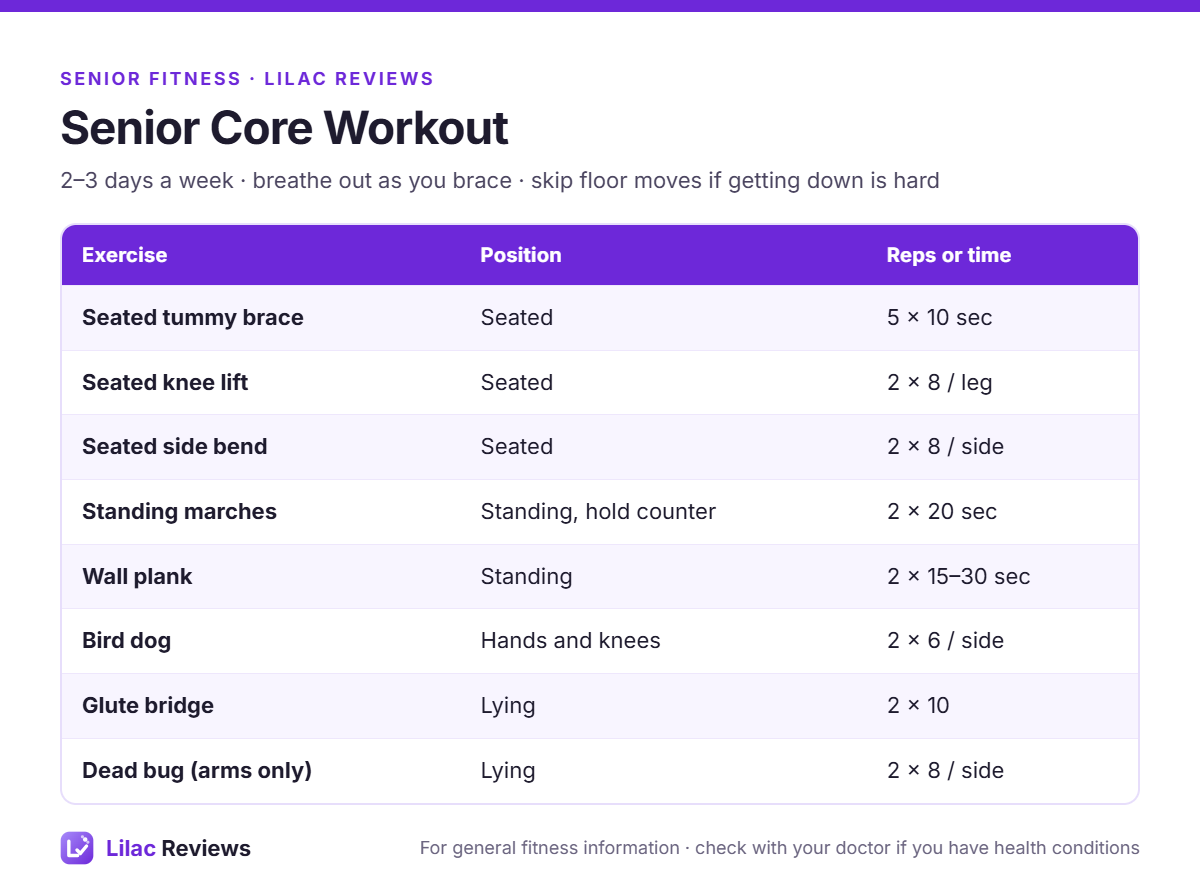
1. Seated tummy brace: sit tall, put your hands on your belly and gently tighten your stomach muscles as if bracing for a light poke. Keep breathing. Hold 10 seconds, relax, repeat 5 times. This teaches the basic core “switch on” you’ll use in every other move.
2. Seated knee lift: hold the sides of the seat, sit tall and lift one knee a few inches without leaning back. Lower slowly. 8 per leg.
3. Seated side bend: hold a light weight or water bottle in one hand and lean slowly to that side, then use your side muscles to come back up. 8 per side.
Standing
4. Standing marches: hold a counter, stand tall and march slowly, lifting your knees toward hip height. Keep your hips level. 20 seconds, twice.
5. Wall plank: stand facing a wall, forearms on it at shoulder height, and walk your feet back until your body is a straight line. Hold 15–30 seconds. Move to a counter, then a sturdy table, as you get stronger.
Floor (optional)
6. Bird dog: on hands and knees, reach one arm forward and the opposite leg back, keeping your back flat. Hold 2–3 seconds, return, switch. 6 per side. Put a folded towel under your knees.
7. Glute bridge: lie on your back, knees bent, and lift your hips until your body forms a line from shoulders to knees. 10 reps.
8. Dead bug (arms only): lie on your back with knees bent and feet on the floor, arms pointing at the ceiling. Keep your lower back gently pressed down and lower one arm overhead, then the other. 8 per side. When easy, lift your feet into a tabletop position.
A simple routine
- Beginners: exercises 1–5, one round, two or three days a week.
- Comfortable on the floor: all eight, two rounds.
- Rest 30 seconds between moves.
Pair it with leg strength from our strength training plan for seniors and balance practice from our balance exercises for seniors. Core, legs and balance work together.
Useful gear
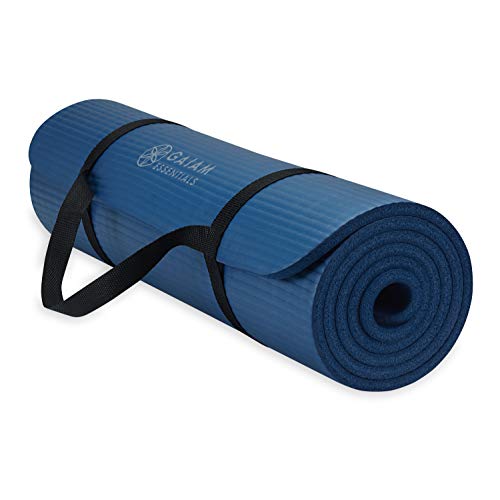
A cushioned mat makes floor moves much more comfortable on knees and hips. A light loop band around the knees makes bridges harder later.

Getting up and down from the floor safely
Lower yourself next to a sturdy chair: hold the seat, kneel on one knee, then the other, then walk your hands down onto the mat. To get up, reverse it: come to hands and knees, bring one foot forward, put your hands on the chair and push up. Practicing this is a useful skill in itself. The National Institute on Aging has more on safe exercise for older adults.
Signs your core is getting stronger
- Getting out of bed or a low chair takes less effort.
- You can hold a wall plank longer or move to a lower surface.
- You feel steadier when carrying something in one hand.
FAQ
Are sit-ups safe for seniors?
They’re not the best choice, especially with osteoporosis or back pain. Bracing, planks, bird dogs and bridges train the core with less spinal bending.
How often should seniors do core exercises?
Two to three times a week is plenty, alongside other strength work.
Can core exercises help back pain?
For many people with general low back stiffness, gentle core and hip strengthening helps. Get advice for ongoing or severe pain.
Do I need equipment for core training?
No. A chair, a wall and a mat cover everything here.
Written by the Lilac Reviews Editorial Team. This article is general fitness information, not medical advice. If you have a health condition, recent injury or surgery, talk to your doctor or physical therapist before starting a new exercise routine.
This guide is for general information only and is not medical advice. Talk to a qualified professional before starting a new exercise program, especially if you have an injury or health condition.