
Grip Strength Exercises for Seniors: 7 Simple Hand and Forearm Moves

Seven grip strength exercises for seniors using a towel, a soft ball, a rubber band and light weights, with a 3-day routine and tips for arthritis-friendly training.
This article may contain affiliate links. If you buy through them, we may earn a small commission at no extra cost to you. Learn more.
Disclosure: As an Amazon Associate, we earn from qualifying purchases. If you buy through a link on this page, we may earn a small commission at no extra cost to you.
Opening jars, carrying groceries, holding a handrail, turning a key. Grip strength is behind dozens of small daily tasks, and you notice it most when it starts to fade. Researchers also use grip strength as a simple marker of overall strength in older adults, which is one reason doctors and physical therapists often measure it.
The good news: hands and forearms respond well to training. These seven grip strength exercises for seniors use a towel, a soft ball, a rubber band and light weights.
Before you start
- Warm your hands with warm water or by opening and closing your fists for a minute.
- Work in a pain-free range. With arthritis, mild effort is fine but joint pain isn’t.
- Go slow. Squeeze for a count of two to five, then release fully.
- If you have carpal tunnel syndrome, recent hand surgery or a hand injury, follow your hand therapist’s plan.
The 7 grip exercises
1. Towel squeeze
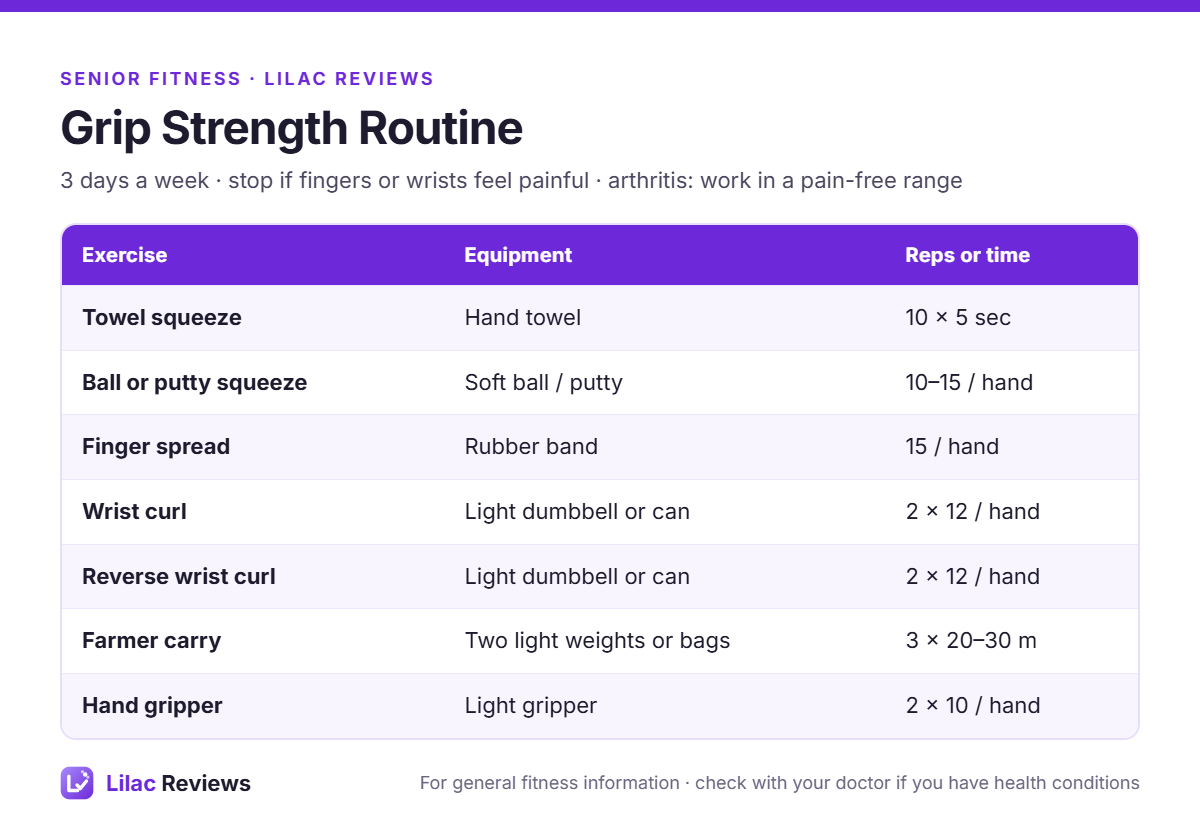
Roll a small hand towel into a tube. Squeeze it as hard as is comfortable for 5 seconds, then relax. Repeat 10 times per hand. This is a gentle starting point.
2. Ball or putty squeeze
Squeeze a soft stress ball or therapy putty, hold 3 seconds, release. 10–15 per hand. Therapy putty comes in different resistances, so start with the softest.
3. Finger spread with a rubber band
Place a rubber band around your fingers and thumb and spread them apart against the band. 15 per hand. This trains the opening muscles, which balances all the squeezing.
4. Wrist curl
Rest your forearm on your thigh or a table, palm up, holding a light dumbbell or a can of soup. Curl your wrist up, then lower slowly. 2 × 12 per hand.
5. Reverse wrist curl
Same setup, palm down. Lift the back of your hand toward the ceiling. Use a lighter weight than for regular curls. 2 × 12.
6. Farmer carry
Hold a light weight, kettlebell or a full shopping bag in each hand and walk tall for 20–30 meters. Rest and repeat 3 times. This is the most “real life” grip exercise there is.

7. Hand gripper
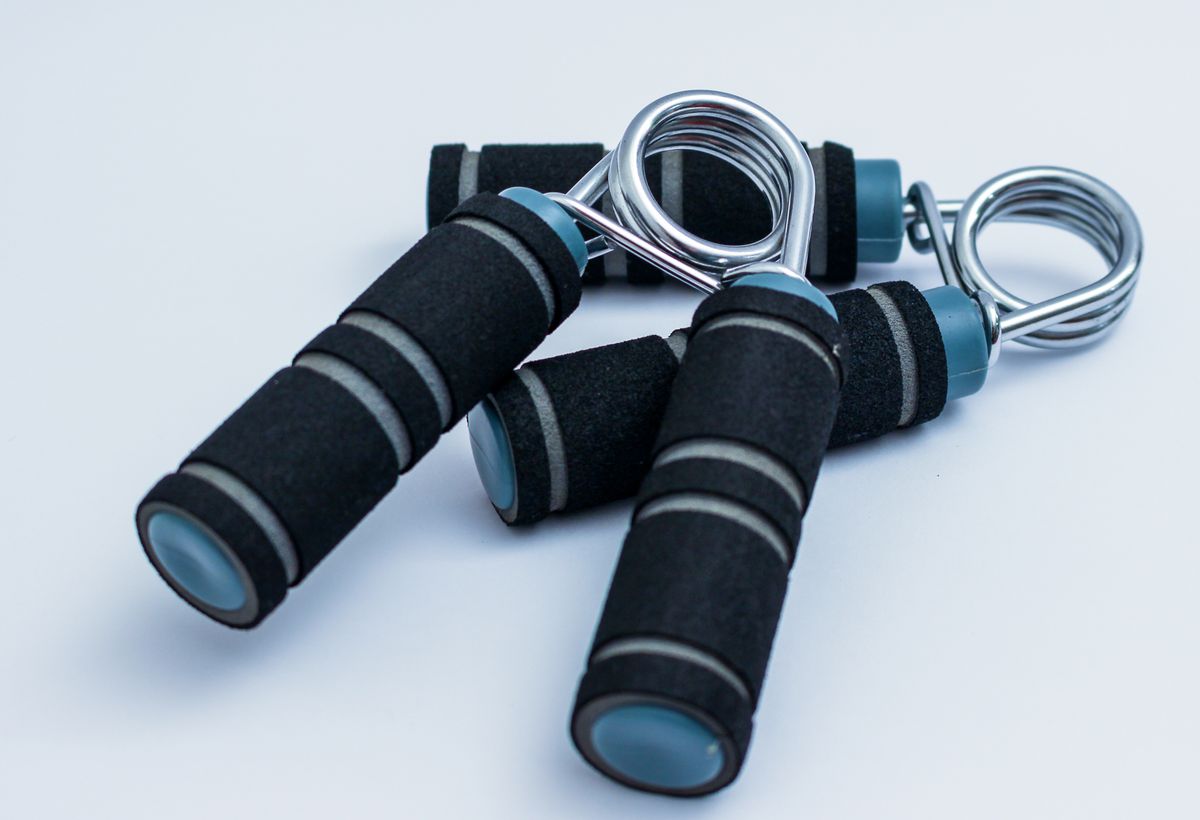
Spring-loaded hand grippers are a classic tool. Choose a light or adjustable one so you can do 10 smooth reps. Squeeze fully, hold a second, open slowly.

A 3-day routine
- Days: Monday, Wednesday, Friday (or any three non-consecutive days).
- Order: exercises 1–3 as a warm-up, then 4–7.
- Time: about 10 minutes.
- Progress: when the reps feel easy, add a few reps, a slightly firmer putty or a 1 lb heavier weight.
Grip work fits neatly into a full routine like our strength training plan for seniors. Rows and carries also build grip; our resistance band exercises for seniors include several pulling moves.

Arthritis-friendly tips
- Do grip work after a warm shower when joints feel looser.
- Use thicker handles (foam tubing, a towel wrapped around a dumbbell) to spread pressure.
- Favor longer, gentler holds over quick, hard squeezes.
- The CDC’s arthritis pages have more on staying active with arthritis.
Signs of progress
- Jars and bottles open more easily.
- You can carry shopping bags further without putting them down.
- Your hands feel less tired after gardening or housework.
FAQ
How can seniors improve grip strength?
Regular squeezing, wrist and carrying exercises two to three times a week, progressing gradually.
Are hand grippers good for seniors?
Light or adjustable ones can be. Very stiff grippers can strain joints, so start easy.
How long does it take to improve grip strength?
Many people notice a difference in four to eight weeks of consistent practice.
Is weak grip a sign of something serious?
Grip naturally weakens with age and inactivity, but a sudden change, numbness or weakness on one side needs prompt medical attention.
Written by the Lilac Reviews Editorial Team. This article is general fitness information, not medical advice. If you have a health condition, recent injury or surgery, talk to your doctor or physical therapist before starting a new exercise routine.
This guide is for general information only and is not medical advice. Talk to a qualified professional before starting a new exercise program, especially if you have an injury or health condition.