
Best Smith Machines for Home Gyms: Safer Solo Lifting

The best Smith machines for home gyms: budget Smith cages, all-in-one Smith machines with cables and rack attachments, plus bar weight, linear bearings, angle and safety tips.
This article may contain affiliate links. If you buy through them, we may earn a small commission at no extra cost to you. Learn more.
Disclosure: As an Amazon Associate, we earn from qualifying purchases. If you buy through a link on this page, we may earn a small commission at no extra cost to you.
A Smith machine is a barbell that slides up and down on fixed rails. You twist the bar to hook it onto safety catches at almost any height, which means you can bail out of a rep without anyone spotting you. That’s why Smith machines are popular in home gyms, especially for people who lift alone, are returning to training, or want a more guided way to squat and press.
This guide explains the pros and cons honestly and covers the best Smith machine for home use by budget and space.
How we put this guide together: we didn’t lab-test these machines. We compared manufacturer specs (footprint, height, bar weight, bearing type, weight capacity, included stations) and looked at repeated themes in verified owner feedback about smoothness, wobble and assembly. Check the current listing for up-to-date specs.
Quick picks
- Best budget Smith cage: Marcy SM-4033 Smith machine
- Best all-in-one with cables: Mikolo Smith machine home gym
- Best for serious garage gyms: Major Fitness all-in-one Smith machine
- Best if you own a rack: a Smith machine rack attachment
Smith machine pros and cons
Pros
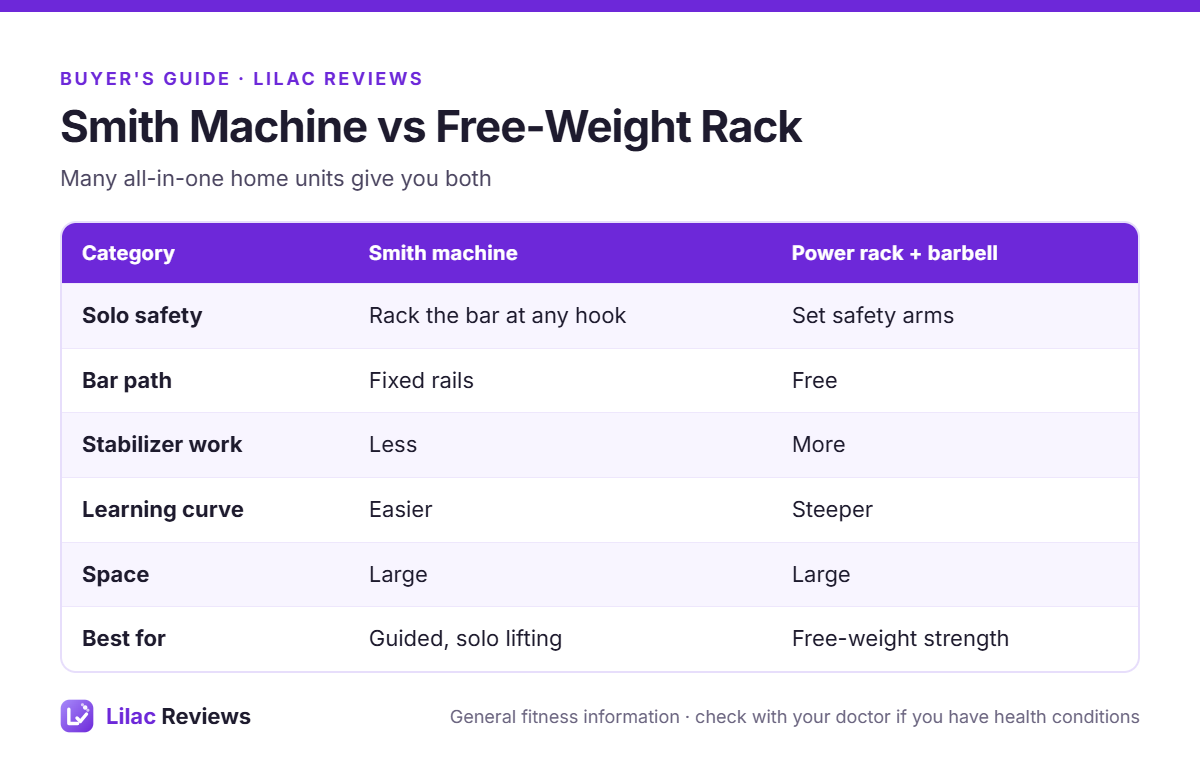
- Easy safety when training alone: rotate the bar to lock it at any hook.
- Guided path makes it easier to focus on effort, not balance.
- Good for beginners, older lifters and people returning from a break.
- Many home models include a free-weight rack and cables too.
Cons
- The fixed path doesn’t match everyone’s natural movement.
- Stabilizing muscles work less than with a free barbell.
- Big, heavy frames need a lot of space and a strong floor.
- Numbers don’t transfer directly to free-barbell lifts.
What to look for
Linear bearings
Bearings on the rails make the bar glide smoothly. Cheap bushings can feel sticky. Smoothness is the biggest difference between a good and a frustrating Smith machine.
Bar weight
Smith bars are often counterbalanced or lighter than a 45 lb Olympic bar. Many home bars weigh somewhere around 15 to 30 lb in feel. Check the listing so you know what you’re lifting.
Vertical or angled rails
Some Smith machines have a slight angle (often around 5 to 7 degrees) to better match a natural squat or press. Others are perfectly vertical. Both work; angled rails can feel more natural for some.
Capacity and footprint
Check weight capacity for the Smith bar and the overall frame. Most all-in-one units are 7 feet tall or more.
The best Smith machines for home
1. Marcy SM-4033 Smith machine: best budget Smith cage
Marcy’s Smith cage combines a Smith bar, free-weight safety catches, a pull-up bar and a pulley system with a lat bar. It’s one of the most affordable ways into a Smith setup.
- Good for: beginners and moderate loads.
- Keep in mind: budget rails are less smooth than premium bearings, and assembly is long.

2. Mikolo Smith machine home gym: best all-in-one with cables
Mikolo’s all-in-one units pair a Smith bar with a power rack, cable crossover and lat pulldown in one frame. It’s popular for people who want a full gym in one footprint.
- Good for: garage gyms that want Smith, free weights and cables.
- Keep in mind: it’s big and heavy, and you’ll need plates.

3. Major Fitness all-in-one Smith machine: best for serious garage gyms
Major Fitness makes heavy-duty combo machines with Smith bars, functional trainer cables and multiple attachments. They aim to replace several machines in one frame.
- Good for: serious lifters building a long-term garage gym.
- Keep in mind: high price, large footprint and a big assembly job.

4. Smith machine rack attachment: best if you already own a rack
Some rack brands and third-party makers sell Smith attachments that mount inside a power rack. It adds a guided bar without a whole new machine.
- Good for: rack owners who want guided lifts.
- Keep in mind: compatibility with your rack’s tube size and hole spacing is essential.

Exercises that work well on a Smith machine
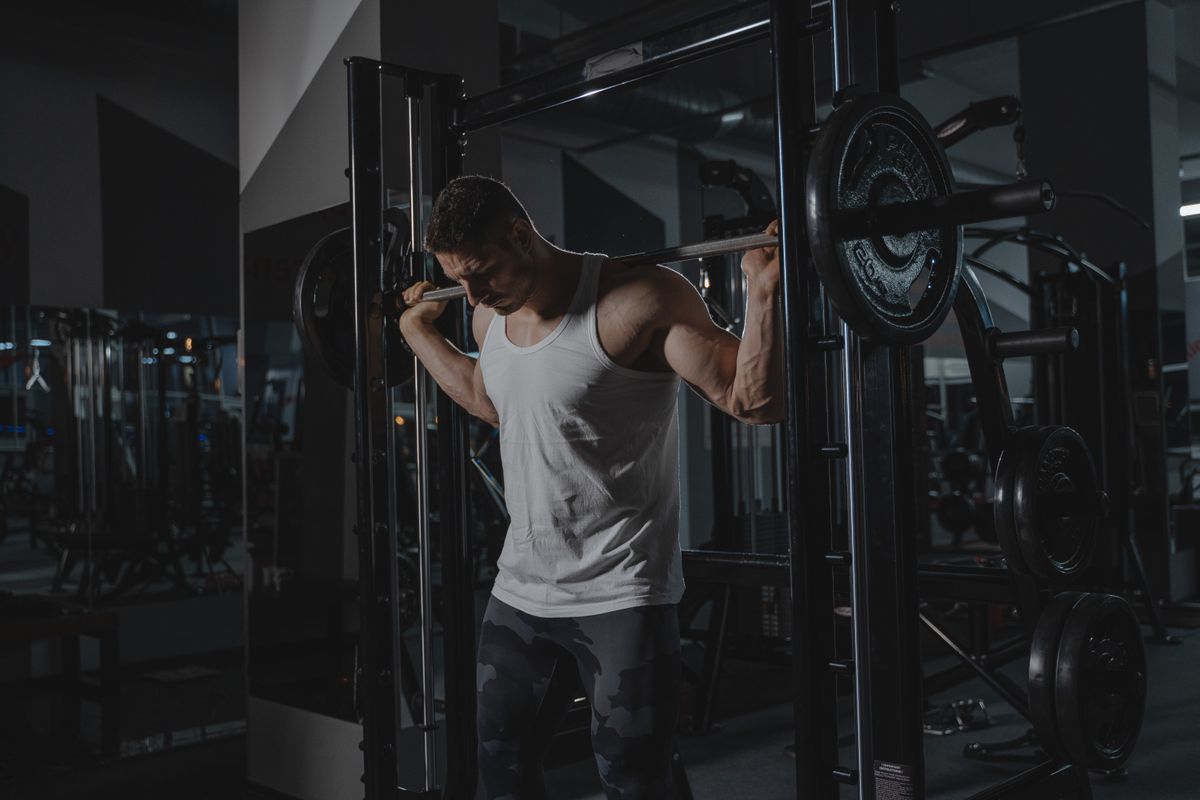
- Squats (feet slightly forward)
- Bench press and incline press
- Split squats and lunges
- Hip thrusts
- Inverted rows (bar at waist height)
- Calf raises
For free-weight alternatives and when to use each, see our barbell vs dumbbells guide.
Space and setup tips
- Check ceiling height plus room for the pull-up bar if you’ll use it. Our high-ceiling home gym ideas cover clearance.
- Use thick rubber mats underneath. See turning a garage into a home gym for flooring options.
- Get help with assembly; these frames are heavy. Our assembly guide has tips.
- Set the safety stops just below your lowest point on every lift.
FAQ
Is a Smith machine good for a home gym?
Yes, especially if you lift alone and want easy safety. Many home models also include a free-weight rack and cables.
Is a Smith machine bad for your knees or back?
Not inherently. Set your feet so your body moves comfortably with the fixed path, and stop if a movement causes pain.
How much does a Smith machine bar weigh?
It varies a lot by model. Some are counterbalanced to feel very light; others feel closer to a standard bar. Check the specs.
Smith machine or power rack?
A rack is better for free-weight strength. A Smith machine is better for guided, solo-friendly lifting. Many all-in-one units give you both.
The bottom line
For safe solo lifting at home, a Smith machine is a useful tool. Choose a budget Smith cage for moderate loads, an all-in-one if you want cables and free weights too, or an attachment if you already own a rack. Measure carefully, and you’ll have a guided station you can trust.
Written by the Lilac Reviews Editorial Team. Product details are based on manufacturer information and may change; check the retailer listing for current specifications. This article is general fitness information, not medical advice.
This guide is for general information only and is not medical advice. Talk to a qualified professional before starting a new exercise program, especially if you have an injury or health condition.