
Best Hand Grip Strengtheners (For Lifters, Climbers and Seniors)

The best hand grip strengtheners: torsion-spring grippers, adjustable grippers, finger trainers, therapy putty and balls, with which type suits lifters, climbers, musicians and seniors.
This article may contain affiliate links. If you buy through them, we may earn a small commission at no extra cost to you. Learn more.
Disclosure: As an Amazon Associate, we earn from qualifying purchases. If you buy through a link on this page, we may earn a small commission at no extra cost to you.
Grip strength matters more than most people think. It helps you hold heavier weights, carry groceries in one trip, open stubborn jars and stay independent as you age. Researchers also often use grip strength as a simple marker of overall strength in older adults. The good news: grip tools are small, cheap and easy to use while watching TV.
This guide covers the best hand grip strengthener for different goals, from heavy-duty grippers for lifters to gentle putty for seniors and people recovering hand strength.
How we put this guide together: we didn’t lab-test these products. We compared manufacturer specs (resistance levels, adjustability, materials) and looked at patterns in verified owner feedback about durability, comfort and how accurate the resistance ratings feel. Check current listings for details.
Quick picks
- Best for serious grip strength: Captains of Crush hand grippers
- Best adjustable gripper: an adjustable-resistance hand gripper
- Best grip kit for beginners: FitBeast hand grip strengthener kit
- Best finger trainer: Prohands Gripmaster
- Best for seniors and arthritis: Vive hand therapy putty or exercise balls
Types of grip strengtheners
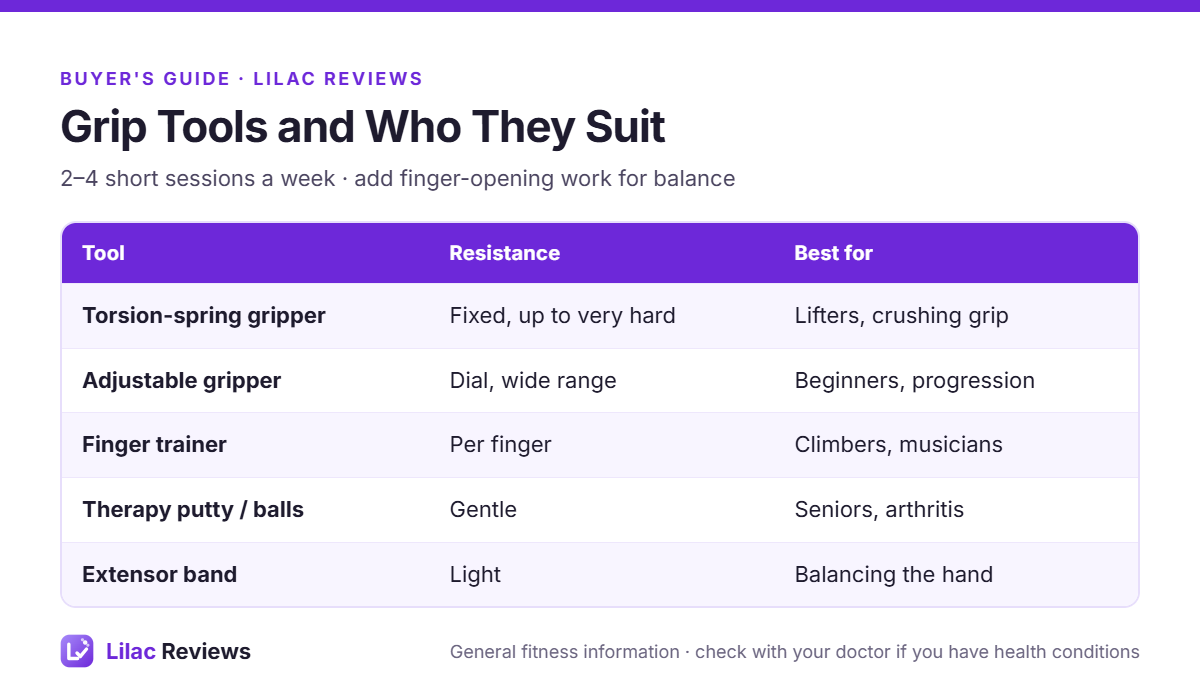
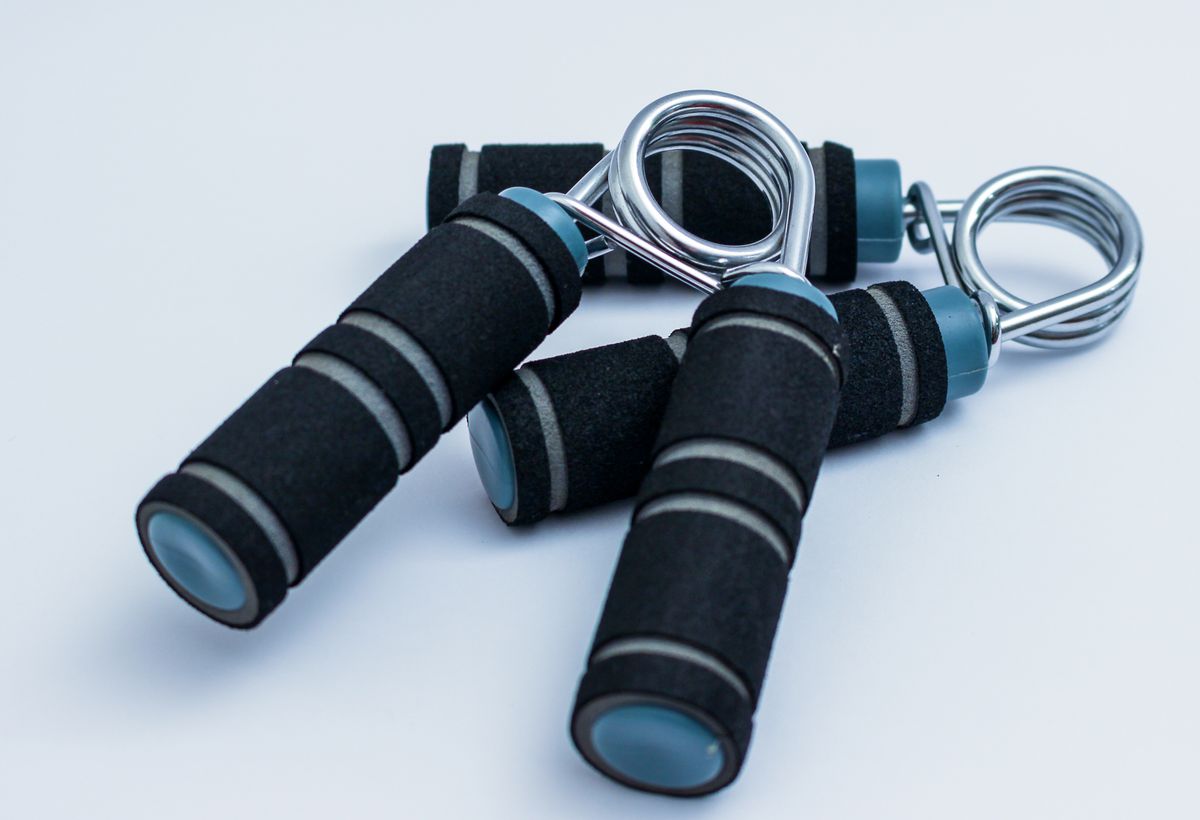
- Torsion-spring grippers: the classic two-handle gripper. Fixed resistance, very durable at the high end.
- Adjustable grippers: one gripper with a dial to change tension. Great for progressing.
- Finger trainers: individual spring-loaded buttons for each finger. Popular with climbers and musicians.
- Therapy putty and balls: soft, gentle resistance for squeezing and finger exercises. Ideal for seniors and rehab.
- Extensor bands: rubber loops that train opening the hand, which balances all the squeezing.
The best hand grip strengtheners
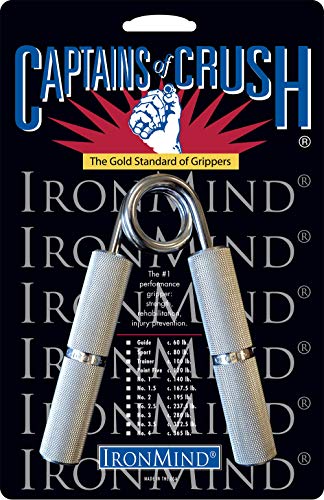
1. Captains of Crush grippers: best for serious grip strength
Made by IronMind, Captains of Crush grippers are the best-known heavy-duty grippers, with a long range of fixed strengths from beginner to extremely hard. They’re machined from metal with knurled handles.
- Good for: lifters, strongman fans and anyone serious about crushing grip.
- Keep in mind: even the lighter levels can be hard for beginners. Start with the easiest model.
2. Adjustable hand gripper: best for progression
Adjustable grippers let you dial the resistance up or down, often across a wide range. One tool can take you from light warm-ups to hard sets.
- Good for: beginners who want to progress, families sharing one gripper.
- Keep in mind: budget springs can lose tension over time, and the listed pounds are approximate.
3. FitBeast grip strengthener kit: best beginner kit
FitBeast kits typically include an adjustable gripper, a finger trainer, a stretcher band and a grip ring, so you can train squeezing, pinching and opening.
- Good for: beginners who want variety in one box.
- Keep in mind: some pieces are light-duty and may not suit heavy users.

4. Prohands Gripmaster: best finger trainer
The Gripmaster has individual spring-loaded keys for each finger and comes in several tension levels. It’s a long-time favorite of climbers, guitarists and pianists.
- Good for: finger strength and independence, musicians, climbers.
- Keep in mind: it doesn’t build heavy crushing grip on its own.

5. Vive hand therapy putty or exercise balls: best for seniors
Therapy putty comes in color-coded resistances and can be squeezed, pinched and stretched. Soft exercise balls are simple to squeeze. Both are gentle on sore or stiff joints.
- Good for: older adults, arthritis, recovering hand strength (with professional guidance).
- Keep in mind: start with the softest putty, and stop if exercises cause pain.

How to use a grip strengthener
- Frequency: two to four short sessions a week. Hands need recovery too.
- Reps: for grippers, 3 sets of 8 to 15 slow squeezes per hand. For putty, 5 to 10 minutes of mixed squeezes and pinches.
- Balance: add extensor work (opening the fingers against a band) to keep hands balanced.
- Progress: move up a level when the top rep count feels easy.
Heavy carries also build grip. Farmer’s carries with dumbbells or kettlebells are a great add-on; see our kettlebell vs dumbbell guide for ideas.
Grip strength for seniors
Keeping hand strength helps with daily tasks like opening jars, carrying bags and holding railings. Start with soft putty or a light ball, keep movements slow, and stop if anything hurts. If you have arthritis, carpal tunnel or a recent hand injury, ask a doctor or hand therapist which exercises are right for you. The National Institute on Aging has more on staying active safely, and our guide to dumbbells for seniors covers whole-body strength.
FAQ
Do hand grip strengtheners work?
Yes. Regular use builds hand and forearm strength, especially when you progress the resistance over time.
How long does it take to improve grip strength?
Many people notice a difference within a few weeks of consistent training.
Can I use a gripper every day?
Light daily use is fine for many people, but hard sessions need rest days. Watch for soreness in the forearms or wrists.
Which grip strengthener is best for arthritis?
Soft therapy putty or gentle squeeze balls are usually the most comfortable. Check with your doctor first.
Are grip trainers good for climbers?
Finger trainers and grippers can help, but most climbers also use hangboards and actual climbing for sport-specific grip.
The bottom line
Pick a heavy-duty gripper if you lift, an adjustable gripper or kit if you’re starting out, a finger trainer if you climb or play an instrument, and therapy putty if you’re a senior or recovering hand strength. Whatever you choose, a few minutes a few times a week is enough to make a difference.
Written by the Lilac Reviews Editorial Team. This article is general fitness information, not medical advice. Product details may change; check the retailer listing for current specifications.
This guide is for general information only and is not medical advice. Talk to a qualified professional before starting a new exercise program, especially if you have an injury or health condition.