
Best Indoor Cycling Bikes for Home: Spin Bikes Worth Buying

The best indoor cycling bikes for home: magnetic vs friction resistance, fit and adjustment, pedals, app support and screens, with picks from budget spin bikes to connected bikes.
This article may contain affiliate links. If you buy through them, we may earn a small commission at no extra cost to you. Learn more.
As an Amazon Associate, we earn from qualifying purchases. If you buy through a link on this page we may earn a small commission at no extra cost to you. We do our best to keep that from influencing what we recommend.
Indoor cycling bikes, often called spin bikes, are the most popular home bikes for a reason. They are compact, low impact, and with a phone or tablet you can follow a class led by an instructor without leaving the house. The range is huge, though, from budget friction bikes to connected bikes with big screens and monthly memberships.
Here is what actually matters, and which bikes fit which riders.
What to check before you buy
Magnetic vs friction resistance
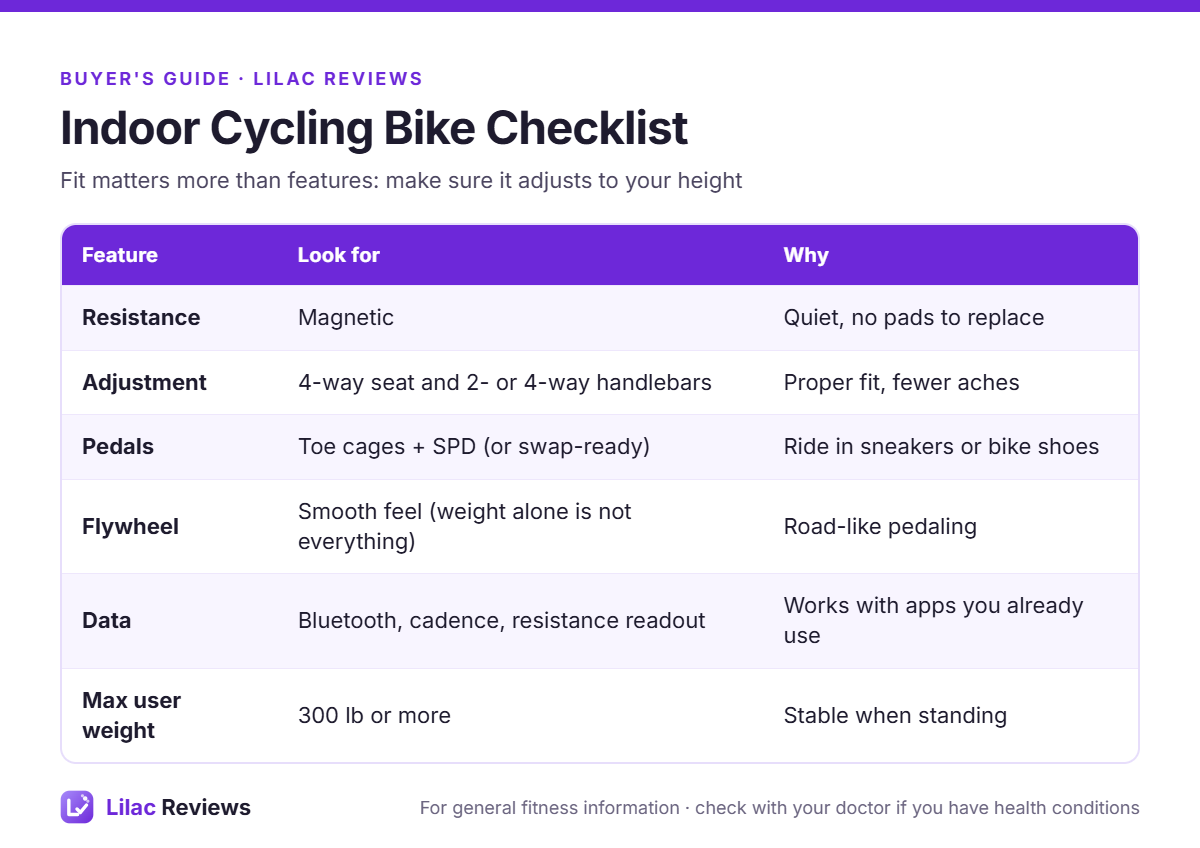
Magnetic resistance uses magnets near the flywheel, so nothing touches. It is quiet, smooth and maintenance free. Friction resistance uses a felt or leather pad pressing on the flywheel. It is cheaper and gives a road-like feel, but pads wear and can squeak. For most homes, magnetic is worth it.
Fit and adjustment
A bike that does not fit will hurt. Look for a seat that moves up, down, forward and back, and handlebars that adjust at least up and down. Check the listed rider height range.
Pedals
Toe cages let you ride in sneakers. SPD clips let you clip in with cycling shoes. Dual-sided pedals give you both. Some bikes use Look Delta cleats, which need specific shoes.
Data and apps
Bluetooth that sends cadence (and ideally resistance or power) lets you use apps such as Zwift, the Peloton app or the bike maker’s own. A built-in screen is convenient but usually means a subscription.
Stability
Standing climbs and sprints rock a light bike. A solid frame and a max user weight of 300 lb or more help.
The best indoor cycling bikes for home
We have not lab-tested these ourselves. Picks are based on published specifications and consistent feedback from independent reviewers and owners. Check the current listing for exact specs.
Best overall: Schwinn IC4
The IC4 has 100 magnetic resistance levels, dual SPD and toe-cage pedals, a 330 lb user limit and Bluetooth that works with JRNY, Zwift and the Peloton app on your own device. It is quiet and well built. Read our Schwinn IC4 review.

Best with a built-in screen: Peloton Bike
The Peloton Bike pairs a sturdy, quiet magnetic bike with a large touchscreen and a huge library of live and on-demand classes. It is the most polished class experience, but it requires a Peloton membership for full use and uses Look Delta-compatible pedals, so you will need cycling shoes with the right cleats.

Best mid-range connected bike: Echelon Connect
Echelon’s Connect bikes offer magnetic resistance and access to Echelon’s class app, with some models using your own tablet and others including a screen. They usually cost less than Peloton. Check which model and membership a listing includes.

Best budget pick: YOSUDA Indoor Cycling Bike
YOSUDA is one of the best-selling budget spin bikes on Amazon. It has a simple frame, a basic LCD and toe-cage pedals, and is offered in friction and magnetic versions. It does not have the polish or stability of the IC4, but for steady rides on a tight budget it is a common starting point. Choose the magnetic version if noise matters.

How to set up an indoor cycling bike
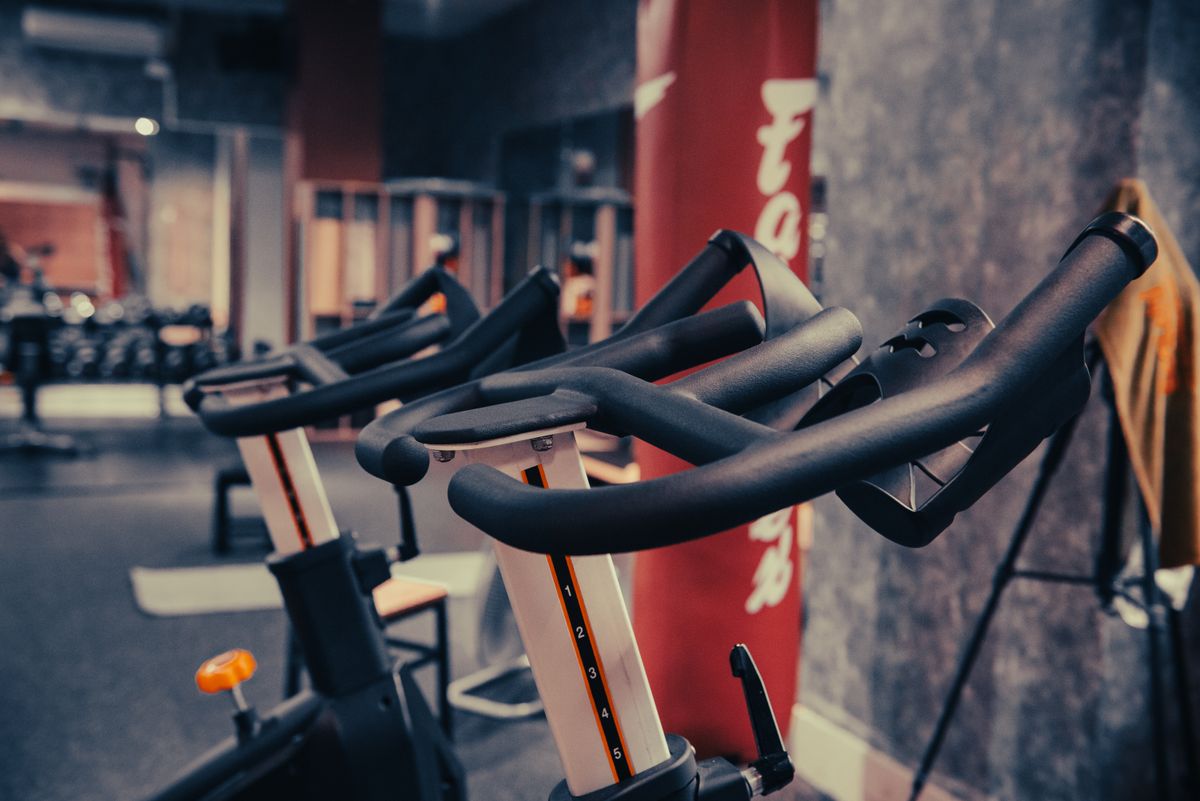
- Saddle height: at the bottom of the pedal stroke, your knee should have a slight bend.
- Saddle fore-aft: with cranks level, your front knee should sit roughly over the pedal.
- Handlebars: start level with the saddle; raise them if your back or neck aches.
- Feet: tighten toe cages or clip in so your foot cannot slip.
Spin bike or something else?
If you want a supportive seat and easy step-through, a recumbent bike is more comfortable; see recumbent vs upright bike. If you love short, intense intervals with your arms involved, an air bike may suit you better.
FAQ
Is a heavier flywheel always better?
Not always. A heavy flywheel smooths out friction bikes, but magnetic bikes can feel smooth with a lighter or rear-mounted flywheel. Ride feel and build quality matter more than a single number.
Do I need cycling shoes?
Not if the bike has toe cages. Clip-in shoes do make pedaling more efficient and are worth considering if you ride often.
How often should I ride?
Three to five rides a week of 20 to 45 minutes fits well with the CDC’s 150 minutes a week of moderate activity.
Bottom line
For most people, the Schwinn IC4 hits the sweet spot of quality, quiet and app freedom. Choose Peloton if you want the best built-in class experience, Echelon for a cheaper connected option, and YOSUDA if budget comes first.
Check with your doctor before starting a new exercise routine, especially if you have heart, joint or back conditions.
This guide is for general information only and is not medical advice. Talk to a qualified professional before starting a new exercise program, especially if you have an injury or health condition.