
Manduka PRO Yoga Mat Review: Heavy, Dense and Built to Last

Manduka PRO yoga mat review: 6 mm dense PVC, closed-cell surface, the break-in period, weight, lifetime guarantee and who should pick a lighter mat.
This article may contain affiliate links. If you buy through them, we may earn a small commission at no extra cost to you. Learn more.
Disclosure: Lilac Reviews is reader-supported. As an Amazon Associate we earn from qualifying purchases, at no extra cost to you. We don’t list prices because they change often; check Amazon for the current price.
The Manduka PRO has a reputation: heavy, expensive, slippery at first, and practically indestructible. Many yoga teachers have used the same one for years. But is it the right mat for a home workout space, and is the break-in period worth the trouble?
In this Manduka PRO review we cover the feel, the grip, the weight, the break-in, how it handles non-yoga workouts, and who should pick something lighter.
The short version
The Manduka PRO is a dense, stable 6 mm mat that cushions without wobbling and lasts for years. It’s heavy and needs breaking in before the grip is at its best. If you practice yoga at home most days, it’s one of the best long-term buys. If you carry your mat to class or want instant grip, look elsewhere.

How we put this review together
We have not lab-tested the PRO. This review is based on Manduka’s published specs and care instructions, comparison with other premium mats, and themes in a large number of owner reviews. Check the listing for the size and version you’re buying.
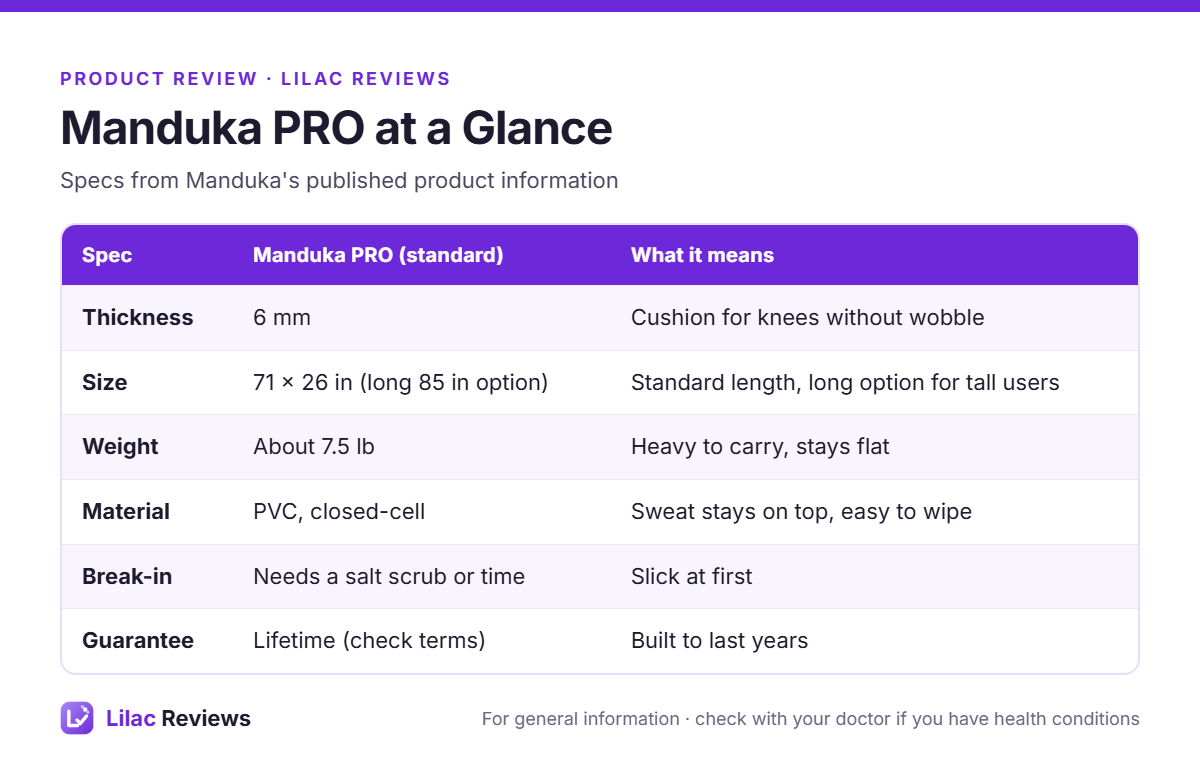
Key specs
- Thickness: 6 mm (about 1/4 inch)
- Size: 71 × 26 inches standard; a long 85-inch version exists
- Weight: about 7.5 lb
- Material: PVC with a closed-cell surface
- Guarantee: lifetime guarantee (check current terms)
What we like
Cushion without wobble
Thick mats are often soft and squishy, which makes balance poses harder. The PRO is dense: your knees and wrists get real cushion, but your feet don’t sink. That combination is the main reason people love it.
It’s built to last
Owners regularly report using their PRO for many years without flaking or tearing. Over the long run, that can make it cheaper than replacing budget mats every year.
Closed-cell surface
Sweat stays on the surface instead of soaking in, so the mat is easy to wipe clean and less prone to smells.
Wider than most
At 26 inches, it’s a couple of inches wider than many standard mats, which is comfortable for broader shoulders and floor exercises.
Stays flat
Its weight means no curling edges and no sliding around on hard floors.
What could be better
- Break-in period: new PRO mats can feel slick. Manduka suggests a coarse salt scrub to speed this up; otherwise it improves with regular use over a few weeks.
- Weight: 7.5 lb is a lot to carry. Manduka’s lighter PROlite is easier to travel with.
- Sweaty hands: even after break-in, very sweaty practice may need a towel or a PU-top mat like Liforme.
- PVC: durable, but not a natural material. Manduka states its PVC is emissions-free in manufacturing; if you want natural rubber, look at JadeYoga.
Is it good for non-yoga workouts?
For bodyweight strength, core work, Pilates and stretching, yes. It’s stable and protective. For jumping workouts in shoes or putting heavy equipment on it, a tougher exercise mat or rubber flooring is better. See our yoga mat vs exercise mat guide and home gym flooring ideas.
Manduka PRO vs alternatives
vs Gaiam Essentials
The Gaiam is far cheaper and much softer (10 mm foam). Great for floor exercises; less stable for standing poses. Our Gaiam Essentials review explains.
vs Liforme and JadeYoga
Both offer better grip out of the box. Liforme is the stickiest for sweaty hands; JadeYoga is natural rubber. The PRO is the most durable. Compare them in our best yoga mats guide.
Who should buy the Manduka PRO
- People who practice yoga at home several times a week.
- Anyone tired of replacing cheap mats.
- People with sensitive knees who still want stability.
Who should skip it
- People who carry their mat to class.
- Anyone who wants maximum grip on day one.
- Budget buyers or occasional users.
Care tips
Wipe with water and a small amount of mild soap after sweaty sessions and let it air dry. Avoid harsh solvents and long periods in direct sun. Our guide on how to clean a yoga mat covers materials in detail.
FAQ
Is the Manduka PRO worth it?
If you practice often and want a mat for years, yes. For occasional use, a cheaper mat is fine.
Why is my Manduka PRO slippery?
New PRO mats have a smooth surface. A salt scrub and regular use break it in.
How heavy is the Manduka PRO?
About 7.5 lb for the standard size.
Is the Manduka PRO good for seniors?
Its stable cushion suits many older adults, though its weight can make it awkward to carry and roll.
Bottom line
The Manduka PRO is the “buy once” yoga mat for home practice: dense, stable and durable. Just be ready for a short break-in and don’t plan on carrying it far.
This guide is for general information only and is not medical advice. Talk to a qualified professional before starting a new exercise program, especially if you have an injury or health condition.