
Best Power Towers and Dip Stations for Home Gyms

The best power towers and dip stations for home: full towers with pull-up, dip and knee-raise stations, compact dip bars, and how to check stability, height and weight limits.
This article may contain affiliate links. If you buy through them, we may earn a small commission at no extra cost to you. Learn more.
Disclosure: As an Amazon Associate, we earn from qualifying purchases. If you buy through a link on this page, we may earn a small commission at no extra cost to you.
A power tower is a freestanding frame with a pull-up bar on top, dip handles in the middle and padded arm rests for hanging knee raises. For bodyweight training at home, it’s one of the most efficient purchases you can make: pull-ups, chin-ups, dips, push-ups and core work, all in a footprint about the size of a treadmill, with no drilling. This guide covers how to choose one and the best power tower for home use, plus simpler dip stations.
How we put this guide together: we didn’t lab-test these towers. We compared manufacturer specs (height range, footprint, max user weight, tube thickness, adjustability) and read verified owner feedback with a focus on wobble, assembly and how the height works for tall users. Check current listings for exact numbers.
Quick picks
- Best all-round power tower: Sportsroyals power tower
- Best for taller users: RELIFE REBUILD YOUR LIFE power tower
- Best budget tower: Stamina power tower
- Best compact dip station: a freestanding dip bar station
- Best no-space option: a doorway pull-up bar plus parallel dip bars
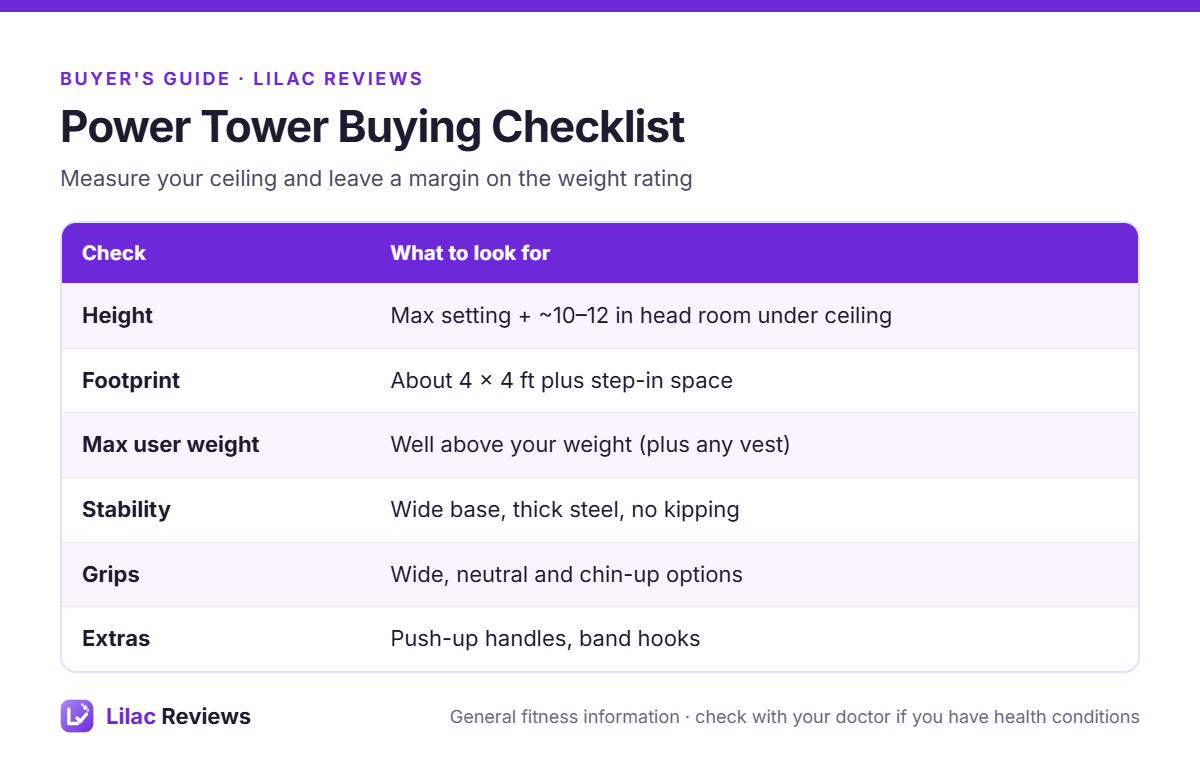
What to check before you buy
Height and ceiling
Many towers top out at 80 to 90 inches or more. Add your head height above the bar for a full pull-up. Measure your ceiling and check the minimum height setting.
Stability
Wobble is the most common complaint. Look for a wide base, thick steel tubing and a design that lets you add weight or anchor the base. Kipping pull-ups make any tower rock.
Max user weight
Check the rated limit and leave a margin, especially if you’ll add a weighted vest. Our guide to home gym safety checklist covers other checks worth doing.
Footprint
Most towers need roughly 4 by 4 feet, plus space to step in and out.
Features
Multiple grip positions, a push-up bar at the base, and band hooks for assisted pull-ups are useful extras.
The best power towers and dip stations
1. Sportsroyals power tower: best all-round tower
Sportsroyals towers are among the most popular on Amazon, with adjustable height, a dip station, padded back rest and multiple grip options. A good fit for most home users.
- Good for: pull-ups, dips, knee raises and push-ups in one frame.
- Keep in mind: as with all towers, tighten every bolt after the first week and keep reps controlled.

2. RELIFE REBUILD YOUR LIFE power tower: best for taller users
RELIFE towers come in models with a taller maximum height and a sturdy base, which helps if you’re tall or want more room for full-range pull-ups.
- Good for: taller users and high-ceiling rooms.
- Keep in mind: check your ceiling at the highest setting.

3. Stamina power tower: best budget tower
Stamina’s power tower is a long-running budget option with pull-up, dip and knee-raise stations. It’s simple and gets the basics done.
- Good for: beginners and moderate use.
- Keep in mind: budget towers wobble more; avoid kipping and dynamic moves.

4. Freestanding dip station: best compact option
If you already have a pull-up bar, a small dip station gives you dips, inverted rows (on some models) and L-sits in a smaller footprint.
- Good for: small rooms, triceps and chest work.
- Keep in mind: light frames can tip if you lean too far; keep your body centered.

5. Doorway bar plus parallel dip bars: best no-space option
A doorway pull-up bar and a pair of low dip bars give you most of a power tower’s exercises with nothing permanent on the floor. Read our Iron Gym pull-up bar review and our guide to door pull-up bar safety first.
- Good for: renters and small apartments.
- Keep in mind: door frames vary; check yours carefully.

Exercises you can do on a power tower
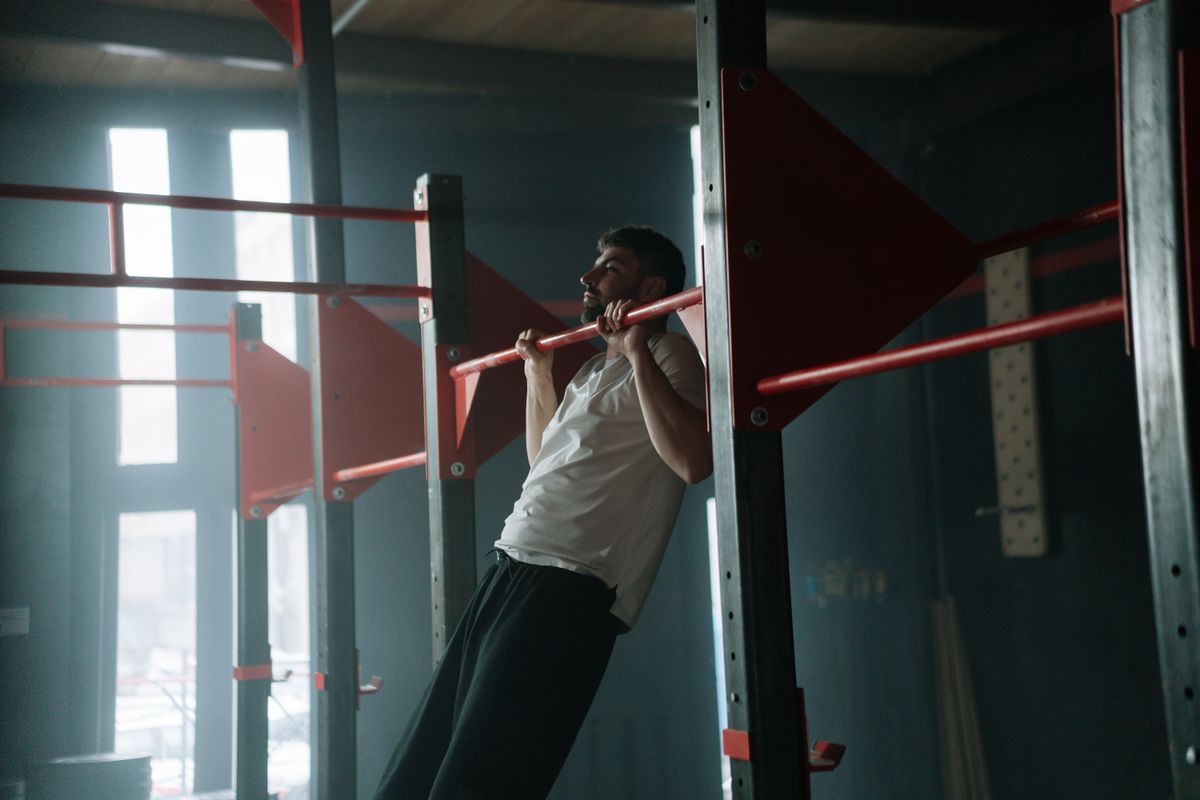
- Pull-ups and chin-ups (or band-assisted versions)
- Dips for chest and triceps
- Hanging knee raises and leg raises
- Push-ups on the base handles
- Inverted rows (on towers with a low bar)
- Dead hangs for grip and shoulder health
Can’t do a pull-up yet? Start with dead hangs, band-assisted reps and slow negatives. Our guide on building strength without a gym shows how to progress.
Safety and setup tips
- Build on a level floor and use a mat to stop sliding. See home gym flooring ideas.
- Recheck bolts after the first week and then monthly.
- Avoid kipping or swinging; most home towers aren’t built for it.
- Step down onto the base carefully rather than dropping.
- If you have shoulder issues, ask a professional before doing dips.
FAQ
Are power towers worth it?
For bodyweight training at home, yes. They cover several key exercises without drilling into walls.
Do power towers wobble?
Most wobble a little. Wider bases, thicker steel and controlled reps reduce it.
How much ceiling height do I need?
Take the tower height at your chosen setting and add enough room for your head above the bar, often 10 to 12 inches.
Can heavy people use a power tower?
Check the max user weight and choose a model rated well above your body weight.
The bottom line
A sturdy power tower is a great one-time purchase for pull-ups, dips and core work at home. Pick one rated well above your weight, check the height against your ceiling, and keep your reps controlled. If space is tight, a doorway bar and dip bars are a good alternative.
Written by the Lilac Reviews Editorial Team. Product details are based on manufacturer information and may change; check the retailer listing for current specifications. This article is general fitness information, not medical advice.
This guide is for general information only and is not medical advice. Talk to a qualified professional before starting a new exercise program, especially if you have an injury or health condition.