
Best Barbells for Home Gyms: How to Pick the Right Bar

The best barbells for home gyms: budget Olympic bars, multi-purpose bars, women's 15 kg bars and EZ curl bars, plus what tensile strength, knurling, shaft diameter and sleeves really mean.
This article may contain affiliate links. If you buy through them, we may earn a small commission at no extra cost to you. Learn more.
Disclosure: As an Amazon Associate, we earn from qualifying purchases. If you buy through a link on this page, we may earn a small commission at no extra cost to you.
The barbell is the piece of equipment you’ll touch most in a rack-based home gym. Every squat, bench, deadlift and press goes through it. A cheap bar that bends, spins badly or shreds your hands can make training miserable, while a good one can last a lifetime. The good news is you don’t need to spend a fortune to get a solid bar.
This guide explains what actually matters when picking the best barbell for a home gym, then suggests bars by budget and use.
How we put this guide together: we didn’t lab-test these barbells. We compared manufacturer specs (weight, length, shaft diameter, tensile strength, sleeve type, knurl pattern, finish, warranty) and looked at long-term owner feedback on bending, rust and sleeve spin. Specs can change between batches, so always check the current listing.
Quick picks
- Best budget Olympic bar: CAP Barbell 7 ft Olympic bar
- Best value all-round bar: Titan Fitness Olympic barbell
- Best multi-purpose bar: Synergee Regional Olympic barbell
- Best for women and smaller hands: a 15 kg women’s Olympic bar
- Best accessory bar: CAP Barbell Olympic EZ curl bar
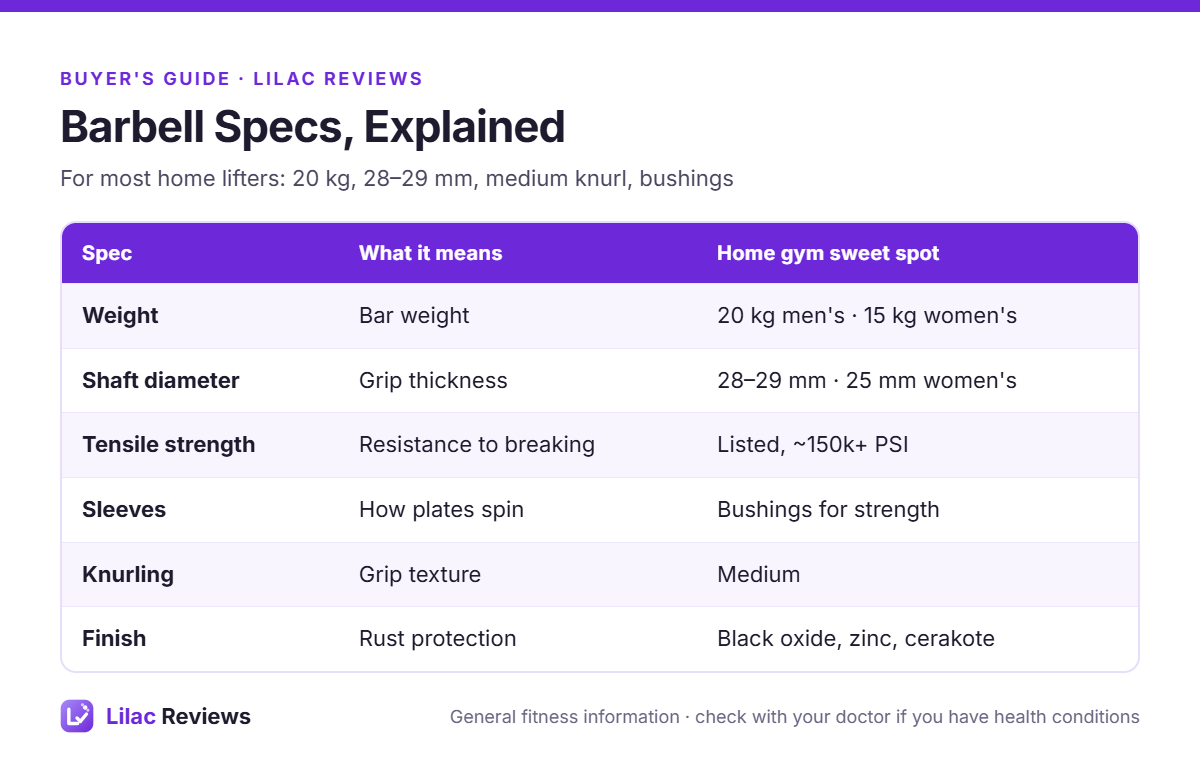
Barbell specs, explained simply
Weight and length
A men’s Olympic bar is about 7.2 feet long and weighs 20 kg (44 to 45 lb). A women’s bar is 15 kg (33 lb), slightly shorter. Some budget “Olympic” bars weigh less, so check if you want your numbers to match a gym.
Shaft diameter
Most men’s multi-purpose bars are 28 to 29 mm thick. Power bars are often 29 mm, Olympic weightlifting bars 28 mm, and women’s bars 25 mm. Thinner bars are easier to grip for smaller hands.
Tensile strength
This tells you how much stress the steel can take before it breaks, measured in PSI. Many decent home bars are rated around 150,000 to 190,000 PSI or higher. Very cheap bars often don’t list it, which is a warning sign.
Sleeves: bushings vs bearings
Sleeves are where the plates go. Bushing sleeves spin smoothly enough for powerlifting and general strength. Bearing sleeves spin faster and suit Olympic lifts like cleans and snatches. For most home lifters, bushings are fine.
Knurling
The cross-hatched grip pattern. Medium knurl is the best all-round choice. Aggressive knurl grips hard but can tear your hands on high-rep sets. A center knurl helps on squats but can scratch your neck on cleans.
Finish
Bare steel feels great but rusts quickly in garages. Black oxide, zinc, chrome and cerakote resist rust better. Stainless steel is best but costs the most.
The best barbells for home gyms
1. CAP Barbell 7 ft Olympic bar: best budget bar
CAP is one of the most common budget barbell brands, and its 7-foot Olympic bar is a typical first bar for home gyms. It fits standard racks and 2-inch plates.
- Good for: beginners, light to moderate loads, tight budgets.
- Keep in mind: budget bars have lower load ratings and may bend if dropped loaded on a rack’s safety arms. Check the rating and weight of the specific model.

2. Titan Fitness Olympic barbell: best value all-round bar
Titan offers several Olympic bars at mid-range prices, with listed tensile strength and standard 20 kg weight. It’s a step up from basic bars without a premium price.
- Good for: squats, bench, deadlifts and presses in a garage gym.
- Keep in mind: finishes vary by model; choose a rust-resistant finish for humid garages.

3. Synergee Regional Olympic barbell: best multi-purpose bar
Synergee’s bars are popular with CrossFit-style home gyms. The Regional bar has bearing sleeves for smoother spin, dual knurl marks and a 28 mm shaft, so it handles both Olympic lifts and general strength work.
- Good for: people who mix cleans and snatches with squats and presses.
- Keep in mind: faster-spinning sleeves aren’t needed for slow lifts, so pure powerlifters may prefer a stiffer power bar.

4. 15 kg women’s Olympic bar: best for women and smaller hands
A women’s bar has a 25 mm shaft and weighs 15 kg. The thinner grip makes a big difference on deadlifts and presses for smaller hands, and the lower weight makes it easier to start.
- Good for: women, teenagers and anyone with smaller hands.
- Keep in mind: it’s slightly shorter, so check it fits your rack’s width.
5. CAP Barbell Olympic EZ curl bar: best accessory bar
The angled grips of an EZ bar take stress off the wrists and elbows on curls and triceps extensions. It’s a nice second bar once you have a main barbell.
- Good for: curls, skull crushers, upright rows.
- Keep in mind: it’s not for squats or heavy deadlifts.

Barbell buying tips
- Match the bar to your rack and plates. Olympic bars use 2-inch plates. Our Olympic vs standard plates guide explains why this matters.
- Look for listed tensile strength and a warranty. Brands that don’t list specs often have something to hide.
- Choose rust resistance for garages. Humid garages eat bare steel. See our guide on turning a garage into a home gym for humidity tips.
- Store it horizontally or vertically in a holder. Leaving a bar loaded on J-hooks for weeks isn’t ideal for cheaper bars.
- Brush the knurling. A stiff nylon brush and a little oil keep it clean. Our home gym buying mistakes article covers other easy-to-miss details.
Safety basics
Always use collars to stop plates sliding, set safety arms in your rack at the right height, and learn the main lifts with light weight first. If you train alone, our guide on making a home gym safe explains how to set safeties for squats and bench press.
FAQ
What barbell should a beginner buy?
A 20 kg Olympic bar with a medium knurl, bushing sleeves and a listed tensile strength. It doesn’t need to be expensive.
How much does a barbell weigh?
A standard men’s Olympic bar weighs 20 kg (about 45 lb); a women’s bar weighs 15 kg (about 33 lb). Some budget bars weigh less.
Do I need a bearing barbell?
Only if you do a lot of Olympic lifts. For squats, bench and deadlifts, bushings are fine.
Can I drop a barbell at home?
Only with bumper plates on a proper platform or thick rubber floor. Dropping a bar loaded with iron plates can damage the bar, plates and floor.
What’s the difference between a power bar and an Olympic bar?
Power bars are stiffer with more aggressive knurl and a center knurl. Olympic weightlifting bars are whippier with faster-spinning sleeves. Multi-purpose bars sit in between.
The bottom line
Most home lifters are best served by a mid-priced 20 kg multi-purpose bar with listed specs and a rust-resistant finish. Add a women’s bar if someone with smaller hands trains with you, and an EZ bar later for arm work. Then add plates; our home gym setup for muscle building shows how it all fits together.
Written by the Lilac Reviews Editorial Team. Product details are based on manufacturer information and may change; check the retailer listing for current specifications.
This guide is for general information only and is not medical advice. Talk to a qualified professional before starting a new exercise program, especially if you have an injury or health condition.