
Kettlebell vs Dumbbell: Which Is Better for Home Workouts?

Kettlebell vs dumbbell for home workouts: how they differ in grip, balance and exercises, which is better for beginners, seniors, fat loss and muscle, and which to buy first.
This article may contain affiliate links. If you buy through them, we may earn a small commission at no extra cost to you. Learn more.
Disclosure: As an Amazon Associate, we earn from qualifying purchases. If you buy through a link on this page, we may earn a small commission at no extra cost to you.
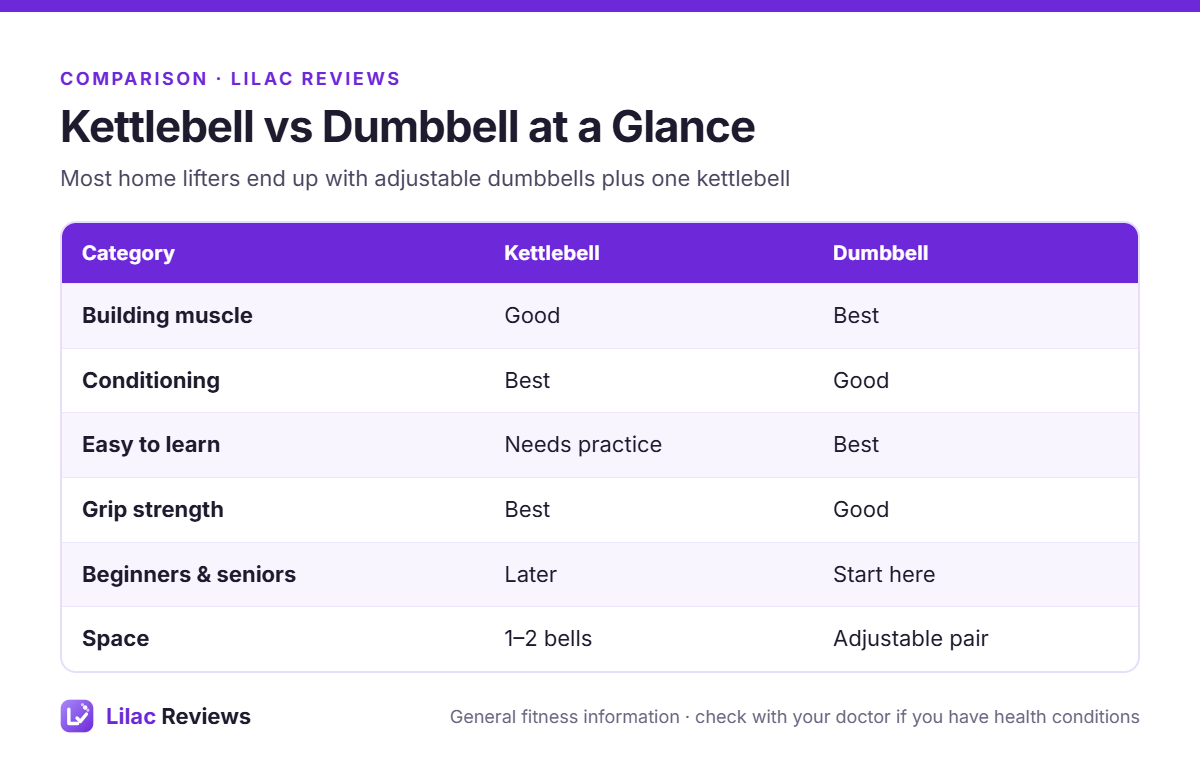
If you only have room or budget for one type of weight, the kettlebell vs dumbbell question comes up fast. Both are small, both build strength, and both cost far less than a machine. But they are not interchangeable. The way the weight hangs from the handle changes which exercises feel natural, how hard you need to concentrate on technique, and how quickly you can progress.
Here’s a plain-English comparison, plus a simple rule for which one to buy first.
The short answer
- Choose dumbbells first if you want to build muscle, train upper body in detail, or you’re a complete beginner who wants the easiest learning curve.
- Choose a kettlebell first if you want quick full-body conditioning workouts, swings and carries, and you’re willing to learn a few techniques properly.
- Older adults and anyone with balance concerns usually do better starting with light dumbbells, because the weight is centered and predictable.
The real difference: where the weight sits
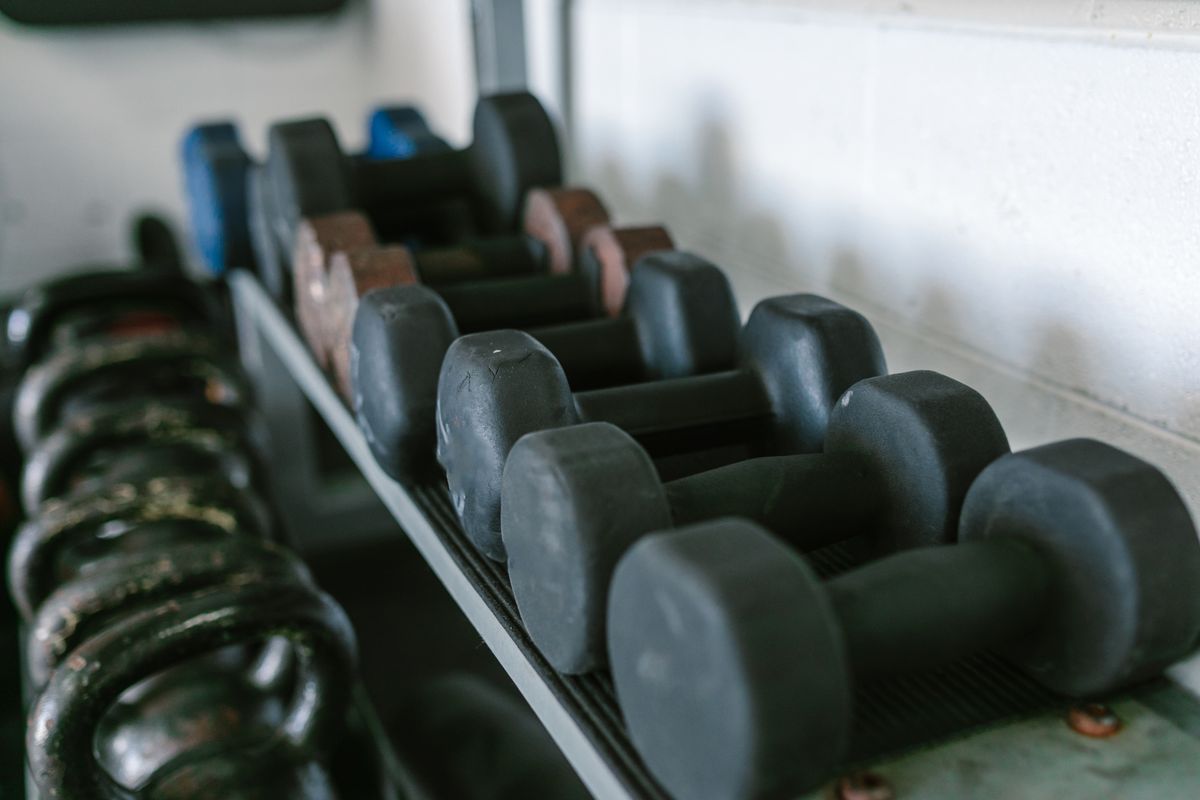
A dumbbell puts the weight evenly on both sides of your hand. It feels stable and moves in a straight line. A kettlebell puts the weight below and slightly in front of the handle. That offset is what makes swings, cleans and snatches possible, and it also makes the bell try to pull your wrist and shoulder out of position on presses and rows.
Neither is better in general. The offset is a feature for ballistic and grip-heavy work, and a drawback for slow, controlled muscle-building moves.
Kettlebell vs dumbbell, category by category
Building muscle
Winner: dumbbells. Curls, lateral raises, flyes, bench presses and rows are easier to do with good control, and small weight jumps let you progress steadily. Adjustable dumbbells give you a whole rack’s worth of weights in a small footprint; see our BowFlex SelectTech 552 review for a popular option.
Conditioning and fat loss
Winner: kettlebells. The swing is one of the best “bang for your buck” exercises: it trains the hips, glutes, hamstrings, back and grip while getting your heart rate up. A 15-minute kettlebell circuit feels like a cardio session and a strength session at once. Fat loss still comes mostly from overall activity and diet, though, not the tool.
Ease of learning
Winner: dumbbells. Most dumbbell moves are intuitive. Kettlebell swings, cleans and Turkish get-ups need coaching or careful practice. Our guide on how to use a kettlebell safely covers the basics.
Grip strength
Winner: kettlebells. The thick handle and the swinging weight work the grip and forearms hard.
Lower body
Tie. Goblet squats work well with both. Kettlebells are great for swings and deadlifts from the floor; dumbbells are easier for lunges and step-ups holding one in each hand.
Safety and joints
Slight edge: dumbbells, for beginners and older adults. A mistimed kettlebell swing can strain the lower back, and a sloppy clean can bang the forearm. Done well, both are safe.
Space and cost
Tie, depending on what you buy. One or two kettlebells can cover a full routine, which is very space-friendly. A pair of adjustable dumbbells covers more weight range in a similarly small footprint. Fixed dumbbell sets need a rack; see our home gym organization guide for storage ideas.
Exercises each one does best
Best kettlebell exercises
- Two-hand swing
- Goblet squat
- Kettlebell deadlift
- Suitcase carry and farmer’s carry
- Single-arm clean and press (once you’ve learned the clean)
Best dumbbell exercises
- Bench press and incline press
- Single-arm row
- Romanian deadlift
- Lunges and step-ups
- Curls, triceps extensions and lateral raises
Which should you buy first?
Ask yourself one question: do you want to train muscles or movements?
- If you’re thinking “arms, chest, shoulders, legs,” buy dumbbells. A pair that adjusts from about 5 to 50 pounds will cover years of training.
- If you’re thinking “short sweaty workouts, swings, carries,” buy one kettlebell. Many women start around 8 to 12 kg and many men around 12 to 16 kg for swings, but beginners should go lighter for presses.
Not sure what weight to choose? Our guide to the Yes4All cast iron kettlebell includes a starting weight guide, and many beginner programs only need one or two bells.
Product starting points
If you’re leaning kettlebell, a single cast iron bell is the simplest start:

If you’re leaning dumbbells, adjustable dumbbells save space:

Can you use both?
Yes, and that’s what many home lifters end up doing: adjustable dumbbells for the main strength work, plus one kettlebell for swings and carries at the end of a session. It’s a small, efficient setup that fits in a closet. Our how to start a home gym guide shows how to phase purchases so you don’t overspend at the start.
A note for seniors and beginners
If you’re over 60 or returning to exercise, start with light dumbbells and slow, controlled moves like sit-to-stands, rows and overhead presses. Kettlebell swings can come later once your hip hinge is solid. The CDC guidelines for older adults recommend muscle-strengthening activity at least two days a week, plus balance work. If you have heart, joint or back problems, check with your doctor before starting.
FAQ
Can kettlebells replace dumbbells?
For general fitness and conditioning, mostly yes. For detailed muscle building and fine weight jumps, dumbbells are more practical.
Are kettlebells harder than dumbbells?
The same weight usually feels harder with a kettlebell on presses and rows because the offset load works your stabilizers more.
Is a kettlebell swing better than running?
They’re different. Swings build hip power and grip with little impact; running builds aerobic endurance. Both have a place.
What is better for seniors, kettlebells or dumbbells?
Light dumbbells are usually easier and safer to start with because the weight is balanced and predictable.
Do I need a heavy kettlebell?
No. Start with a weight you can swing for 15 smooth reps with a flat back, then go heavier as your technique improves.
The bottom line
Dumbbells are the better all-round first purchase for most people, especially beginners, seniors and anyone focused on muscle. Kettlebells are the better tool for fast, full-body conditioning. If you can, own a pair of adjustable dumbbells and one kettlebell, and you’ll have almost every home workout covered.
Written by the Lilac Reviews Editorial Team. This article is general fitness information, not medical advice. Product details may change; check the retailer listing for current specifications.
This guide is for general information only and is not medical advice. Talk to a qualified professional before starting a new exercise program, especially if you have an injury or health condition.