
Weighted Vest vs Ankle Weights for Walking: Which Is Better?

Weighted vest vs ankle weights: how each changes walking, joint stress, posture and strength, which is safer for seniors, and when ankle weights are actually the better tool.
This article may contain affiliate links. If you buy through them, we may earn a small commission at no extra cost to you. Learn more.
Disclosure: As an Amazon Associate, we earn from qualifying purchases. If you buy through a link on this page, we may earn a small commission at no extra cost to you.
If you want to get more out of your daily walk, adding weight is a tempting idea. The two cheapest ways are a weighted vest and a pair of ankle weights. They look like two versions of the same thing, but they affect your body very differently. This weighted vest vs ankle weights comparison explains how each one works and which is the better choice for walking, strength work and older adults.
The short answer
- For walking, a weighted vest is usually the better choice. It keeps the load close to your center of gravity and doesn’t change your stride much.
- For leg strengthening exercises, ankle weights are the better tool. They’re great for leg lifts, kickbacks and seated knee extensions.
- For seniors, a light vest for walking and light ankle weights for chair exercises is a smart combination.
How each one works
Weighted vest
A vest adds weight to your torso, close to your center of mass. Your legs, hips and core work a bit harder to carry you, similar to carrying a light backpack, but more evenly spread. Your walking pattern stays mostly the same.
Ankle weights
Ankle weights add weight to the end of each leg. Every step, your hip flexors and hamstrings have to swing and stop that extra weight. That’s a good strength stimulus in a slow exercise, but in walking it changes the swing of your leg and can increase stress on the knees, hips and ankles over many steps.
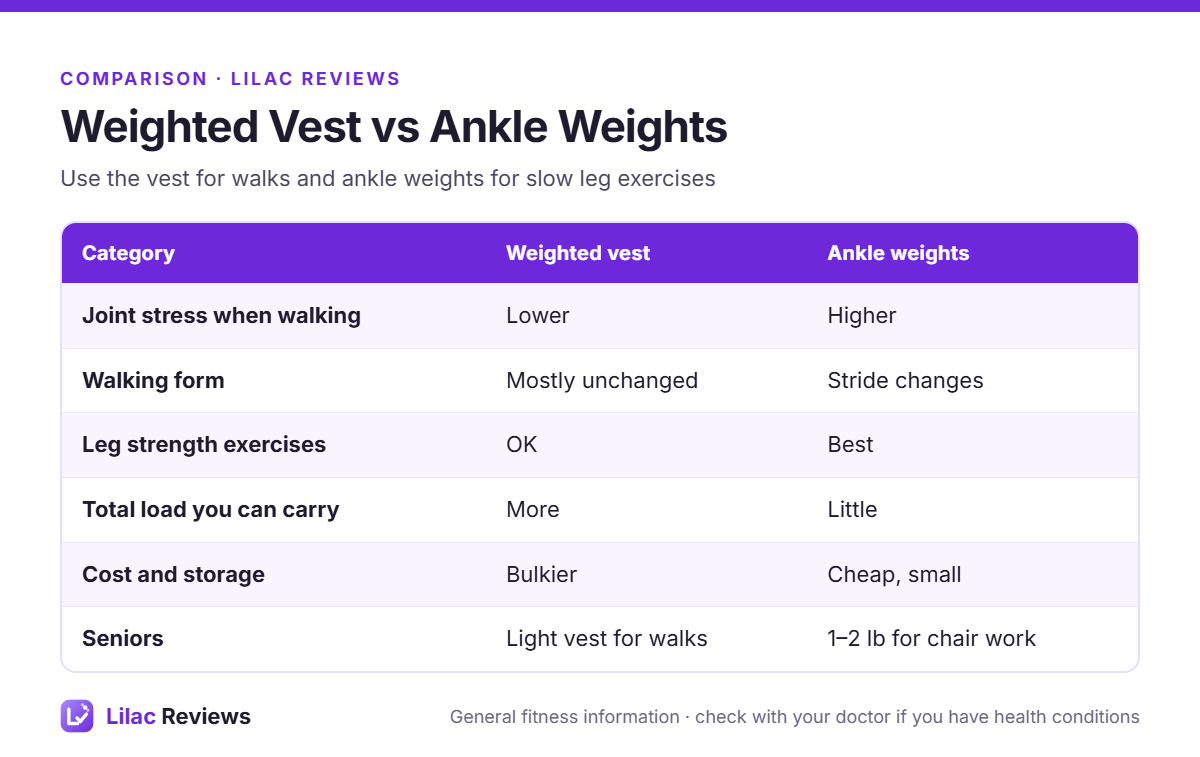
Weighted vest vs ankle weights, head to head
Joint stress
Winner: weighted vest. The load is centered, so it doesn’t pull the leg through an unnatural swing. Ankle weights create a lever effect: a small weight far from the hip feels much heavier at the joint.
Walking form
Winner: weighted vest. A well-fitted vest barely changes your stride. Ankle weights tend to shorten or exaggerate the step.
Leg strength exercises
Winner: ankle weights. For controlled moves like side leg raises, glute kickbacks and seated knee extensions, ankle weights are hard to beat.
Calorie burn
Slight edge: weighted vest, because you can safely carry more total weight. Either way, the extra calories are modest; walking longer or a little faster often matters more.
Posture and back
Depends on fit. A heavy or loose vest can pull your shoulders forward. Start light and keep your posture tall. Ankle weights don’t affect the upper back.
Cost and convenience
Winner: ankle weights. They’re cheaper, smaller and easier to store. Vests are bulkier and warmer.
Which is better for seniors?
For walking, a light vest (often 4 to 8 pounds to start) is generally the safer option, provided you don’t have back, neck or balance problems that make extra torso load a bad idea. Ankle weights are better used for seated or chair-supported strengthening exercises at 1 to 2 pounds. If you have osteoporosis, joint replacements, heart disease or balance concerns, ask your doctor or physical therapist which is right for you.
The CDC guidelines for older adults include aerobic activity, muscle strengthening and balance work. A walk with a light vest and a few ankle-weight leg exercises covers all three.
How to use both in one week
- Walk days: 20 to 30 minutes, with a light vest for part or all of the walk.
- Strength days: 10 to 15 minutes of ankle-weight leg lifts, kickbacks and knee extensions, plus a few upper-body exercises.
- Rest days: gentle stretching and balance practice.
Products to consider
For walking, a simple fixed-weight vest is an easy start. Our best weighted vests for women and best weighted vests for men guides go deeper.

For leg exercises, a soft adjustable pair of ankle weights covers most needs. See our full best ankle weights guide.
How heavy should you go?
- Vest: about 5 percent of body weight to start, building toward 10 percent. See our guide on how heavy a weighted vest should be.
- Ankle weights: 1 to 2 pounds for standing work and seniors, up to 3 to 5 pounds for lying leg exercises.
FAQ
Is it bad to walk with ankle weights?
Not always, but it’s not ideal. Light weights on short, flat walks are usually fine for healthy adults. For regular walking, a vest is the better choice.
Do weighted vests help you lose weight?
They increase the effort of walking a little, so you burn slightly more calories. Overall activity and diet matter more.
Can I wear ankle weights and a weighted vest together?
It’s not necessary and adds joint stress. Use the vest for walking and the ankle weights for exercises.
Are wrist weights better than ankle weights for walking?
Light wrist weights are less risky for the knees but can strain shoulders if you swing your arms hard. A vest remains the simplest option.
The bottom line
Use a weighted vest to add load to walks and ankle weights to strengthen your legs with slow, controlled exercises. That way, each tool does what it’s best at, and your joints will thank you.
Written by the Lilac Reviews Editorial Team. This article is general fitness information, not medical advice. Product details may change; check the retailer listing for current specifications.
This guide is for general information only and is not medical advice. Talk to a qualified professional before starting a new exercise program, especially if you have an injury or health condition.