
How to Turn a Spare Room Into a Gym

A spare room can become a useful home gym without turning your house into a construction site. The key is to plan the room around how you actually train, then choose equipment, flooring, storage, and layout that fit the space you have.
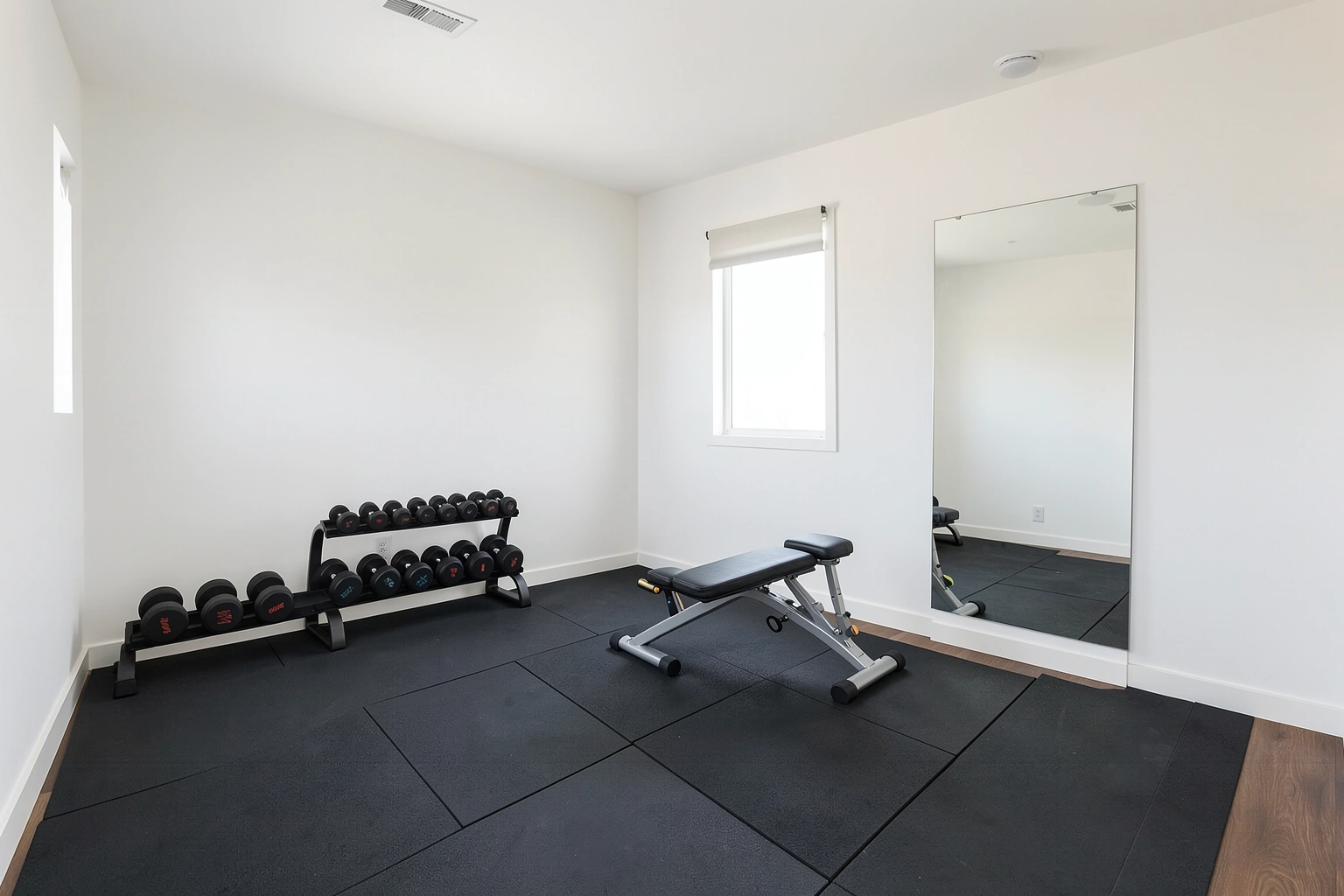
A well-designed spare-room gym does not need to look like a commercial facility. In many homes, the best setup is a simple one: enough open floor space for movement, a few versatile tools, and durable surfaces that can handle regular use. That approach keeps costs under control and avoids the common mistake of buying too much before the room is ready.
Start With the Right Goal for the Room
Before you move a single item, decide what the room needs to support.
If your main focus is strength training, the room should prioritize stable flooring, a clear lifting area, and storage for dumbbells, bands, and a bench. If cardio matters more, you may need to reserve space for a treadmill, bike, or rower, plus room for safe access and cooling. For mixed training, the layout has to balance both: some equipment along the walls and an open center zone for bodyweight work, stretching, or mobility drills.
That decision shapes everything else. A room built around strength can stay relatively minimal. A room that needs to support cardio usually needs more attention to ventilation, noise, and power access. If you want a flexible setup, think in terms of “training zones” rather than filling the room with gear.
Measure the Room and Identify Usable Space
Room size matters, but usable space matters more.
Measure the length and width of the floor, then subtract anything that blocks movement: door swings, closet doors, baseboard heaters, low shelves, and any permanent fixtures. Also note ceiling height if you plan to use overhead presses, pull-up equipment, or tall machines. A room can look large on paper and still feel cramped once you account for clearance space.
A simple rule of thumb is to preserve at least one open area for movement, not just equipment. For many people, a clear zone of roughly 6 by 6 feet is enough for mat work, stretching, and some bodyweight exercises, while larger lifts or step-back movements may feel better with more room. If the room is narrow, even a 3-foot-wide clear lane down the center can help the space stay functional.
Example room sizes can help you judge whether the room is workable:
- 8 by 10 feet: usually best for a mat-based or very minimal setup
- 10 by 10 feet: often workable for dumbbells, a bench, and storage along one wall
- 10 by 12 feet or larger: more realistic for mixed training or a compact cardio machine
A practical way to plan is to sketch the room from above and mark three things:
- fixed obstacles
- equipment footprints
- open movement space
That open space is what keeps the room functional. If every corner is filled, the room stops being a gym and becomes storage with weights in it.
For safety, check the manufacturer’s instructions for any equipment you plan to use. Treadmills, benches, racks, and wall-mounted items often need specific spacing or installation guidance. For general home safety guidance, resources from Consumer Product Safety Commission and NIOSH are useful starting points, especially when you are thinking about trip hazards, cords, and indoor air quality.
Set a Realistic Budget for the Setup
A spare-room gym can be built in stages. That is usually the smartest way to do it.
Instead of trying to finish everything at once, divide your budget into categories:
- flooring
- core equipment
- storage
- lighting and mirrors
- ventilation or comfort upgrades
- optional tech or accessories
Approximate budget ranges can help you plan more realistically:
- Minimal setup: about $200 to $800 if you start with a mat or basic flooring, resistance bands, and a few versatile items such as adjustable dumbbells or a small storage solution
- Mid-range setup: about $800 to $2,500 if you add better flooring, a bench, a mirror, wall or freestanding storage, and possibly a compact cardio machine
- More complete setup: about $2,500 and up if you cover the room with dedicated flooring, add multiple larger pieces of equipment, and invest in more storage and comfort upgrades
These ranges can vary a lot based on whether you buy new, used, or premium equipment, and whether the room needs any prep work. A minimal setup usually focuses on the essentials: flooring, a mat, adjustable dumbbells or resistance bands, and a few storage pieces. A more complete setup may include dedicated flooring throughout the room, wall storage, and multiple pieces of larger equipment.
The best budget rule is simple: buy the items that support your main workouts first, then add extras only after you know the room works in practice. That prevents the common problem of spending money on equipment that looks useful but never gets used.
Choose the Flooring That Fits Your Training Style
Flooring is one of the most important decisions in a spare-room gym because it affects comfort, noise, safety, and subfloor protection.
Rubber gym flooring vs. interlocking foam tiles
Rubber gym flooring is usually the stronger choice for durability and impact protection. It handles heavier use better, resists wear, and is a better fit for free weights or more intense training. It also tends to feel more stable underfoot.

Interlocking foam tiles are easier to install, lighter, and often more renter-friendly. They can work well for bodyweight training, stretching, yoga, or light dumbbell work. The trade-off is durability: foam is generally less suited to dropped weights or heavy equipment.
| Option | Best for | Durability | Noise/impact control | Renter-friendly |
|---|---|---|---|---|
| Rubber gym flooring | Strength training, mixed use, heavier equipment | High | Strong | Medium |
| Interlocking foam tiles | Bodyweight work, mobility, light equipment | Moderate to low | Moderate | High |
| Workout mat only | Minimal setups, temporary use | Low | Limited | High |
If the room will see regular lifting or a treadmill, rubber flooring is usually the safer long-term choice. If you need something removable or low-commitment, foam tiles can make sense.
For flooring products and installation basics, manufacturer guidance matters. Follow the installation instructions for the material you choose, and avoid assuming a floor is suitable for heavy use just because it feels thick or soft.
Pick Space-Saving Equipment First
The most useful equipment in a small room is usually the equipment that can do more than one job.
Strong starter choices
- Adjustable dumbbells: Replace several pairs of fixed weights and save a lot of floor space.
- Resistance bands: Good for warmups, accessory work, mobility, and travel-friendly training.
- Folding bench: Useful for presses, rows, split squats, and step-ups.
- Workout mat: Helps define the training area and makes floor work more comfortable.
- Compact storage rack or bin: Keeps small items from spreading across the room.
If you want cardio in the room, a folding treadmill or compact bike can work, but only if the room can support the footprint and the noise level. In a small space, cardio machines can crowd out floor-based training faster than people expect.
Free weights vs. compact all-in-one machines
Free weights are more versatile and usually easier to fit into a spare room. They allow you to train a wide range of movements without dedicating a large footprint to a single machine.
Compact all-in-one machines can save planning time because they combine multiple functions, but they often cost more and still take up a meaningful amount of space. They also tend to be less flexible if your training changes later.
If you are setting up your first home gym, free weights plus bands are often the better starting point. You can always add a machine later if the room and your routine justify it.
Plan the Layout Before You Buy Everything
A good layout prevents the room from feeling crowded.
The easiest way to think about a home gym layout is to separate the room into zones:
- a movement zone
- a storage zone
- an equipment zone
The movement zone should stay open. That is where you do warmups, stretching, bodyweight exercises, and any movement that needs room to step, lunge, or rotate.
Layout ideas for common room shapes
Square room:
Put larger equipment along one wall and keep the center open. This works well for a folding bench, dumbbells, and a mat.
Narrow room:
Use one long wall for storage and smaller gear, then keep a clear lane down the middle. This makes the room feel less cramped and helps with safe movement.
Awkward room with closet or angled walls:
Use the odd corners for storage, not for training. Keep the most usable wall for mirrors or a bench, and avoid placing equipment where the room narrows.
A useful planning habit is to tape the equipment footprint on the floor before buying. That makes it easier to see whether the room can still function as a room, not just a storage area.
Add Storage, Mirrors, and Lighting That Make the Room Usable
Storage is not a finishing touch. In a small gym, it is part of the layout.
Wall-mounted storage vs. freestanding storage
Wall-mounted storage saves floor space and keeps equipment off the ground. It works well for resistance bands, smaller accessories, and sometimes dumbbells or mats. The trade-off is permanence: it may not be ideal for renters or anyone who wants a flexible room.
Freestanding storage is easier to move and usually better for renters. It can hold dumbbells, towels, and small items without drilling into walls. The downside is that it uses more floor space.
If you are short on room, wall-mounted storage is the more efficient choice. If you need the setup to be temporary, freestanding storage is easier to reverse.
Mirrors and lighting
A full-length mirror helps you check form, judge spacing, and make the room feel larger. Place it where it reflects the main workout area, not a cluttered corner.
Lighting should be bright enough that you can move safely and see your posture clearly. If the room has weak overhead lighting, add a lamp or better fixtures rather than relying on one dim bulb. Good lighting also makes the room feel more inviting, which matters when the space is small.
Handle Ventilation, Temperature, and Noise
A spare-room gym can get hot and stuffy faster than a larger room because workouts raise body heat and the room may not have strong airflow.
If the room has a window, use it when possible. If it does not, a low-cost box fan or oscillating fan can help move air, and a dehumidifier can make the room more comfortable in damp climates or after sweaty workouts. For renter-friendly comfort improvements, use removable window fans, portable fans, and floor fans before considering anything permanent.
Noise matters too, especially in shared homes or apartments. Rubber flooring helps reduce impact noise better than bare floors, and placing heavier equipment away from shared walls can also help. Treadmills and some cardio machines can create vibration, so check the manufacturer’s setup instructions and think about how sound travels through the house. If noise is a concern, quieter options such as resistance bands, dumbbells, and bodyweight work are often easier to live with than a large cardio machine.
For indoor air and ventilation basics, government resources such as the EPA’s indoor air quality guidance can help you think through airflow, humidity, and comfort in a simple, practical way.
Check Electrical, Tech, and Safety Details
Before you set up the room, look at the practical details that affect daily use.
Electrical and cord placement
If you plan to use a treadmill, fan, speaker, or charging station, check where the outlets are. Avoid running cords where they can be stepped on or caught under equipment. Use power strips carefully and keep them away from sweat-prone areas and traffic paths.
Stability and floor load
Heavier machines and loaded racks deserve extra attention. Make sure the floor can support the intended use, especially if the room is on an upper level. If you are unsure, ask a qualified professional rather than guessing.
Tripping and tipping hazards
Keep the floor clear. Dumbbells, bands, and cords should not cross your main walking path. Mirrors and wall-mounted storage should be secured properly so they do not shift or fall. Exits should stay unobstructed.
These details are easy to overlook, but they are often what separates a convenient gym from an annoying one.
Make It Renter-Friendly If You Cannot Do Permanent Changes
Renters can still build a useful spare-room gym without making permanent alterations.
A renter-friendly setup usually relies on:
- interlocking foam tiles or removable flooring
- freestanding storage
- portable mirrors
- equipment that does not require anchoring
- temporary lighting upgrades, if allowed
This approach gives you flexibility if you move later. It also reduces the risk of losing a deposit over wall damage or unauthorized changes.
If you rent, check your lease and ask the landlord before drilling, anchoring, or installing anything heavy. Some buildings also have rules about noise, flooring, or equipment weight. If the room is in a condo or HOA-managed property, review those rules too.
Avoid the Most Common Home Gym Mistakes
Most spare-room gym problems come from planning too late.
The biggest mistakes are:
- buying equipment before measuring the room
- leaving no open floor space
- using flooring that is too thin or too soft for the workout style
- ignoring ventilation
- forgetting storage
- placing large equipment where it blocks movement
- choosing gear that does not match actual training habits
A simple way to avoid these problems is to plan the room in this order: measure, choose the workout style, pick flooring, map the layout, then buy equipment. That sequence keeps the room functional and helps you spend money on things you will actually use.
Simple Spare-Room Gym Setups by Room Size and Budget
Here are a few realistic setup patterns that work well in many homes.
Minimal strength setup
Best for: small rooms, limited budgets, beginner lifting
Includes: adjustable dumbbells, resistance bands, folding bench, workout mat, simple storage
Why it works: covers most strength training without taking over the room
Mixed-use setup
Best for: people who want strength and cardio in one room
Includes: dumbbells, bands, bench, mirror, wall or freestanding storage, one compact cardio machine
Why it works: gives you variety while keeping part of the floor open
Renter-friendly flexible setup
Best for: apartments, leased homes, temporary use
Includes: removable flooring, freestanding storage, portable mirror, mat, compact equipment that can be moved easily
Why it works: effective without permanent changes
Narrow-room layout
Best for: long, tight rooms
Includes: storage on one wall, equipment on the opposite wall, center lane kept open
Why it works: preserves movement space and avoids a cramped feel
Bodyweight and Mat-Based Setups vs. Cardio Machines in Very Small Rooms
If your spare room is very small, the best choice is often to keep the setup simple.
Bodyweight and mat-based setups work well in tight spaces because they need little floor area, create less noise, and are usually easier for renters. They are a good fit if you mainly want stretching, mobility, yoga, core work, or short strength sessions with bands and dumbbells.
Cardio-machine setups can be harder to fit into very small rooms because the machine footprint is only part of the issue. You also need clearance for getting on and off, moving around it, and reducing vibration or noise. A folding treadmill or compact bike may still work, but only if the room has enough open space left over for safe movement.
As a practical rule, if the room cannot spare a dedicated movement area after the machine is placed, a mat-based setup is usually the better option.
When to Consult a Professional
Some parts of a spare-room gym are simple. Others deserve outside help.
Consider a contractor, electrician, or landlord if you are:
- changing flooring in a way that affects the subfloor
- mounting heavy equipment or mirrors to walls
- adding outlets or changing electrical loads
- placing heavy machines on an upper floor
- unsure whether the room can handle the intended equipment
- renting and not sure what changes are allowed
If the setup involves structural changes, electrical work, or equipment that creates significant vibration or load, professional advice is worth it. That is especially true if the room is above living space or if you are planning to anchor anything substantial.
A spare room can become a practical gym without a full renovation. The most successful setups are usually the ones that stay focused: a clear goal, a measured layout, durable flooring, and equipment that earns its place. If the room still feels usable after the gym is installed, the plan is working.