
Best Compression Recovery Boots and Leg Massagers for Home

The best compression recovery boots and leg air massagers for home: Normatec vs budget sleeves, sizing, pressure levels, safety checks and who should skip them.
This article may contain affiliate links. If you buy through them, we may earn a small commission at no extra cost to you. Learn more.
Disclosure: Lilac Reviews is reader-supported. As an Amazon Associate we earn from qualifying purchases, at no extra cost to you. We don’t list prices because they change often; check Amazon for the current price.
Compression recovery boots used to be something you saw only in pro sports locker rooms: big inflatable sleeves that squeeze your legs in waves while an athlete scrolls on their phone. Now there are home versions at every price, from premium systems to simple leg air massagers.
This guide covers the best compression recovery boots and leg massagers for home, what they can realistically do, how to size and use them, and, importantly, who should not use them without a doctor’s OK.
Quick picks
- Best premium: Hyperice Normatec 3 Legs.
- Best mid-range leg massager: FIT KING leg air massager.
- Best budget option: CINCOM leg massager.
How we chose
We compared pressure levels, zones, sleeve sizes, modes and sizing information from published specs, and looked at owner feedback about comfort, fit and durability. We did not lab-test these devices.
What compression boots do (and don’t do)
Pneumatic compression devices inflate chambers along the leg, usually in a sequence from the foot upward. People use them after hard training or long days on their feet because they feel relaxing and can make legs feel lighter. Research on recovery boots for healthy athletes is limited and mixed: some studies suggest they help people feel less sore, while measurable performance benefits are less clear.
They are not a treatment for medical conditions unless prescribed. Medical compression devices for conditions like lymphedema are a different category and should be fitted by a professional.
Price tiers explained
- Premium (Normatec and similar): full-leg boots up to the hip, multiple zones, precise pressure control, app connection, sturdy build.
- Mid-range leg massagers: sleeves that cover foot to calf or thigh, several modes and intensities, simple controls.
- Budget: foot-and-calf wraps with basic modes. Fine for tired feet and calves.
The best compression boots and leg massagers
1. Hyperice Normatec 3 Legs: best premium
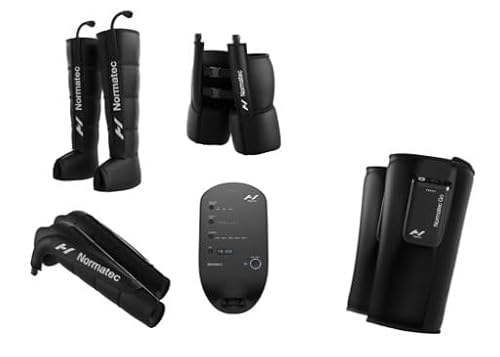
Normatec is the name most associated with recovery boots. The Normatec 3 offers several pressure levels, multiple zones along the leg and a “Zone Boost” feature to spend more time on a specific area. It covers the whole leg and connects to the Hyperice app.
Good to know: it’s a big investment and best suited to people who train hard and often.
2. FIT KING leg air massager: best mid-range
FIT KING leg air massager
FIT KING’s sleeves cover feet, calves and, on some models, thighs, with several modes and intensities. Owners often use them while watching TV after long walks or shifts on their feet.
Good to know: check the calf and thigh circumference limits before ordering, and look for optional extension pieces if you have larger legs.
3. CINCOM leg massager: best budget
CINCOM leg massager
A simple, affordable leg massager covering feet and calves. A reasonable option if you mainly want relief for tired lower legs.
Safety: who should ask a doctor first
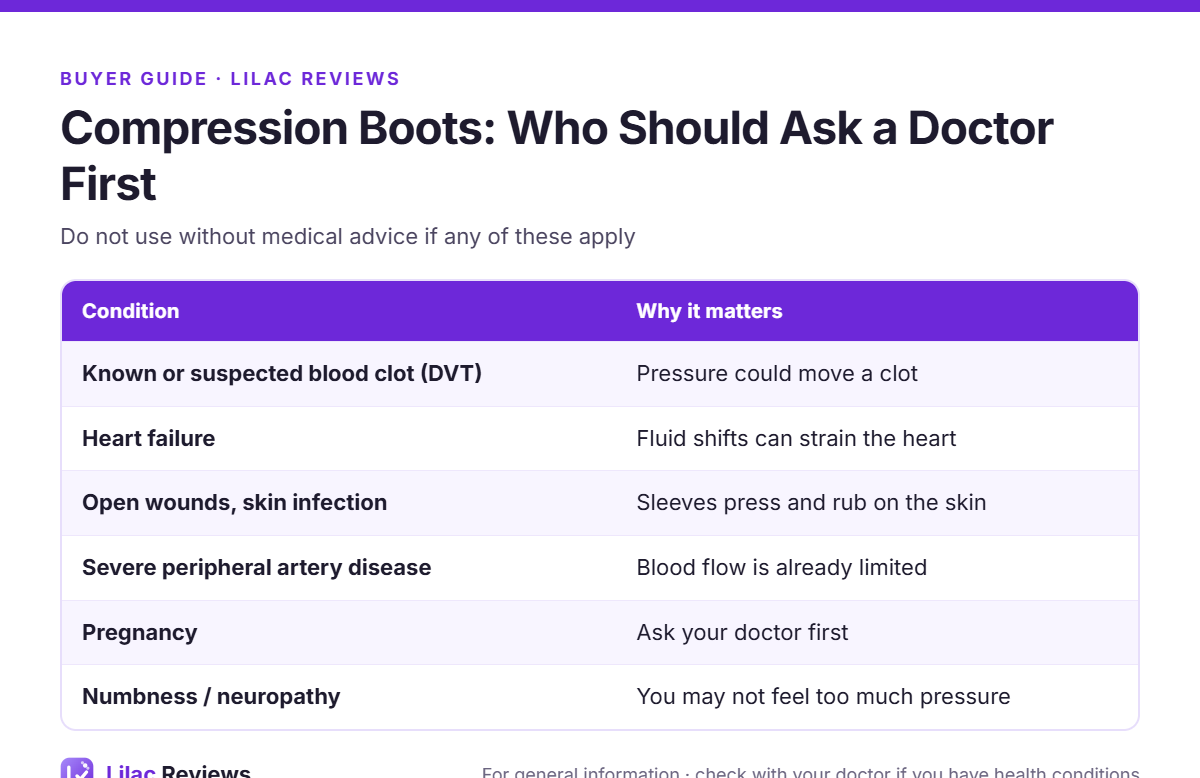
Do not use compression boots or leg massagers without medical advice if you have, or might have, any of the following:
- A blood clot in the leg (deep vein thrombosis) or a history of clots. The Mayo Clinic lists swelling, pain and warmth in one leg as warning signs; get these checked promptly.
- Heart failure or serious heart conditions.
- Severe peripheral artery disease or poor circulation.
- Open wounds, skin infections or fragile skin on the legs.
- Diabetes with numbness in the feet (neuropathy), since you may not feel excessive pressure.
- Pregnancy.
- Recent leg surgery or fractures.
If anything feels painful, numb or tingly during use, stop. Start on the lowest pressure.
How to use compression boots at home
- Sit or lie down comfortably with your legs straight and slightly raised.
- Start on the lowest pressure and a 15 to 20 minute session.
- Increase pressure only if it feels comfortable; it should feel like a firm hug, never painful.
- Use after workouts, long walks or long days on your feet, a few times a week.
- Drink water, and follow up with a short walk or gentle stretching.
Boots work best as part of a simple recovery routine with sleep, easy movement and stretching. Our massage gun vs foam roller guide covers cheaper tools, and massage balls are great for feet.
Sizing tips
- Measure calf and thigh circumference at the widest point and compare with the size chart.
- Check inseam length for full-leg boots.
- Sleeves that are too tight feel uncomfortable at low pressure; too loose and they don’t compress evenly.
FAQ
Do compression recovery boots work?
Many people find they reduce the feeling of soreness and heavy legs. Evidence for performance benefits is limited, so think of them as a comfort tool.
How long should you use compression boots?
Most people use 15 to 30 minutes. Follow the maker’s guidance.
Are leg air massagers safe for seniors?
Many older adults use them, but check with your doctor first, especially if you have circulation problems, diabetes, heart conditions or a history of blood clots.
Can I sleep with compression boots on?
No. Use them for timed sessions while awake.
Bottom line
The Normatec 3 is the premium choice for frequent, hard training. FIT KING and CINCOM offer affordable relief for tired legs. Whatever you choose, check the safety list first and keep the pressure comfortable.
This article is for general information and is not medical advice. Talk to your doctor before using compression devices if you have any medical condition.
This guide is for general information only and is not medical advice. Talk to a qualified professional before starting a new exercise program, especially if you have an injury or health condition.