
30-Day Walking Plan for Beginners (From 10 to 30 Minutes)

A 30-day walking plan for beginners that builds from 10 to 30 minutes, with how fast to walk, what to wear, indoor options, and how to keep going after day 30.
This article may contain affiliate links. If you buy through them, we may earn a small commission at no extra cost to you. Learn more.
Disclosure: As an Amazon Associate, we earn from qualifying purchases. If you buy through a link on this page, we may earn a small commission at no extra cost to you.
Walking is the easiest workout to start and one of the easiest to keep. It needs no gym, no special skill and very little money. The hard part is not the walking itself but building the habit, and going from “I should walk more” to a routine that sticks.
This 30-day walking plan for beginners takes you from short 10-minute walks to 30 minutes at a brisk pace, five days a week. That lands you right on the widely used target of about 150 minutes of moderate activity a week.
Why 30 minutes, five days a week?
The CDC recommends that adults get at least 150 minutes of moderate-intensity aerobic activity per week, and brisk walking is the example most people can manage. Thirty minutes on five days is a simple way to hit it. You don’t need to start there. Jumping straight to long walks is the most common reason beginners end up with sore shins and quit.
How fast is “brisk”?
Use the talk test. At an easy pace you can chat in full sentences. At a brisk pace you can still talk, but you couldn’t sing, and you notice your breathing. For many beginners that is roughly 2.5–3.5 mph, but your speed matters less than the effort. Hills, heat and fitness level all change it.
The 30-day plan
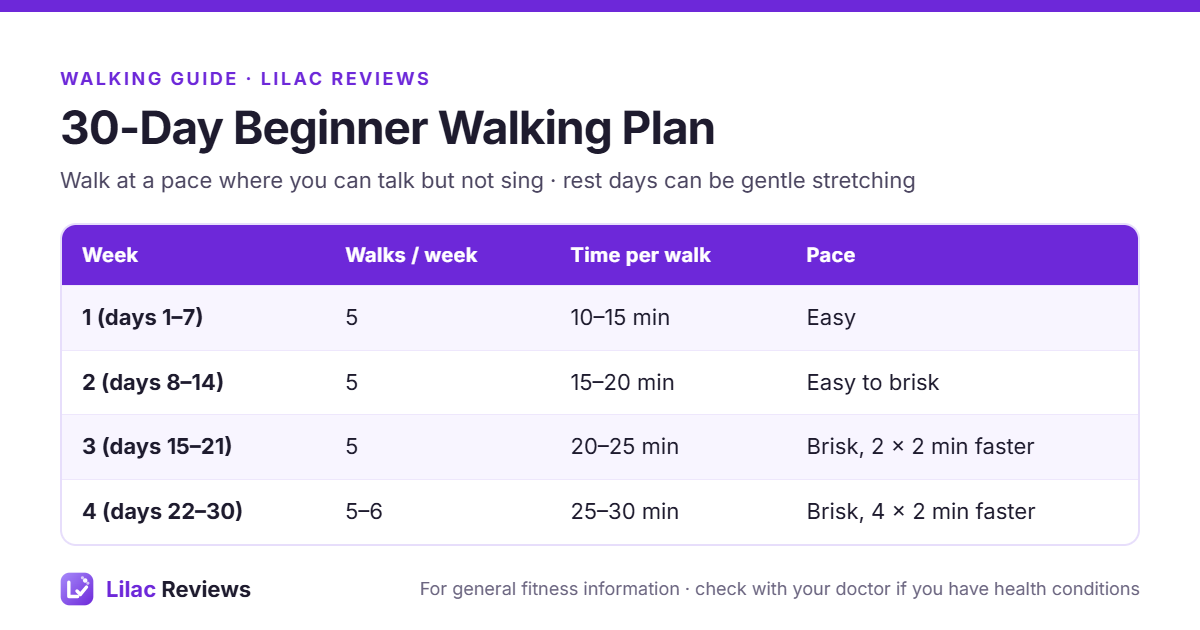
Week 1: just show up (days 1–7)
Walk 10–15 minutes at an easy pace on five days. Pick a fixed time, such as after breakfast or after dinner, so it becomes part of your day. If 10 minutes feels like a lot, split it into two 5-minute walks. Rest days can be complete rest or a few minutes of gentle stretching.
Week 2: a little longer (days 8–14)
Go to 15–20 minutes. Start easy for the first five minutes, then let your pace pick up toward brisk. Keep your head up, shoulders relaxed and arms swinging naturally.
Week 3: add short pushes (days 15–21)
Walk 20–25 minutes. In the middle of the walk, add two 2-minute stretches where you walk noticeably faster, then return to your normal brisk pace. These short pushes build fitness quickly without wearing you out.
Week 4: 30 minutes (days 22–30)
Build to 25–30 minutes on five or six days, with four 2-minute faster stretches. By day 30 you should be walking about 150 minutes a week. If you need an extra week at any stage, take it. The plan works at your pace, not the calendar’s.
What you need
- Comfortable walking shoes with some cushioning and a firm heel. Replace them when the tread wears smooth.
- Weather layers, a light rain jacket and something reflective if you walk early or late.
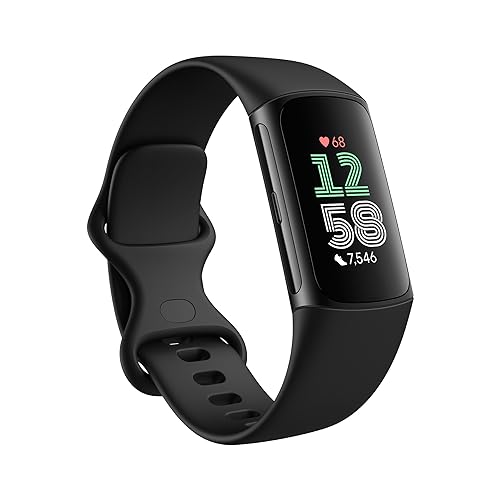
- A simple way to track walks. A phone app works. A fitness tracker makes it easier to see minutes and steps at a glance; see our Fitbit Charge 6 review.
Walking indoors when the weather is bad
Bad weather is the number one habit-killer. Have a backup plan: mall walking, walking laps of your home, a walking video, or a treadmill or walking pad. A compact walking pad fits under a desk or sofa, and slower speeds are fine for beginners. Our WalkingPad C2 review covers one popular folding model. If you have a treadmill with incline, our incline treadmill walking workout is a good next step after this plan.
Tips to make the habit stick
- Put it on the calendar. Treat the walk like an appointment.
- Walk with someone. A friend, neighbor or dog makes it harder to skip.
- Track your streak. A paper calendar with a tick for each walk works surprisingly well.
- Don’t chase perfect. Missed a day? Just walk the next one. One missed walk doesn’t undo anything.
Common beginner problems
- Sore shins: slow down, shorten your stride and make sure your shoes are not worn out.
- Blisters: wear moisture-wicking socks and break in new shoes on short walks.
- Side stitch: slow your pace and breathe deeply from your belly.
- Feeling exhausted: repeat the previous week. Progress isn’t a race.
After day 30: what next?
Keep walking 150 minutes a week, and add two days of simple strength training, which the CDC also recommends. Our guide on building strength without a gym is an easy place to start. You can also add gentle hills, a longer weekend walk, or try a light weighted vest once walking feels easy. Our weighted vest weight guide explains how heavy to go.
FAQ
Can walking 30 minutes a day help with weight loss?
It can help as part of an overall routine, especially combined with eating habits you can sustain. Walking alone burns a modest number of calories, so expect gradual results.
Is it better to walk in one go or split it up?
Both count. Three 10-minute brisk walks give similar benefits to one 30-minute walk for most people.
How many steps is 30 minutes of walking?
Roughly 3,000–4,000 steps for most people at a brisk pace, depending on stride length and speed.
Should seniors follow the same plan?
Yes, with a slower start if needed. Older adults may want to stay at week 1 or 2 for longer and add balance work. See our easy home exercises for seniors.
Written by the Lilac Reviews Editorial Team. This article is general fitness information, not medical advice. If you have a health condition, recent injury or surgery, talk to your doctor or physical therapist before starting a new exercise routine.
This guide is for general information only and is not medical advice. Talk to a qualified professional before starting a new exercise program, especially if you have an injury or health condition.