
How to Clean a Yoga Mat (Without Ruining It)

How to clean a yoga mat by material: daily wipe, weekly deep clean, what to use on PVC, TPE, rubber and cork, how to dry it and what never to use.
This article may contain affiliate links. If you buy through them, we may earn a small commission at no extra cost to you. Learn more.
Disclosure: Lilac Reviews is reader-supported. As an Amazon Associate we earn from qualifying purchases, at no extra cost to you. We don’t list prices because they change often; check Amazon for the current price.
Your yoga mat collects sweat, skin oils, dust and whatever was on the floor. Over time that makes it slippery, smelly and less pleasant to put your face near in child’s pose. The good news: cleaning it takes a couple of minutes. The bad news: the wrong cleaner can ruin a good mat in one go.
Here’s how to clean a yoga mat the right way, with a quick daily wipe, a deeper weekly or monthly clean, material-by-material tips and the things you should never use.
The short version
- After sweaty sessions: wipe with a damp cloth and a drop of mild soap, then air dry.
- Every few weeks: deep clean with mild soapy water, rinse and dry flat.
- Always: dry completely before rolling, and keep it out of direct sun.
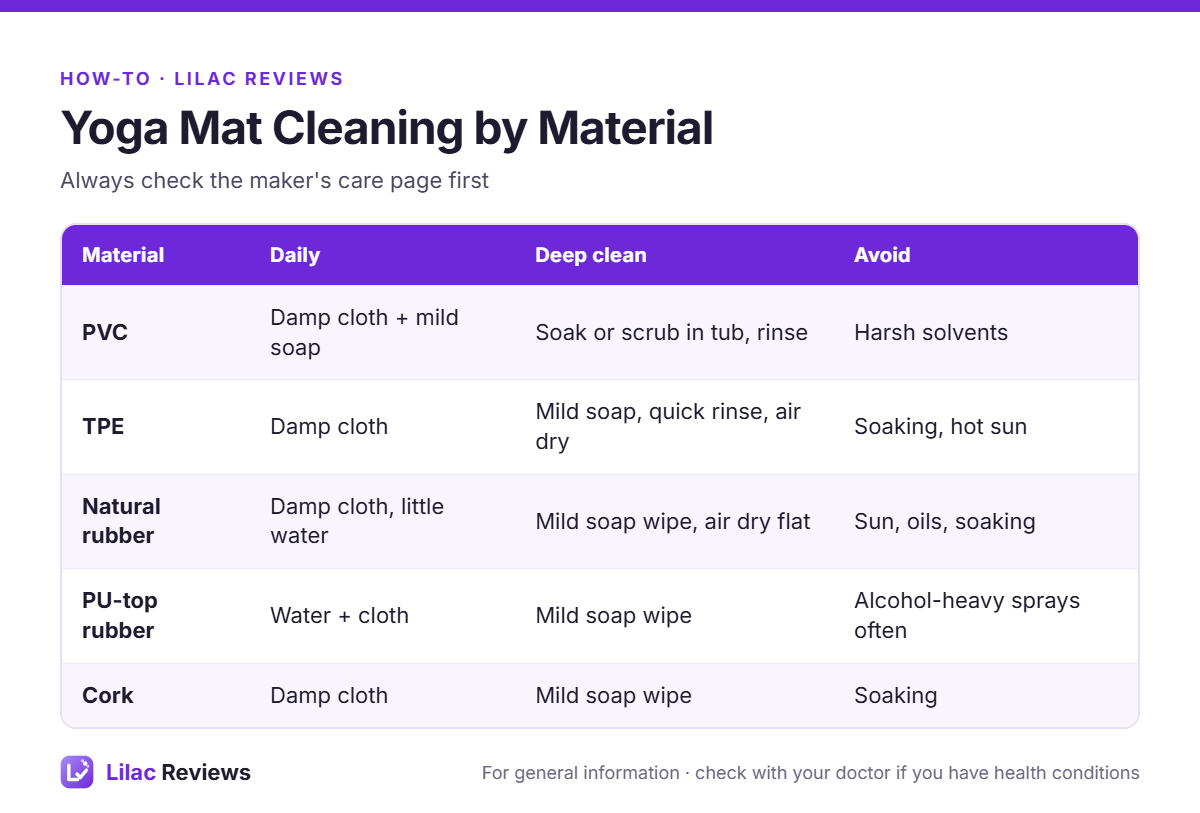
Step 1: check what your mat is made of
This matters more than anything else. Look at the brand’s site or the label:
- PVC (like the Manduka PRO): tough and closed-cell, can handle more water.
- TPE: light foam, doesn’t like soaking or heat.
- Natural rubber (like JadeYoga): absorbs some moisture, sensitive to sun and oils.
- PU-top rubber (like Liforme): grippy top layer that needs gentle cleaning.
- Cork: naturally resists odors, just needs a light wipe.
- NBR foam (thick exercise mats like the Gaiam Essentials): soft and porous, wipe and air dry.
When in doubt, follow the maker’s care page. Manduka and most big brands publish one.
Step 2: the quick daily wipe
- Mix a few drops of mild dish soap in a spray bottle of water, or use plain water.
- Lightly mist the mat and wipe with a soft cloth from top to bottom.
- Flip and wipe the underside if it sits on a dusty floor.
- Wipe again with a cloth dampened with plain water to remove soap residue, which can make mats slippery.
- Hang it over a chair or shower rail to air dry.
Step 3: the deep clean
Every few weeks, or when the mat smells or feels grimy:
- PVC mats: lay in the bathtub with a few inches of lukewarm water and mild soap. Scrub gently with a soft cloth or sponge, rinse well and press out water with a towel.
- Rubber, PU and TPE mats: don’t soak. Wipe with mild soapy water, then wipe with clean water.
- Roll the mat up inside a dry towel and press to remove extra water.
- Dry flat or hanging, away from direct sun and heaters, until completely dry. That can take a day for thick mats.
What not to use
- Harsh chemicals, bleach and strong solvents.
- Essential oils on natural rubber; oils break down rubber over time.
- Frequent alcohol-heavy sprays on PU and rubber mats; they can dry and crack the surface.
- The washing machine, unless your mat’s maker specifically says it’s safe.
- The dryer or direct sun to speed up drying.
Dealing with smells and slipperiness
Smells usually mean the mat was rolled up damp. Deep clean, then dry fully. For persistent odors on PVC, a light spray of diluted white vinegar (about 1 part vinegar to 3 parts water) followed by a water wipe helps; skip vinegar on natural rubber.
Slipperiness can come from soap residue (rinse better), body lotion (wash hands and feet before practice) or a new mat that needs breaking in. A towel on top helps during sweaty sessions.
Make your mat last longer
- Practice barefoot; shoes wear yoga mats quickly.
- Roll it with the top side facing out to help it lie flat.
- Store it out of the sun in a cool, dry spot. A wall rack or basket works; our home gym organization guide has ideas.
- Use a separate exercise mat for shoes and weights. See yoga mat vs exercise mat.
If it’s time for a new mat, our best yoga mats guide can help.

FAQ
How often should I clean my yoga mat?
Wipe it after sweaty sessions and deep clean every few weeks, or more if you practice daily.
Can I use vinegar to clean a yoga mat?
Diluted vinegar is fine for many PVC mats. Avoid it on natural rubber and check your maker’s guidance.
Can I put my yoga mat in the washing machine?
Generally no, unless the manufacturer says it’s machine washable.
Why is my yoga mat still slippery after cleaning?
Soap residue is the most common cause. Wipe with plain water and let it dry fully.
Bottom line
A damp cloth, a drop of mild soap and proper drying are all most mats need. Check your mat’s material, avoid harsh cleaners and the sun, and it will last for years.
This guide is for general information only and is not medical advice. Talk to a qualified professional before starting a new exercise program, especially if you have an injury or health condition.