
Yoga Mat vs Exercise Mat: What’s the Difference and Which Do You Need?

Yoga mat vs exercise mat: thickness, grip, size and durability compared, which works for yoga, HIIT, weights and seniors, and when you need both.
This article may contain affiliate links. If you buy through them, we may earn a small commission at no extra cost to you. Learn more.
Disclosure: Lilac Reviews is reader-supported. As an Amazon Associate we earn from qualifying purchases, at no extra cost to you. We don’t list prices because they change often; check Amazon for the current price.
Search for a mat and you’ll see “yoga mat,” “exercise mat,” “fitness mat,” “Pilates mat” and “workout mat,” often for products that look almost the same. They’re not the same, though. A mat built for yoga can wear out fast under sneakers, and a squishy exercise mat can make yoga balance poses wobbly.
Here’s a clear guide to yoga mat vs exercise mat: thickness, grip, size and durability, which suits which workouts, and when it’s worth owning both.
The short answer
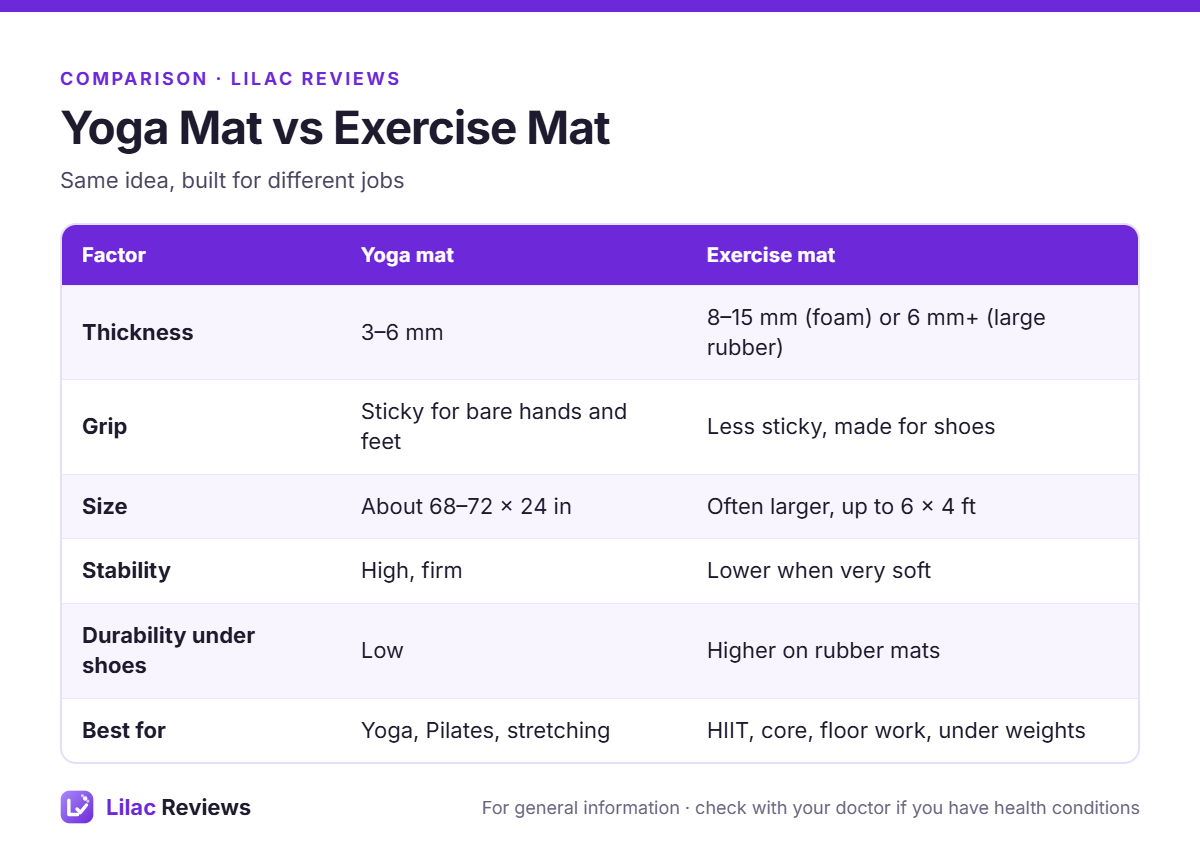
- Yoga mat: thinner (about 3 to 6 mm), sticky surface for bare hands and feet, firm and stable. Best for yoga, Pilates and stretching.
- Exercise mat: either thicker and softer (8 to 15 mm foam) for floor work, or larger and tougher (rubber) for shoes and equipment. Best for core, HIIT, bodyweight workouts and under machines.
The differences in detail
Thickness and cushioning
Yoga mats are designed to keep you stable while standing on one leg, so they stay fairly thin and dense. Exercise mats designed for floor work are thicker and softer to protect your spine, hips and knees during crunches, bridges and side-lying exercises.
Grip
Yoga mats have a sticky surface so hands and feet don’t slide in poses like downward dog. Exercise mats usually aren’t as sticky; they’re designed for shoes or for lying down.
Size
A standard yoga mat is about 68 to 72 inches long and 24 inches wide. Exercise mats are often larger, some as big as 6 × 4 feet or more, so you have room to move side to side in workouts.
Durability
Yoga mats, especially natural rubber and PU-top mats, can tear or flake under sneakers and jumping. Rubber exercise mats and flooring tiles handle shoes and dropped dumbbells much better.
Which mat for which workout?
- Yoga: yoga mat, 4 to 6 mm.
- Pilates and core: thicker exercise mat (8 to 15 mm) or a cushioned yoga mat.
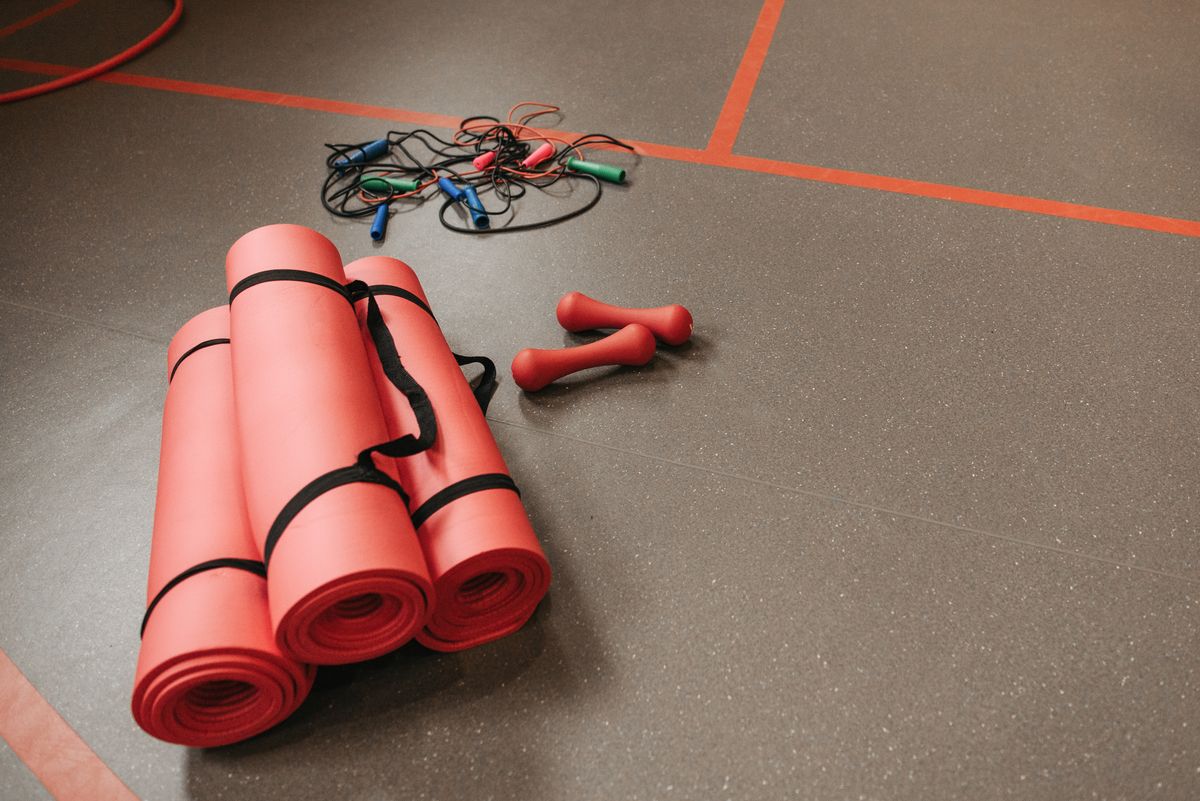
- HIIT, jumping, workouts in shoes: large rubber exercise mat or interlocking flooring.
- Stretching and mobility: either; thicker is comfier for kneeling.
- Under weights or machines: rubber flooring or equipment mats, not a yoga mat.
- Seniors doing floor exercises: 8 to 10 mm mat with a stable surface, and a chair nearby for getting up and down.
Good examples of each
Yoga mat: Manduka PRO

Dense 6 mm cushion that stays stable. Read our Manduka PRO review or see more in best yoga mats for home workouts.
Cushioned exercise mat: Gaiam Essentials
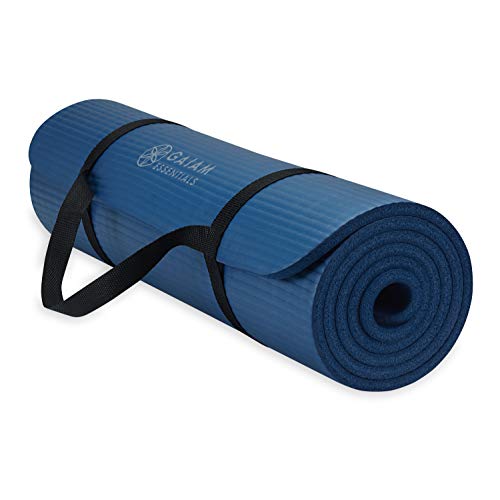
Soft 10 mm foam that’s comfortable for floor work. Covered in our Gaiam Essentials review.
Large floor coverage: puzzle mats
For workouts in shoes or a dedicated corner, interlocking foam or rubber tiles work well. Our ProsourceFit puzzle mat review and home gym flooring ideas cover the options.
Do you need both?
If you do yoga and also do HIIT or lifting at home, yes. A yoga mat for barefoot practice and a tougher mat or flooring for everything else will last longer than one mat doing both jobs. If you mostly do one type of workout, buy the mat for that and skip the other.
Care differences
Yoga mats need gentle cleaning: a damp cloth and mild soap, then air drying out of the sun. Rubber exercise mats can usually handle a firmer scrub. See how to clean a yoga mat for material-by-material tips.
Choosing a mat for seniors and sore joints
For older adults, the right mat is mostly about comfort and stability. Very thin mats can be hard on knees and hips; very soft mats can make standing exercises less steady. A 6 to 10 mm mat with a grippy surface is a good middle ground. Place it on a non-slip floor away from furniture edges, keep a sturdy chair nearby for support when getting down and up, and fold the end of the mat over for extra cushion when kneeling. Our easy home exercises for seniors guide shows moves that work well on either type of mat.
Signs it’s time to replace your mat
- The surface is flaking, peeling or has bald patches where your hands and feet go.
- It stays slippery even after a proper clean.
- You can feel the floor through it in spots that used to be cushioned.
- It smells even after deep cleaning and drying.
FAQ
Can I use a yoga mat as an exercise mat?
For bodyweight and floor exercises, yes. For jumping, shoes and weights, it will wear out faster.
Can I do yoga on an exercise mat?
You can, but thick, soft mats make balance poses harder and may be slippery for bare hands.
What thickness mat is best for home workouts?
6 mm is a good all-round compromise. Go thicker for floor work and thinner for yoga balance.
Is a Pilates mat different from a yoga mat?
Pilates mats are usually thicker to cushion the spine during rolling movements.
Bottom line
Choose a yoga mat for barefoot stability and grip, an exercise mat for cushion or toughness. Buy for the workout you do most, and add the other only if you need it.
This guide is for general information only and is not medical advice. Talk to a qualified professional before starting a new exercise program, especially if you have an injury or health condition.