
Best Under Desk Ellipticals for Home Offices and Seniors

The best under desk ellipticals for working from home and seniors: how to check desk clearance, quiet magnetic resistance, stopping the chair from rolling, and models worth a look.
This article may contain affiliate links. If you buy through them, we may earn a small commission at no extra cost to you. Learn more.
As an Amazon Associate, we earn from qualifying purchases. If you buy through a link on this page we may earn a small commission at no extra cost to you. It never changes what we write.
An under desk elliptical is a small seated machine you pedal with your feet while you work, read or watch TV. It will not replace a hard workout, but it turns hours of sitting into gentle movement, and for many older adults it is the easiest way to keep legs moving every day.
The catch: a lot of people buy one, find it hits the desk or slides away on the floor, and give up. This guide helps you avoid that.
Who an under desk elliptical is for
- People who work at a desk and want to break up long sitting stretches.
- Seniors who want easy, seated leg movement without balance worries.
- Anyone who wants light activity while watching TV.
It is not a good fit if you want intense cardio or weight loss on its own. For that, look at our elliptical vs treadmill comparison.
Measure before you buy
Thigh clearance is the big one
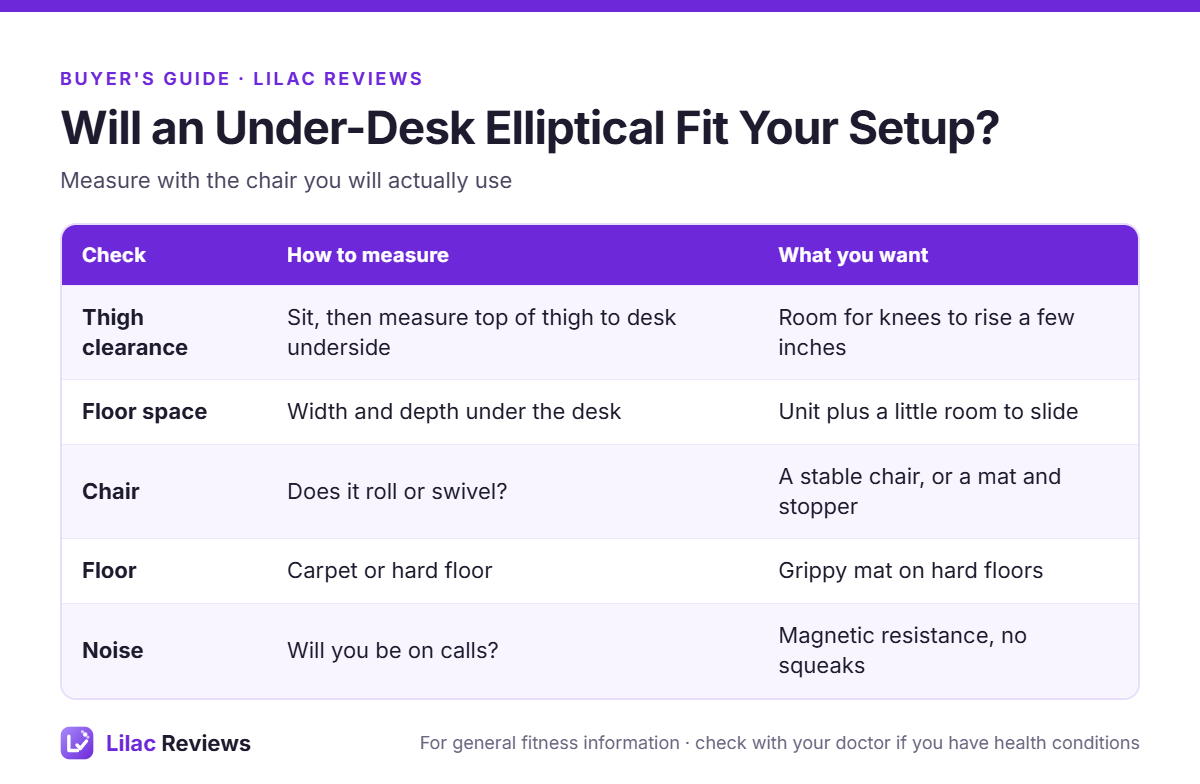
As you pedal, your knees rise. Sit in your normal chair with feet flat, then measure from the top of your thigh to the underside of the desk. Compare that with the pedal height listed for the machine. If the gap is small, your knees will bump the desk. Lowering your chair or raising your desk usually fixes it.
Stop the chair from rolling
Pushing pedals forward pushes your chair back. Office chairs on wheels roll away within minutes. Use a non-rolling chair, put the elliptical and chair on a grippy mat, or add a strap between the machine and the chair leg. Many owners say this single fix is what made the machine usable.
Floor type
On hard floors, a rubber mat stops the elliptical sliding. On thick carpet it can wobble; a thin, firm mat on top of the carpet helps.
The best under desk ellipticals
We have not lab-tested these ourselves. Picks are based on published specifications and consistent feedback from independent reviewers and owners. Prices change often, so check the current listing.
Best overall: Cubii Move
The Cubii Move is a simple, quiet under desk elliptical with six resistance levels and a small display for strides, time and estimated calories. It weighs around 17 lb, which makes it steady but still easy to move between rooms. Read our Cubii Move review for the full details on desk fit and carpet wobble.

Best for app tracking: Cubii Pro
The Cubii Pro adds Bluetooth so you can track strides and time in the Cubii app and sync with some fitness apps. It suits people who like seeing progress over weeks. If you do not care about the app, the Move does the same physical job.
Best low-profile option: DeskCycle Ellipse
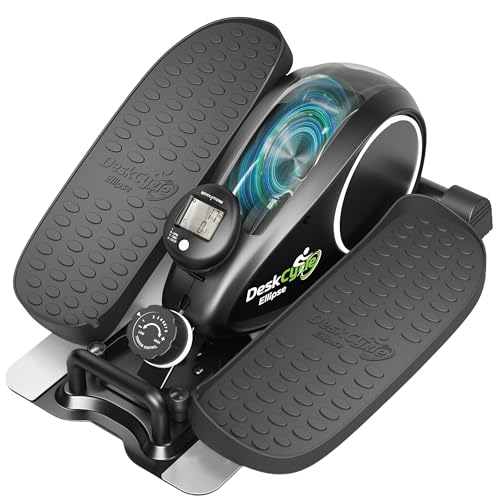
From the makers of the DeskCycle bike, the Ellipse is a leg exerciser with an elliptical-style motion and a low pedal height designed for standard desks. It uses magnetic resistance and is built to stay quiet during calls. It also works well in front of a recliner or sofa.
Best budget pick: Sunny Health & Fitness under desk elliptical
Sunny Health & Fitness makes several compact under desk ellipticals with magnetic resistance and a basic monitor. They cost less than Cubii and do the same core job. Expect a lighter build, so a mat or strap matters even more. Check the listing for pedal height and max user weight before you buy, as Sunny’s models differ.
Under desk elliptical vs under desk bike
An elliptical moves your feet in a flatter, gliding loop, so your knees rise less than on a bike. That often makes it easier to fit under a desk. An under desk bike has a bigger circular motion and can feel more like a workout. We compare bike-style options in our upcoming pedal exerciser guide; for now, the DeskCycle 2 review is a good place to see what a low-profile bike offers.
How to use one without it becoming clutter
- Start with 10 to 15 minutes at a time, a few times a day.
- Keep resistance low while typing; save higher levels for TV or reading.
- Pedal backward sometimes to change the muscles used.
- Stand up and walk for a few minutes every hour as well. Seated pedaling helps, but it is still sitting.
Light activity adds up. The CDC’s guidelines for older adults stress moving more and sitting less, and any activity is better than none.
FAQ
Do under desk ellipticals really help?
They help you move more and sit still less, which is a real benefit. They burn far fewer calories than a full workout, so think of them as a daily movement tool, not a gym replacement.
Are they good for seniors?
Yes, for many seniors. You stay seated, the motion is smooth and resistance can be very light. Use a stable chair without wheels.
Can I use one with a standing desk?
Not while standing. They are made for seated use. If you want to move while standing, look at a walking pad.
Bottom line
The best under desk elliptical is the one that fits under your desk and stays put. Measure your thigh clearance, solve the rolling chair problem, and pick a quiet magnetic model. The Cubii Move is the easiest all-round choice, the DeskCycle Ellipse suits lower desks, and Sunny’s models keep the cost down.
Check with your doctor before starting a new exercise routine, especially if you have heart, joint or circulation conditions.
This guide is for general information only and is not medical advice. Talk to a qualified professional before starting a new exercise program, especially if you have an injury or health condition.