
Best Weightlifting Gloves for Home Workouts (and When to Skip Them)

The best weightlifting gloves for home workouts: full-palm, wrist-wrap and fingerless picks, grip pads as an alternative, sizing tips and when to go bare-handed.
This article may contain affiliate links. If you buy through them, we may earn a small commission at no extra cost to you. Learn more.
Disclosure: Lilac Reviews is reader-supported. As an Amazon Associate we earn from qualifying purchases, at no extra cost to you. We don’t list prices because they change often; check Amazon for the current price.
Weightlifting gloves divide people. Some lifters swear by them for comfort and grip; others say they make the bar feel thicker and weaken your grip. Both have a point. The trick is knowing which problem you’re trying to fix.
This guide covers the best weightlifting gloves for home workouts, the alternatives worth considering (grip pads, chalk, straps), how to size them, and when you’re better off bare-handed.
Quick picks
- Best with wrist support: Harbinger Pro WristWrap gloves.
- Best ventilated everyday gloves: Atercel workout gloves.
- Best full-palm protection: Trideer weight lifting gloves.
- Best glove alternative: Grip Power Pads.
How we chose
We compared design, padding, wrist support, materials and sizing information, and looked for consistent owner feedback about durability, fit and grip. We didn’t run lab tests.
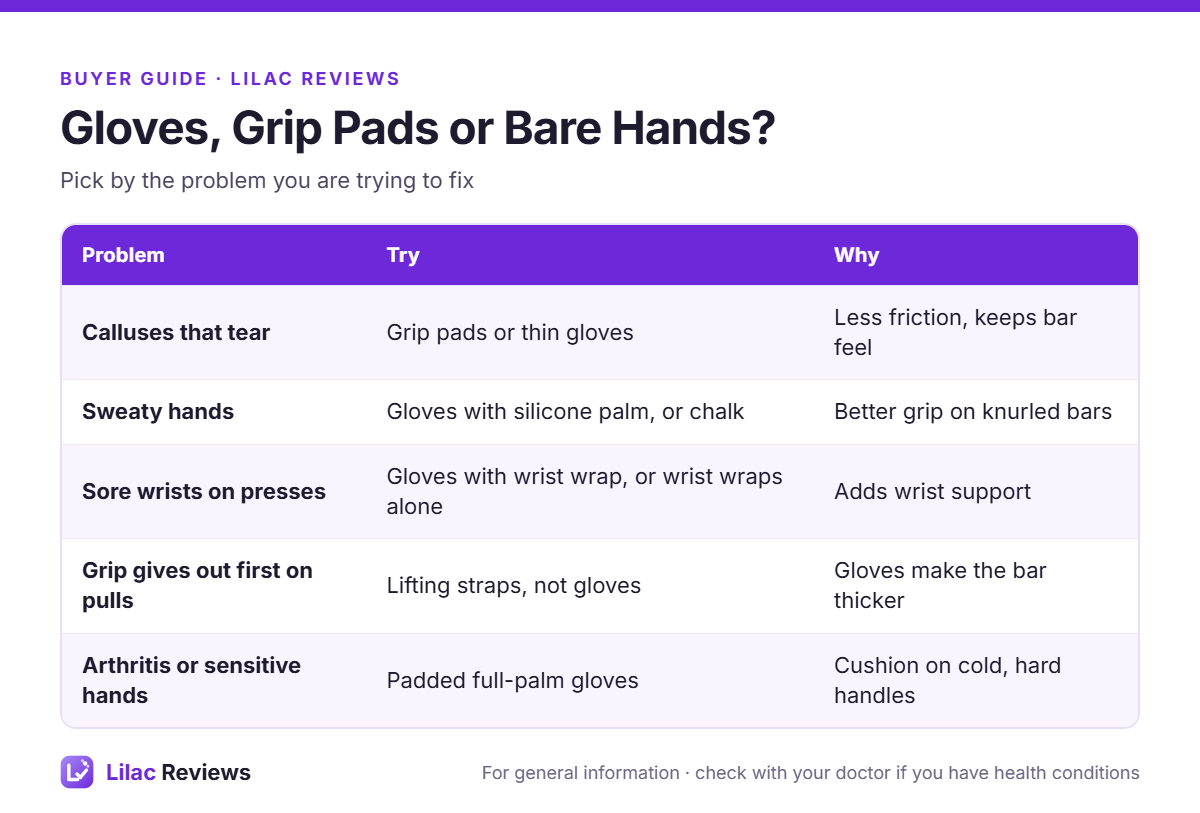
Do you need weightlifting gloves?
Gloves help with:
- Calluses and torn skin from knurled bars and pull-up bars.
- Sweaty hands slipping on dumbbells and machine handles.
- Comfort for people with sensitive or arthritic hands, especially on cold metal handles in a garage.
Gloves don’t help with:
- Grip strength giving out on heavy deadlifts and rows. That’s a job for lifting straps, or simply more grip training.
- Thick-feeling bars: padding makes the bar effectively thicker, which can make holding it harder.
The best weightlifting gloves
1. Harbinger Pro WristWrap: best with wrist support

Harbinger has been making gym gloves for decades. The Pro WristWrap adds a built-in wrist wrap for support on pressing movements, with padded palms and a fingerless design. A good all-rounder if your wrists ache on presses.
2. Atercel workout gloves: best ventilated everyday gloves

Light, breathable gloves with a grippy palm and an optional wrist strap. Popular for general home workouts, dumbbells and machines. They’re a good choice if your main issue is sweaty hands.
3. Trideer weight lifting gloves: best full-palm protection
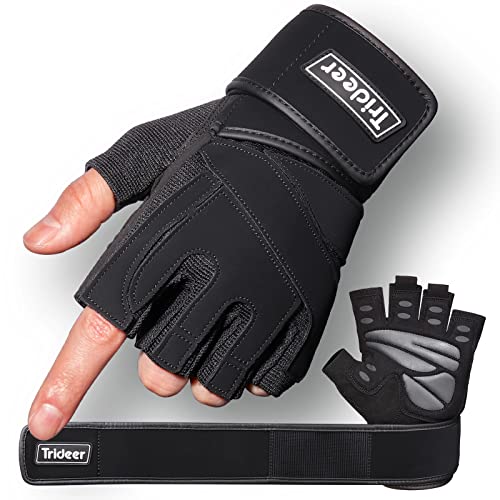
Full palm coverage and padding protect against calluses and cold handles. A nice option for older lifters and people with sensitive hands.
4. Grip Power Pads: best glove alternative

Grip pads are small rubber squares you hold between your hand and the bar. They protect your skin and improve grip without covering your hands or overheating, and many lifters prefer them to gloves because they keep the bar feel.
How to size lifting gloves
- Measure around your hand just below the knuckles, not including the thumb.
- Compare with the brand’s size chart; sizes vary between brands.
- Gloves should feel snug without restricting finger movement. Loose gloves bunch up and slide.
- If you’re between sizes, choose the smaller size for leather and the larger for thicker padded gloves.
Alternatives worth knowing
- Chalk: the best grip aid for sweaty hands on barbells. Liquid chalk makes less mess at home.
- Grip pads: skin protection without full gloves.
- Lifting straps: for heavy pulls when grip fails first.
- Wrist wraps: for wrist support on presses.
- Bare hands: builds grip strength and natural calluses. Fine for most beginners.
Caring for gloves
Air them out after each session, wash fabric gloves by hand in cool water with mild soap and let them dry away from heat. Leather gloves should be wiped, not soaked. Smelly gloves are usually gloves that never dry properly.
Keep them with your other small gear; our home gym organization guide has storage ideas. New to lifting? Start with how to build strength without a gym.
Gloves for older lifters and sensitive hands
If you have arthritis, thin skin or poor circulation in your hands, cold metal dumbbells and knurled bars in a garage can be genuinely uncomfortable. Padded full-palm gloves add warmth and cushion, and many older lifters find they can grip more confidently with them. Look for an easy hook-and-loop closure you can do up with one hand, and choose a slightly looser fit if finger joints swell during the day. Neoprene-coated dumbbells and foam grip covers are another simple fix. If grip pain is new or getting worse, mention it to your doctor or a hand therapist.
Which lifts benefit most from gloves?
- Pull-ups and hanging exercises: rough bars can tear calluses; thin gloves or grip pads help.
- Dumbbell and kettlebell work: padded palms reduce hot spots on high-rep sets. See how to use a kettlebell safely.
- Machines and cable handles: gloves help with sweaty handles.
- Heavy deadlifts: gloves usually make things worse; use chalk or straps instead.
FAQ
Are weightlifting gloves good or bad?
Neither. They help with comfort, calluses and sweaty hands, but they don’t improve grip strength and can make bars feel thicker.
Should beginners wear lifting gloves?
It’s optional. Many beginners do fine bare-handed. Gloves are helpful if your hands are sensitive or sweaty.
Gloves or lifting straps?
Gloves for comfort and skin protection; straps when your grip gives out on heavy pulls.
Can I wear gloves for pull-ups?
Yes, especially if your bar is rough. Grip pads are a popular alternative.
Bottom line
Choose the Harbinger Pro WristWrap for wrist support, Atercel for light everyday use, Trideer for full protection and Grip Power Pads if you want skin protection without wearing gloves.
This guide is for general information only and is not medical advice. Talk to a qualified professional before starting a new exercise program, especially if you have an injury or health condition.