
Best Weighted Vests for Women (Walking, Strength and Over 50)

The best weighted vests for women: what fit actually means for a female torso, how heavy to start, and the vests that suit walking, home workouts, women over 50 and plus sizes.
This article may contain affiliate links. If you buy through them, we may earn a small commission at no extra cost to you. Learn more.
Disclosure: As an Amazon Associate, we earn from qualifying purchases. If you buy through a link on this page, we may earn a small commission at no extra cost to you.
Walking with a weighted vest has become one of the most popular “small change, big habit” fitness trends, especially for women in their 40s, 50s and beyond. It turns an ordinary walk into a bit of strength work without adding impact. But a lot of vests are designed around a broad, flat male chest, and a vest that rubs, bounces or presses on the bust is one you’ll stop wearing after a week.
This guide focuses on the best weighted vest for women by looking at fit first, weight second. We cover what to look for, how heavy to start, and the vest styles that work for walking, home workouts and larger or smaller frames.
How we put this guide together: we didn’t lab-test these vests. We compared manufacturer specs (weight options, adjustability, materials, sizing charts), read sizing guides closely, and looked at repeated themes in verified owner feedback from women, especially comments about chest fit, shoulder pressure and bounce. Check the current listing for sizes before you order.
Quick picks
- Best budget vest for walking: ZELUS weighted vest
- Best slim vest you can wear under a jacket: Hyperwear Hyper Vest ELITE
- Best adjustable-weight vest: Aduro Sport adjustable weighted vest
- Best for larger chests and plus sizes: a short-torso vest with wide shoulder pads and side straps
What makes a weighted vest work for women
Torso length
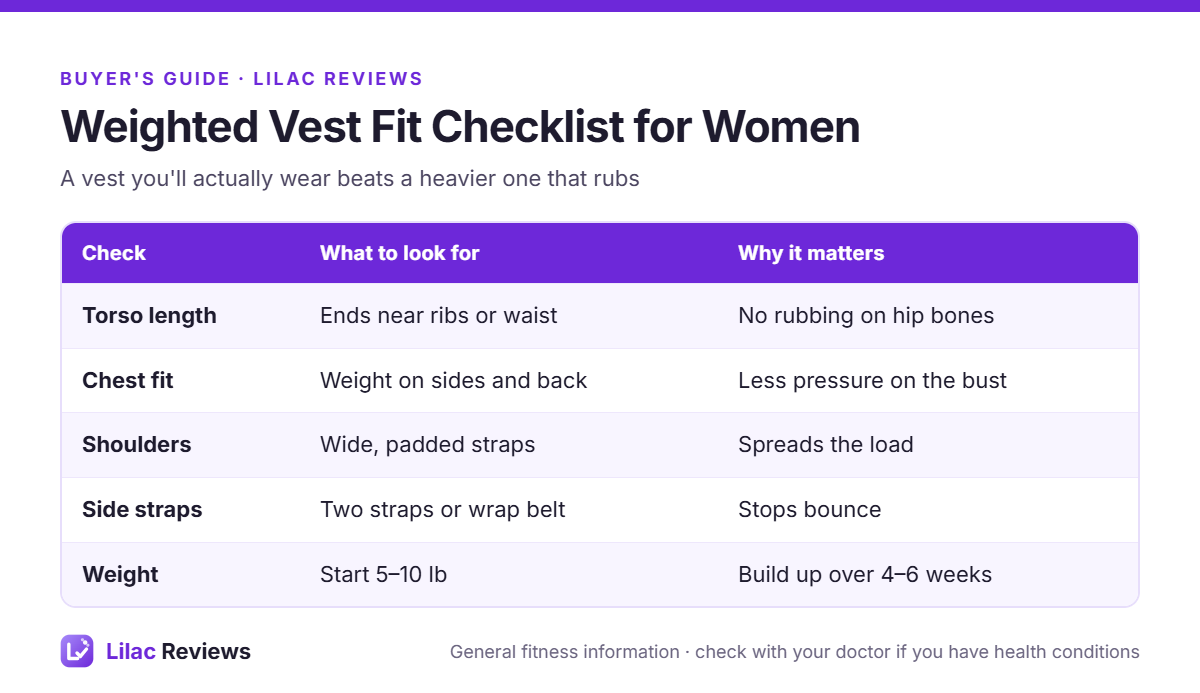
Many vests are long enough to sit on the hip bones of shorter women, which rubs with every step. A shorter cut that ends around the bottom of the ribs or the waist usually feels better for walking.
Chest and bust fit
Look for a vest that carries weight around the sides and back rather than as a flat slab across the front. Vests with weight spread in many small pockets, or a front opening that sits above or around the bust, tend to feel more natural.
Shoulder padding
All the weight hangs from your shoulders. Wide, padded straps spread the load. Narrow straps dig in, especially on long walks.
Side straps that actually tighten
Bounce is the number one complaint. Two side straps or a wide wrap-around belt let you snug the vest so it moves with your body, not against it.
Weight options
Most women start with something between 5 and 12 pounds. A fixed-weight vest is simpler; an adjustable one lets you start light and build up over a few months without buying a second vest.
The best weighted vests for women, by situation
1. ZELUS weighted vest: best budget vest for walking
ZELUS vests come in a wide range of fixed weights, from very light up to about 30 pounds, with an ironsand fill, a neoprene body and reflective strips. The lighter versions are short enough for many women, and the price makes it an easy way to find out whether you’ll stick with vest walking. We cover it in more detail in our ZELUS weighted vest review.
- Good for: first-time vest users, neighborhood walks, light home workouts.
- Keep in mind: heavier versions get bulky up front, and the weight isn’t adjustable, so choose your starting weight carefully.

2. Hyperwear Hyper Vest ELITE: best slim vest for everyday wear
The Hyper Vest line is built to look and fit more like a fitted top than a tactical vest. The weight sits in many thin steel pieces spread around the torso, which keeps it close to the body. Weight can be adjusted by adding or removing pieces.
- Good for: women who want to wear the vest during chores, errands or long walks without a bulky look.
- Keep in mind: it costs more than basic vests, and the snug fit means sizing matters. Read the size chart closely.
3. Aduro Sport adjustable weighted vest: best adjustable-weight vest
Adjustable vests with removable weight bags let you start at a very light load and add weight over weeks. This style is a good fit if you’re planning to progress, or if two people with different needs will share the vest.
- Good for: gradual progression, sharing, strength circuits at home.
- Keep in mind: pocket-style vests can be bulkier than slim vests, and partly filled pockets may shift unless you strap them tight.
4. Short-torso vest with wide straps: best for larger chests and plus sizes
If standard vests press on the bust or don’t close around the ribcage, look for vests sold in multiple sizes (not one-size-fits-all), with wide padded shoulders and two side straps. Some styles sit higher on the chest, which many larger-chested women find more comfortable.
- Good for: plus-size women and anyone between sizes.
- Keep in mind: check the circumference range on the size chart, not just S, M or L.
How heavy should a weighted vest be for women?
A common starting point is about 5 percent of your body weight, building toward around 10 percent over four to six weeks. For a 150-pound woman, that means starting near 7 or 8 pounds. Heavier isn’t better if it changes your posture or your walking pattern. Our guide on how heavy a weighted vest should be has a full chart and a six-week plan.
Weighted vests for women over 50
Weight-bearing activity is often recommended for adults as they age, and strength work on at least two days a week is part of the CDC’s activity guidelines for older adults. A vest can be one simple way to add load to walking. A few extra cautions apply:
- Start lighter than you think, even 4 to 6 pounds.
- If you have osteoporosis, back problems, pelvic floor issues or balance concerns, ask your doctor or a physical therapist before using one.
- Walk on even ground at first, and leave the vest off for hills until you’re comfortable.
- Stop if you feel pain in your neck, shoulders or lower back.
The National Institute on Aging has a helpful overview of safe exercise for older adults if you’re just getting started. Our list of easy home exercises for seniors is a good place to begin too.
Ways to use your vest
- Walking: the easiest start. Try 10 to 15 minutes with the vest, then finish without it.
- Incline walking: pairs well with a vest, but lower the incline at first. See our incline treadmill walking workout.
- Bodyweight strength: squats, step-ups and lunges get harder with a light vest.
- Chores: some women wear a slim vest while doing housework or gardening.
Common mistakes to avoid
- Buying too heavy. A 20-pound vest as a first vest is a common regret.
- Running in a loose vest. Bounce strains the shoulders and back. Keep it to walking until the fit is perfect.
- Wearing it all day immediately. Build time gradually, like any new exercise.
- Ignoring hot weather. Neoprene vests trap heat. Walk early, drink water, and skip the vest on very hot days.
FAQ
What weight vest should a woman start with?
Most women start with 5 to 10 pounds, or about 5 percent of body weight, and increase slowly.
Are weighted vests good for women over 50?
They can be a useful way to add load to walking and bodyweight exercise. Start light and check with your doctor first if you have bone, joint, back or balance issues.
Can I wear a weighted vest every day?
Some people do, but build up gradually and take days off if your shoulders, neck or back feel sore.
Should a weighted vest be tight?
Snug enough not to bounce, loose enough to breathe deeply. You should be able to take a full breath without the vest pressing on your ribs.
Is it better to wear a weighted vest or ankle weights for walking?
A vest keeps the load close to your center, which is generally easier on the joints. Ankle weights change your stride. We explain the difference in our weighted vest vs ankle weights guide.
The bottom line
For most women, a light, well-fitting vest beats a heavy one that rubs. If you’re new to it, start with an affordable fixed-weight vest. If you want something you can wear for hours, a slim vest is worth the extra cost, and if you plan to progress, an adjustable vest saves buying twice. Whatever you choose, start light, walk often, and let your body adapt.
Written by the Lilac Reviews Editorial Team. Product details are based on manufacturer information and may change; check the retailer listing for current specifications. This article is general fitness information, not medical advice.
This guide is for general information only and is not medical advice. Talk to a qualified professional before starting a new exercise program, especially if you have an injury or health condition.