
ZELUS Weighted Vest Review: An Affordable Vest for Walking and Home Workouts

ZELUS weighted vest review: 4 to 32 lb versions, ironsand weights, neoprene fit, reflective strips, how heavy to go and who should pick another vest.
This article may contain affiliate links. If you buy through them, we may earn a small commission at no extra cost to you. Learn more.
As an Amazon Associate, we earn from qualifying purchases. If you buy through a link on this page we may earn a small commission at no extra cost to you. It never changes what we write.
Weighted vests have gone from a niche CrossFit accessory to something you see on morning walkers everywhere. Strap on a few extra pounds, walk your usual route, and the same distance becomes more demanding without running.
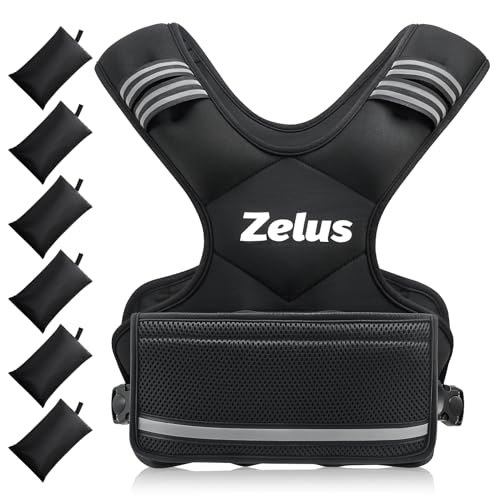
The ZELUS vest is one of the most popular budget options on Amazon. It comes in several weight ranges, uses ironsand weights and is built from neoprene. Here is how it compares and who it suits.
The short version
The ZELUS weighted vest is a comfortable, affordable choice for weighted walking and light home workouts. The neoprene body, reflective strips and front pocket are practical touches. It isn’t built for heavy loads or running, and neoprene gets warm in summer, but for most walkers it hits the right balance of fit and price.
- Best for: walkers and beginners adding light load to everyday activity.
- Skip it if: you want very heavy loads, a running-specific vest or maximum breathability.
- Standout spec: multiple versions from 4 to 32 lb with ironsand weights.
How we put this review together
We did not run a long-term lab test on this one, and we are not going to pretend we did. This review of the ZELUS vest is built from published specifications and independent reviews from established fitness publications. Where sources disagree on a number, we say so. Prices change constantly, so we don’t list them here; check the current price on Amazon before you buy.
ZELUS Weighted Vest specs at a glance
| Spec | Detail |
|---|---|
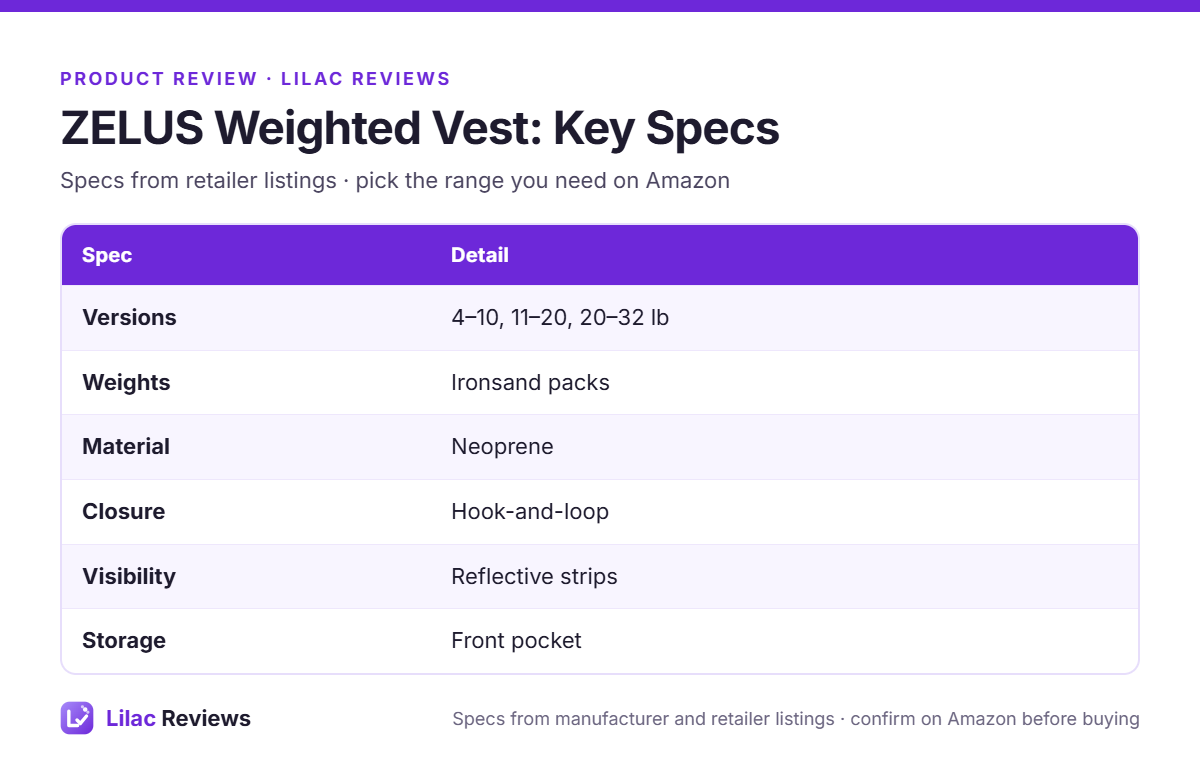
| Weight options | Versions covering 4 to 10 lb, 11 to 20 lb and 20 to 32 lb |
| Weights | Ironsand weight packs |
| Material | Neoprene |
| Closure | Hook-and-loop fastening |
| Visibility | Reflective strips on the front, shoulders and back |
| Storage | Front pocket for keys or a phone |
What we like about the ZELUS vest
Easy to pick the right weight
Choosing between the 4 to 10, 11 to 20 and 20 to 32 lb versions means you can start light. Our guide to how heavy a weighted vest should be recommends starting around 5% of body weight for walking, and most people are best served by the lighter versions.
Comfortable neoprene fit
Neoprene hugs the torso and spreads the load, which limits the bounce you get with cheaper sandbag-style vests. Hook-and-loop fastening makes adjusting quick.
Practical for outdoor walking
Reflective strips on the front, shoulders and back are a real safety plus for early-morning or evening walks. The front pocket holds a phone or keys.
Useful beyond walking
Squats, step-ups, lunges and push-ups all become harder with a few extra pounds, which is useful if you don’t have dumbbells yet.
What could be better
Neoprene runs warm
Neoprene isn’t very breathable. On hot days you will sweat under it more than with mesh vests.
Not for heavy loads
Even the heaviest version tops out around 32 lb. That’s plenty for walking, but serious rucking or heavy training needs a plate-carrier style vest.
Not a running vest
Running with extra weight increases impact on your joints. This vest is best for walking and controlled movements.
Pros and cons
Pros
- Several weight ranges to start light
- Snug neoprene fit with less bounce
- Reflective strips and front pocket
- Affordable
Cons
- Warm in hot weather
- Not for heavy loads
- Not designed for running
Who should buy the ZELUS vest (and who shouldn’t)
Buy the ZELUS vest if you walk regularly and want to make those walks more demanding, or want a light way to add load to bodyweight moves. Weight-bearing activity like walking is part of the CDC’s activity guidance for older adults, and a light vest is an easy way to progress it.
Skip it if you have back, neck, hip or knee problems without your doctor’s approval, if you want to run with weight, or if you need more than 32 lb.
Weighted vest tips
Start with the lightest setting and short walks, about 15 to 20 minutes, on flat ground. Add time before you add weight, and keep good upright posture.
If you feel neck, shoulder or lower-back strain, remove some weight. Avoid weighted vests during pregnancy, and ask your doctor first if you have osteoporosis or joint problems.
Alternatives to consider
- WalkingPad C2 Folding Walking Pad: weighted walking indoors on a folding walking pad.
- Yes4All Solid Cast Iron Kettlebell: a single kettlebell for loaded carries and swings.
- BowFlex SelectTech 552 Adjustable Dumbbells: dumbbells for targeted strength work.
FAQ
How heavy should my weighted vest be?
For walking, start around 5% of your body weight and build slowly. Our weighted vest guide covers this in detail.
Can I run in the ZELUS vest?
We would not recommend it. It is designed for walking and controlled exercises.
Is the ZELUS vest adjustable?
Each version covers a range, and you pick the version that fits your target weight.
Is the ZELUS vest comfortable for women?
The neoprene body is fairly forgiving, but fit varies. Check the size chart on the Amazon listing.
Bottom line
The ZELUS weighted vest is a sensible, affordable way to make your walks and bodyweight workouts harder. Start light, focus on posture and consistency, and it does the job well.
Talk to your doctor before using a weighted vest if you have heart, back, joint or bone-density concerns, or if you are pregnant.
This guide is for general information only and is not medical advice. Talk to a qualified professional before starting a new exercise program, especially if you have an injury or health condition.