
Chair Exercises for Seniors: A 20-Minute Seated Workout

A 20-minute chair workout for seniors: seated warm-up, leg, upper body and core moves, how to pick a safe chair, how to progress and when to check with a doctor.
This article may contain affiliate links. If you buy through them, we may earn a small commission at no extra cost to you. Learn more.
Disclosure: As an Amazon Associate, we earn from qualifying purchases. If you buy through a link on this page, we may earn a small commission at no extra cost to you.
If getting down on the floor feels risky, or standing workouts leave you tired before you have really started, a chair is one of the best pieces of exercise equipment you already own. Seated exercise still builds leg strength, keeps shoulders moving and gets your heart rate up a little, and you can do it in front of the TV.
This guide gives you a complete 20-minute chair workout for seniors, explains how to set up safely, and shows how to make it harder as you get stronger. It is written for older adults who are new to exercise or coming back after a break.
Before you start: pick the right chair
The chair matters more than any band or weight. Look for:
- No wheels and no swivel. A kitchen or dining chair is ideal. Office chairs can roll out from under you.
- A firm, flat seat at a height where your feet sit flat on the floor and your knees are at about a right angle.
- A solid back you can lean against, and ideally no arms so your elbows can move freely. If you need arms to stand up, keep them.
- A non-slip spot. Put the chair against a wall or on a rubber mat so it can’t slide.
Wear supportive shoes rather than socks, keep a glass of water nearby, and move slowly. If you have heart or lung problems, recent surgery or uncontrolled blood pressure, check with your doctor before starting a new routine.
The 20-minute seated workout
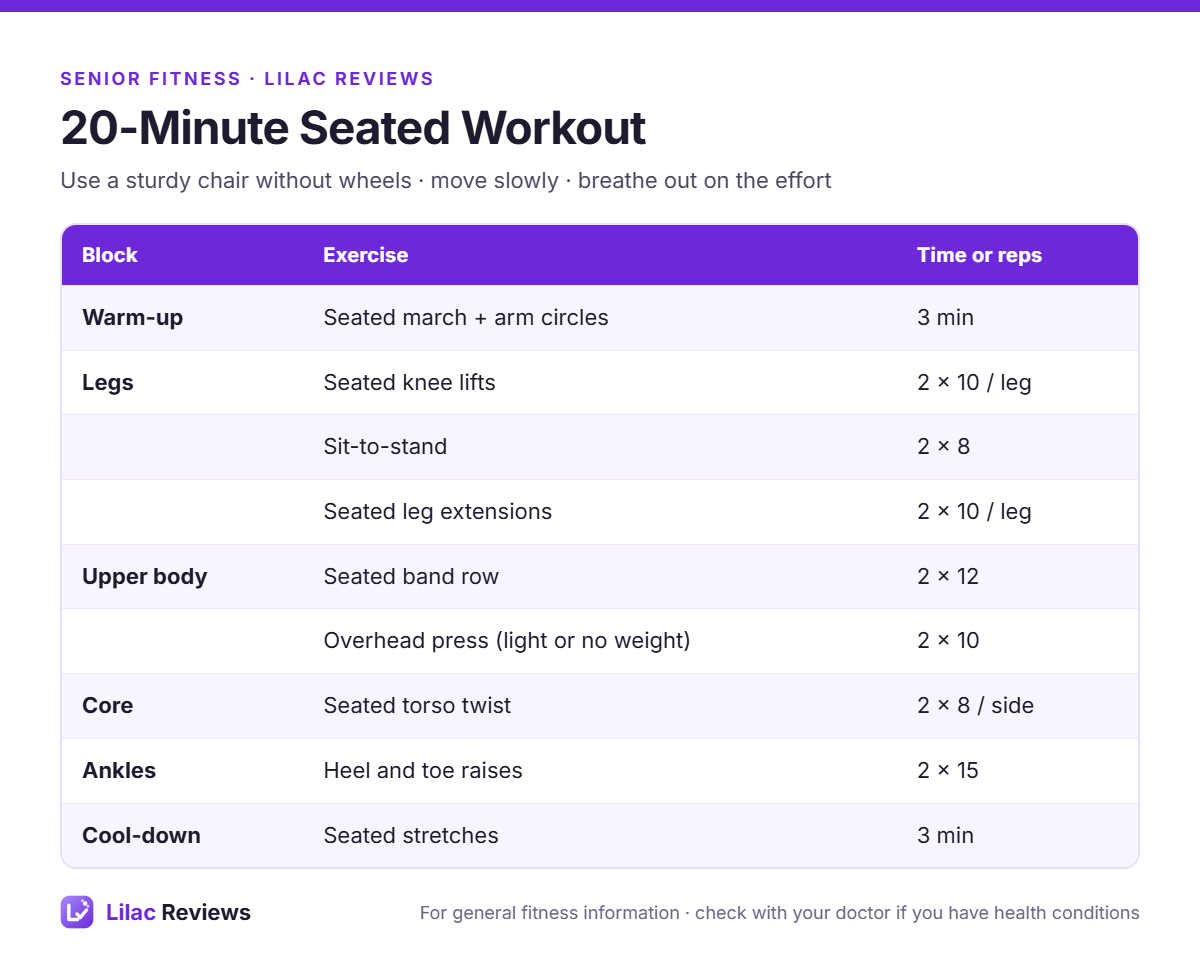
Do the routine two or three times a week on non-consecutive days. On the other days, a short walk or the gentle moves in our easy home exercises for seniors are a good fit.
Warm-up (3 minutes)
Seated march: sit tall near the front of the chair and lift your knees one at a time, as if marching. Swing your arms. After a minute, add arm circles: small circles forward for 30 seconds, then backward. Finish with a few shoulder rolls.
Leg strength
Seated knee lifts (2 × 10 per leg): hold the sides of the seat, lift one knee a few inches, pause, then lower slowly. Keep your back straight rather than leaning back.
Sit-to-stand (2 × 8): this is the most useful exercise in the whole routine because it trains the exact movement of getting up from a chair or toilet. Scoot forward, feet hip-width apart and slightly behind your knees. Lean your chest forward, push through your heels and stand up. Sit back down slowly, reaching your hips back. Use your hands on your thighs or the chair arms at first; aim to need them less over time.
Seated leg extensions (2 × 10 per leg): straighten one knee until the leg is nearly level, squeeze the front of the thigh for two seconds, then lower. Great for knee support.
Upper body
Seated band row (2 × 12): loop a light resistance band around your feet, hold one end in each hand and pull your elbows back past your ribs, squeezing your shoulder blades together. This helps posture and makes carrying shopping easier.
Overhead press (2 × 10): start with your hands at shoulder height, palms forward, and press up without arching your back. Use no weight, water bottles or 1–3 lb dumbbells. If raising your arms overhead hurts your shoulders, press forward instead.

Core and ankles
Seated torso twist (2 × 8 per side): cross your arms over your chest and gently turn your upper body to one side, then the other, keeping your hips still. Move within a comfortable range.
Heel and toe raises (2 × 15): lift both heels off the floor, lower, then lift your toes. This wakes up the calves and shins that help you clear your feet when walking.
Cool-down (3 minutes)
Finish with a seated hamstring stretch (one leg straight, heel on the floor, lean forward gently from the hips), a chest opener (hands behind you on the chair back) and a few slow, deep breaths. Our daily stretching routine for seniors has more options.
How hard should it feel?
On a 1–10 effort scale, aim for about 4–6. You should be breathing a little harder but still able to talk. For strength moves, the last two or three reps should feel like work without your form falling apart. Mild muscle tiredness the next day is normal; sharp pain or joint pain that lasts is not.
How to progress over 6 weeks
- Weeks 1–2: one set of each exercise, focus on smooth movement.
- Weeks 3–4: two sets, shorter rest between moves.
- Weeks 5–6: add a slightly stronger band, light ankle weights for knee lifts and leg extensions, or one or two more reps on sit-to-stands.
The U.S. CDC activity guidelines for older adults recommend muscle-strengthening activity at least two days a week, plus balance work and about 150 minutes of moderate aerobic activity. A chair routine is an easy way to cover the strength part.
Add a little seated cardio
If you want more cardio without standing, a pedal exerciser or under-desk elliptical works well with a chair. Pedal for 10–20 minutes while watching TV. See our Cubii Move review and DeskCycle 2 review for two popular options.

Common mistakes
- Slumping. Sit toward the front of the seat with your chest lifted.
- Holding your breath. Breathe out as you lift or push.
- Rushing reps. Slow, controlled movement builds more strength and is safer.
- Using a wobbly chair. If it shifts, stop and fix the setup.
FAQ
Are chair exercises enough for seniors?
They are a great start and can cover strength and some cardio. Most people also benefit from walking and standing balance work as they get stronger, because balance improves best when you train on your feet.
How often should seniors do chair exercises?
Two to three times a week for the strength moves is plenty. Gentle seated stretching and marching can be done most days.
Do I need equipment?
No. A sturdy chair is enough to begin. A light resistance band and a pair of 1–3 lb dumbbells add variety later.
Can chair exercises help with balance?
Sit-to-stands and ankle work build the leg strength balance depends on. For direct balance training, try our balance exercises for seniors once you feel ready.
Written by the Lilac Reviews Editorial Team. This article is general fitness information, not medical advice. If you have a health condition, recent injury or surgery, talk to your doctor or physical therapist before starting a new exercise routine.
This guide is for general information only and is not medical advice. Talk to a qualified professional before starting a new exercise program, especially if you have an injury or health condition.